Flipkart’s Big Shopping Days sale is just hours away, so if you have been waiting to buy a smartphone, now is the time. The sale will start for the Flipkart Plus members on May 14, 8pm onwards and for the other regular users, the sale will start from May 15 at 12:00am (midnight). Before the launch, Samsung has announced deals and offers on some of its smartphones. During Flipkart’s Big Shopping Days sale, Samsung Galaxy J6, Galaxy Note 8 and other smartphones will be available for purchase at discounted prices with offers and deals.
According to Samsung, the Galaxy Note 8 will be sold for a special price of Rs 36,990 with an additional Rs 3,000 off on exchange of any old smartphone. The customers making the purchase using the HDFC Credit or Debit cards will also get 10% cashback.
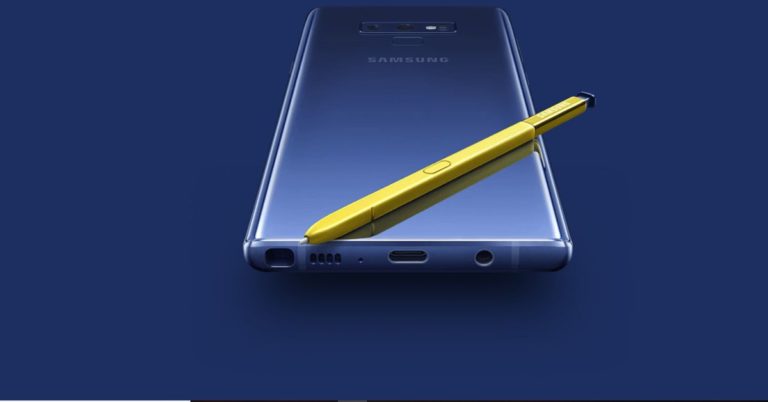
Samsung Galaxy Note 8 sports a 6.3-inch Super AMOLED Infinity Display with QHD+ resolution. It is powered by the Exynos 8895 SoC and comes with 6GB of RAM. Being a part of the Galaxy Note series, Samsung Galaxy Note 8 equips the infamous S-pen which can be used in a number of ways. The smartphone features a dual-rear camera setup which comprises of a 12MP primary camera paired with an 8MP secondary camera. On the front, there is an 8MP camera for selfies and video calls. Samsung Galaxy Note 8 packs a 3,300mAh battery with fast charging and wireless charging support.
Coming to Samsung Galaxy J6, it will sell for Rs 9,490 during the Flipkart’s Big Shopping Days sale. Additionally, there will also be an extra 10% cashback if the purchase is made using the HDFC Credit or Debit cards.
Samsung Galaxy J6 comes with 5.6-inch display and is powered by the Exynos 7870 SoC. It packs a single rear camera which comprises of a 13MP sensor, while on the front, there is an 8MP selfie camera. The Galaxy J6 comes in two variants – 3GB RAM/ 32GB storage and 4GB RAM/ 64GB storage. The smartphone packs a 3,000mAh battery and supports a microSD card up to 256GB.
Other than Samsung smartphones, the Flipkart Big Shopping Days sale is offering discounts and offers on many smartphones from different OEM makers. And other than smartphones, the sale is also offering offers on mobile accessories, power banks, mobile covers, tablets, laptops, televisions, gaming consoles and much more. But it is not just limited to electronics as the Big Shopping Days sale is offering offers on a number of categories ranging from household to fashion to electronics.
Oppo’s sub-brand Reno has already launched its Reno and Reno 10x Zoom and the Reno 5G smartphones last month. Although these devices have not yet come to India, but the company has announced that the Oppo Reno smartphones will make their way to the Indian market on May 28. Currently, these devices are being sold in the Chinese and the European markets only. But now, according to a new leak, the company is planning to launch a new affordable Reno smartphone in China. It was spotted on the TENAA listing which reveals some of its key specifications and what it looks like.
Although the exact name of the device is currently unknown, it might be called the Oppo Reno Lite or the Oppo Reno Z.
In This Article
Oppo Reno Z price (expected)
The leaked Oppo Reno Z or Reno Lite will be priced at a starting price of $380 (approximately Rs 26,500). It will come in four colour options – Star Purple, Extreme Night Black, Coral Orange, and Bead White.
Oppo Reno Z specifications and design
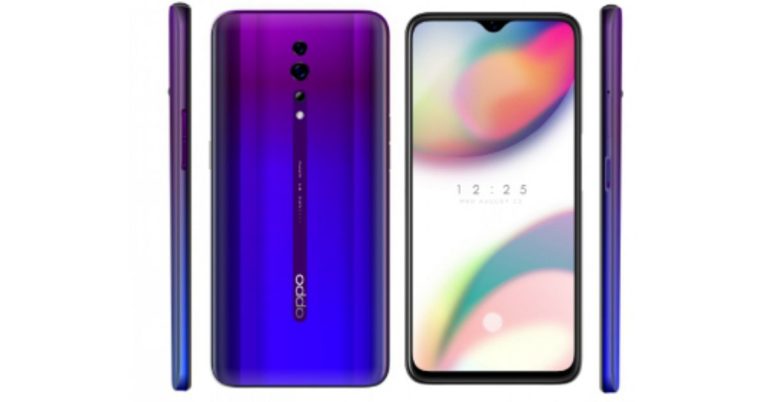
Talking about the design of the device, it looks similar to the other Oppo Reno smartphones launched before it. But since it is a mid-range segment smartphone it won’t have the shark-fin pop-up selfie camera. Instead, it will have a water-drop notched display and it will house a front LED flash next to the O-Dot ceramic point.
The Oppo Reno Z/ Reno Lite sports a 6.4-inch AMOLED Full-HD+ (2340 × 1080 pixels) display with an aspect ratio of 19.5:9. It is expected to be powered by the MediaTek Helio P90 CPU clocked at 2.2GHz paired with IMG PowerVR GM 9446 GPU. The TENAA listing reveals that the Oppo Reno Z will have 6GB of RAM and 128GB of internal storage, but it won’t support microSD card. The device could run Android 9 Pie skinned with ColorOS 6.0 and will reportedly come with an in-display fingerprint scanner. The handset will pack a 3,950mAh battery with VOOC 3.0 20W flash charge support.
On the camera front, the OPPO Reno Z is reported to sport a dual-rear camera setup which comes with a 48MP main sensor paired with a 5MP lens. However, the details of the front camera are currently not known.
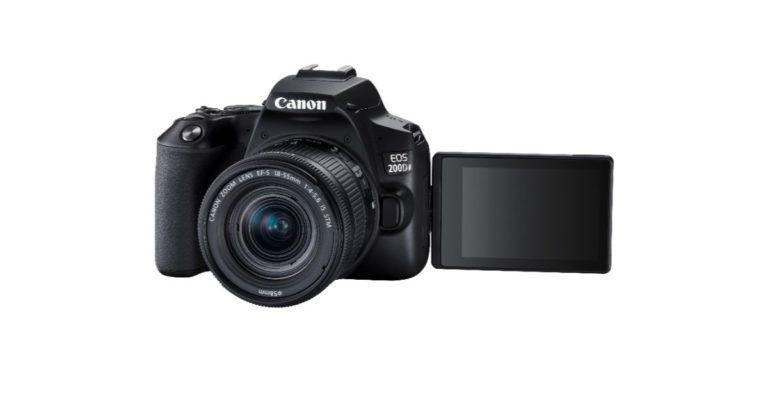
Japanese multinational corporation Canon has today announced the launch of its compact and lightweight DSLR camera – EOS 200D II – in India. The newly launched Canon EOS 200D II DSLR camera is priced at Rs 52,995 if you buy it with the EF-S18-55 IS STM Kit. If you want the EF-S18-55 IS STM + EF-S55-250 IS STM double zoom kit along with the camera, you would have to pay Rs 65,995.
It is worth mentioning that the latest DSLR camera from Canon comes with a 24.1MP APS-C CMOS sensor, which is coupled with a DIGIC 8 processor that ensures that the user gets sharp and vibrant images. The latest offering from Canon has an ISO range of 100 to 25,600, which can be expanded up to ISO 51,200. The camera comes loaded with Dual Pixel CMOS AF technology that helps in focussing quickly on objects and the company ensures that it can even do so when used in lowly-lit areas. In addition to this, the device also comes with an Auto Lighting optimiser.
According to Canon, this enables the camera to capture dramatic scenes like sunrise or sunset or rich colours of a grass field. Furthermore, Canon EOS 200D II DSLR camera has a Creative Assist function that helps in navigating through various settings in order to get the desired effect. The camera from Canon also has an eye-detection autofocus feature that is claimed to track the subject’s eyes even when they are moving.
The Canon EOS 200D II DSLR camera comes with a vari-angle 3.0-inch LCD touch screen that has 1.04 million dots pixels. It also has the capability of recording 4K videos and can be used to make 4K time-lapse movies.
Coming to the connectivity, the newly launched Canon EOS 200D II comes with one-touch Wi-Fi button, which can be used for uploading photos on social media platforms or even to cloud storage. Users will also have the option of transferring photos to a smart device and control various settings of the camera like shutter speed, self-timer, focus selection and others using the Canon Camera Connect app. The device also has a built-in Bluetooth low energy that helps it to stay connected for quick access.
Speaking about the product, Mr Eddie Udagawa, Vice President, Consumer Imaging and Information Centre, Canon India said, “With the increasing interest in photography, consumers are now looking for products that are not only feature-rich but also convenient to use and carry. Keeping abreast with their evolving requirements, we are delighted to launch Canon EOS 200D II DSLR, which aims to facilitate a convenient, hassle-free and an enjoyable experience to photography enthusiasts. Powered by 24.1 megapixel APS-C CMOS sensor and the latest DIGIC 8 image processor, the camera will enable users create vibrant and sharp images with every click. On top of an intuitive interface, EOS 200D II is loaded with features that will enhance portrait shots and seamless connectivity for users to share their snapshots instantly. With the new product, we are positive that photographers at all levels will feel empowered to capture their everyday, fleeting moments that inspire them.”
Computer and electronics maker Lenovo unveiled the world’s first foldable laptop in its Lenovo Accelerate event. The company previewed the concept foldable PC which is similar to the foldable smartphones but still different. The foldable PC is named Lenovo ThinkPad X1 and it belongs to the ThinkPad-series of laptops. The company says that the new laptop is aimed at highly mobile and tech-savvy professionals who want the best hardware with portability.
According to Lenovo, the ThinkPad X1 is neither a phone, nor a tablet but it is a full-fledged laptop with a foldable screen. And since it is a concept machine, the price, availability or other major details hasn’t been revealed by the company yet.
The Lenovo ThinkPad X1 sports a 13.3-inch (when unfolded, on being folded it is 9.6-inches) OLED 2K display made by LG Display with thin bezels. When unfolded, it looks like a huge tablet, but when folded, it looks like a laptop without a keyboard. It is powered by Intel CPUs and runs Windows operating system. The CPU and the Windows version used in it is currently not available but Lenovo has said that the Lenovo ThinkPad X1 will go on sale in 2020.
It comes with features such as stereo speakers, and a pair of USB Type-C ports along with an infrared camera. It also supports Bluetooth Keyboard along with support for Wacom pens to use as a stylus. The Lenovo ThinkPad X1 can also offer a full-day of battery life to the users.
The users can position the Lenovo ThinkPad X1 as per their use, they can use it as a replacement for their laptops or make it work as a PC. It utilizes a torque hinge which enables the screen to be positioned at different angles without breaking. It can also be positioned as a regular laptop. Even though it is a concept device it is still a product in the Lenovo’s ThinkPad line-up of laptops so it will give similar performance and quality the series is known for. Lenovo has used double hinge cycles so that the fold-unfold cycle of the Lenovo ThinkPad X1 doesn’t put a strain to the device or break it.
Lenovo Thinkpad X1
According to Lenovo, it took three years of development to develop the Lenovo ThinkPad X1. When launched for commercial use in 2020, the Lenovo ThinkPad X1 will open a new way for portable PCs. But on the other hand, if things don’t go right, it too could end up as the Samsung Galaxy Fold.
Lenovo’s ThinkPads are one of the best looking and premium laptops with good specifications produced by the company. Lenovo has brought a new line-up of laptops which will hold the specifications of the Lenovo ThinkPad but will have a much lesser price – the Lenovo ThinkBook series. The Lenovo ThinkBook series of laptops are meant for small and medium business owners who wants to get good specifications at an affordable price. The new Lenovo ThinkBook laptops are launched in the ThinkBook S-series – the Lenovo ThinkBook 13s and the Lenovo ThinkBook 14s.
Both the newly launched Lenovo ThinkBook laptops offer an ultra-slim design, a touch fingerprint reader along with a physical ThinkShutter camera cover. They come with spill resistant keyboard, Full-HD display and offer up to 11 hours of battery life.
In This Article
Lenovo ThinkBook 13s and Lenovo ThinkBook 14s price and availability
The Lenovo ThinkBook 13s will come with an expected price of $729 (approximately Rs 51,300) while the Lenovo ThinkBook 14s will reportedly be priced at $749 (approximately Rs 52,700).
The ThinkBook 14s will be made available from May 2019 onwards while the ThinkBook 13s will be selling in the US first. Although the India availability of the new ThinkBook S-series is not known but it is expected to be announced in the Indian market in the coming weeks.
Lenovo ThinkBook 13s and the Lenovo ThinkBook 14s specifications and features
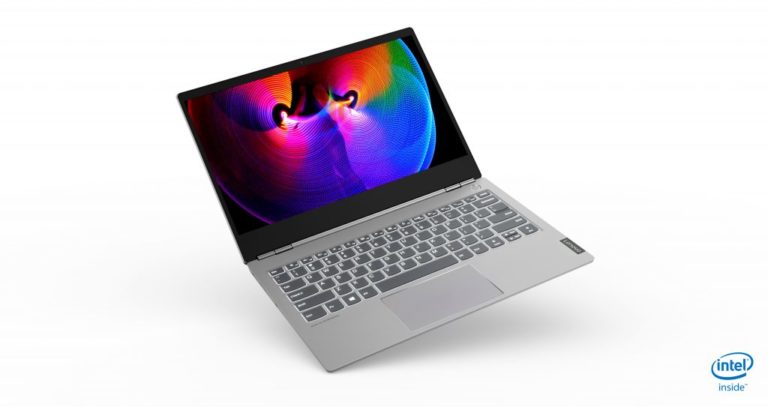
Lenovo ThinkBook 13s will be sporting a 13-inch Full-HD display with narrow bezels and it has a 180-degree rotation flexibility. The device is made of aluminum and magnesium metal. It comes in Mineral Grey colour finish and weighs 1.34kgs. The ThinkBook 13s supports Rapid Charge which can charge 80% of battery in just one hour. It can give up to 11 hours of battery life.
While on the other hand, Lenovo ThinkBook 14s comes with a 14-inch Full-HD display with narrow bezels. Similar to the ThinkBook 13s, the ThinkBook 14s as well is made out of aluminium and magnesium. It too comes win a Mineral Grey Colour finish but it weighs 1.5kgs. The new Lenovo ThinkBook 14s can offer up to 10 hours of battery life.
Both the laptops are powered by the 8th Generation Intel Core CPUs and come with SSD for faster bootups and performance. They come in optional GPU variants and the customer can either go for the Integrated Intel UHD 620 or the AMD Radeon 540X. Both the new ThinkBook S-series laptops comes with dual-array microphones support and pack dual-speakers from HARMAN. They also come with Skype Hot Keys which gives the users simple access to Skype calling and one key answering/ hang-up option.
As mentioned above, both the ThinkBook 13s and the ThinkBook 14s comes with touch fingerprint reader and Physical ThinkShutter camera protection for security and privacy. They have the Discrete TPM 2.0 for the user data encryption and their hinges are coated in Indium metal to reduce the Wi-Fi interference.
Digital payments company Paytm has partnered with Citibank to launch its first credit card called Paytm First Card. The Paytm First Card will come with unlimited cash back and will be accepted in India, as well as in other countries across the globe.
The company has issued a statement talking about it which says that the card can be taken from Citibank and it does not involve any hidden fees or other charges. If the expenses made by the card exceed Rs 50,000 per year, the annual fee of Rs 500 will also be waived off completely.
The company has also added that Paytm is offering an equated monthly instalment (EMI) option on the purchases that the customers will make via the card.
Speaking about the newly launched card, Vijay Shekhar Sharma, chairman and CEO of One97 Communication, said, “We are delighted to partner with Citi to launch the PaytmFirst Card. Our new offering is designed to bring the utmost flexibility to our customers in their digital payment options and will help spur large-ticket cashless payments. We are confident of getting a very good response from our customers.”
If you use Paytm, you can also apply for the credit card using the Paytm app on your smartphone. On getting the credit card, you will be awarded Paytm promo-codes worth Rs 10,000 on spending a minimum of Rs 10,000. However, this value has to be reached within the first four months of the card being issued, the company has specified.
You would also be able to track various transactions of the credit card using the Paytm First Card passbook on your Paytm app. The app will also show you exclusive offers from Paytm as well as Citibank on a real-time basis.
It is worth mentioning that the parent company of Paytm, One97 Communication, started out as a Citi Commercial Banking client in 2009. Later in 2016, Paytm wallet got integrated with Citibank’s online and mobile app to make things easier for customers of the bank.
“Paytm First Card gives us the opportunity to extend our expertise in credit card services to a new all-digital consumer base,” said Stephen Bird, CEO, Global Consumer Banking, Citi. “What began as an institutional relationship for Citi has grown into a stronger and deeper partnership across the Citi franchise. Today’s announcement affirms how Citi is establishing itself globally as the partner of choice to accelerate growth for our partners, customers, and business.”
Facebook-owned WhatsApp suffered an attack from hackers earlier this month. WhatsApp today acknowledged the attack saying that there was a vulnerability in the application which allowed the hackers to remotely install the spyware on iOS and Android smartphones running the app. The vulnerability or bug was found in the call feature of WhatsApp. So, when the call was made, it let the spyware to be installed to the devices even when the call wasn’t answered.
According to a report by TechCrunch, the hackers taking advantage of this security flaw installed Israeli Spyware named Pegasus. The spyware was from the NSO Group which is normally licensed to governments. The governments use it to install the spyware on devices of individuals who are under investigation.
But not all WhatsApp version were affected by this security flaw. This issue was found in the WhatsApp for Android holding version earlier than the v2.19.134. It also affected the WhatsApp Business for Android (versions earlier than the v2.19.44) and versions earlier to v2.19.51 of the app’s iOS version were affected. The WhatsApp Business for iOS version earlier than the v2.19.51 and the WhatsApp for Windows Phone version earlier than the v2.18.348 were also affected with this security flaw. Lastly, the WhatsApp for Tizen with version earlier than the v2.18.15 was affected as well.
According to WhatsApp, only a very small number of users became the target of this flaw and spyware. Till now it is not known just how many users were affected with the spyware or this bug and how long was this flaw active for the hackers to notice. According to the company, it is “nontrivial to deploy, limiting it to advanced and highly motivated actors.” The company also said that once the flaw was discovered, it took less than 10 days for them to make the changes to WhatsApp’s infrastructure and make the spyware inoperable. The WhatsApp servers were updated on Friday so the flaw was repaired/removed. Additionally, it has also released another patch fixing the platform.
According to WhatsApp’s statement to TechCrunch, “WhatsApp encourages people to upgrade to the latest version of our app, as well as keep their mobile operating system up to date, to protect against potential targeted exploits designed to compromise information stored on mobile devices.”
Although the Facebook-owned messaging service company has notified the Department of Justice and other human rights organisations. About this regard, the NSO Group said to The Financial Times that it is investigating the issue but it has no involvement about how its code is used or where.
Spotify launched its services in India back in March 2019. After that, it has been focusing intently on growing in the market. And now, the music streaming platform has announced the launch of a new and lighter version of its application – Spotify Lite. The Spotify Lite is built for the low-end and budget-centric smartphones using the Android platform. The size of the Spotify Lite app is 10MB and it is brought to India after being tested in markets of Indonesia, Philippines, Malaysia, Mexico, and Brazil.
The Spotify Lite application is a lighter and watered-down version of the main application but it looks and feels similar to the main Spotify app. Currently, the Spotify Lite beta version is live on Google Play Store and is available for the beta users in India. The Spotify Lite application does what its name suggests, it uses less space in a smartphone, it uses less data when streaming music. The new Lite app can even work in older Android smartphones with limited storage capacity.
The Spotify Lite app can be downloaded separately and installed in the same phone without the one affecting the other’s performance. The Beta users of the application can download it and test it on their devices.
Speaking about the new app, Amarjit Batra, Managing Director of Spotify India told IANS, “When Spotify launched in India two months ago, we had committed to localising the app so that more and more people can listen to music… Spotify Lite Beta is a step in that direction as it enables users to play millions of songs for free, takes up less space on phones, and saves data when used on the go. Our ambition is to be available on all platforms that make sense to our users, and make the music streaming experience as seamless as possible.”
The Spotify Lite application works similar to the main app, it lets the user keep track of and play his songs and artists on demand. The lite app also gives the users the ability to discover new music, keeps track of the storage, can control over the cache and the ability to clear it. Other than that, being a lite version of the main application, the Spotify Lite can work on low-end Android smartphones and in all network conditions.
Spotify claimed that after the application was brought to India, it has gathered over one million followers within a week of its launch. Spotify is offering more than four crore songs and over 300 crore playlists from which the users can choose any type of music he wishes to listen.
Chinese smartphone brand Xiaomi’s sub-brand Redmi’s first flagship smartphone has been in headlines for a few weeks now. Today, the company has confirmed that the upcoming smartphone will be called Redmi K20. Redmi’s General Manager Lu Weibing also explained that the ‘K’ in ‘K20’ stands for Killer, adding that the K-series will comprise of the company’s performance-driven flagship handsets.
We should mention that this announcement from Redmi comes a day after tipster Ishan Agarwal leaked that the flagship device by the company will be called Redmi K20. He also added that the company may also launch a Pro variant of the Redmi K20 handset. It is worth mentioning that this is not the first time that the Redmi K20 Pro has been tipped about. However, there is no word from the company about the Redmi K20 Pro.
Redmi took to Weibo to announce that the much-talked-about flagship smartphone will be called as the Redmi K20. Weibing also announced the same on Weibo and added that the company will be announcing all its flagship smartphones under the K-series from now on. as we mentioned earlier, ‘K’ in the new series will stand for ‘Killer’.
Just a day before this, Weibing also posted a poll that asked users to guess the name of the upcoming flagship smartphone and the options he wrote included K20, P20, T20, and X20. He also added that the company will be revealing the name today. It has now been confirmed that the flagship device by Redmi will be called as Redmi K20.
A recent leak also suggests that the flagship smartphone will come in two variants – the Redmi K20 and Redmi K20 Pro. It is worth pointing out that one among these two devices will be launched in India as POCO F2. In addition to this, Redmi K20 Pro is said to come with a massive 4,000mAh battery and the presence of a 48MP primary sensor is also tipped. It will also reportedly come with a pop-up selfie camera.
The Chinese smartphone brand has also confirmed that the flagship device will have an in-display fingerprint scanner and a super-wide angle sensor. It is also touted to offer a 2-day battery life. The handset is said to come with a pop-up selfie camera.
We should mention that Xiaomi touted the POCO F1 to be the most affordable smartphone in India to come with Qualcomm Snapdragon 845 processor, which was the most powerful one at the time of the launch.
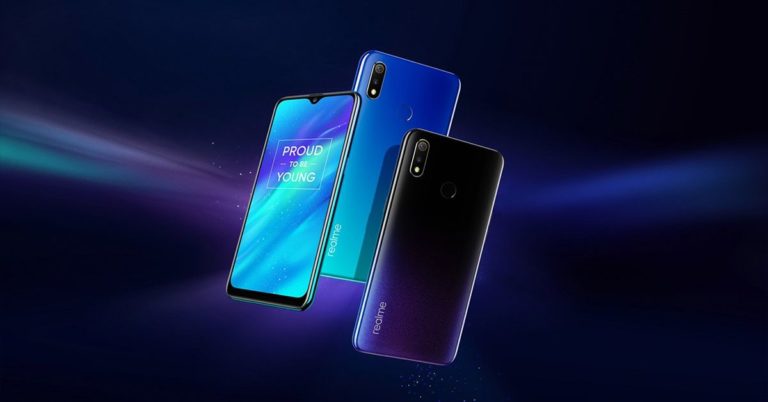
The Realme C2 smartphone will be going on its first sale on May 15, Wednesday. The Chinese smartphone brand has made an announcement that the first sale of the handset will be held on May 15 while the second sale will start on May 24. The two will be followed by a third on May 31. Some of the highlights of the Realme C2 is that it is powered by the MediaTek Helio P22 CPU and sports a 19.5:9 screen. It also comes with a diamond-cut design with three-layer painted back panel. Here are the price details and specifications of Realme C2:
In This Article
Realme C2 price in India
The Realme C2 with 2GB RAM/ 16GB storage will sell at Rs 5,999 while the 3GB RAM/ 32GB storage variant of the device can be picked up at Rs 7,999. The Realme C2 will come in two colour options – Diamond Blue and Diamond Black.
The first sale of the Realme C2 will start on May 15 at 12pm (noon). It can be purchased on Flipkart and Realme’s official website. Other than that, the second and the third sale of the Realme C2 will take place on May 24 and May 31 respectively.
Launch offers of the Realme C2 includes mobile protection program from Flipkart for Rs 199.
Realme C2 specifications and features
The newly launched Realme C2 sports a 6.1-inch HD+ (720 x 1560 pixels) display with an aspect ratio of 19.5:9 and Corning Gorilla Glass 3 protection on top. The device is powered b the octa-core MediaTek Helio P22 SoC paired with 2GB/3GB of RAM. It runs Android 9 Pie skinned with ColorOS 6.0 and comes with dual-SIM (Nano) support. As mentioned above, the Realme C2 comes with 16GB and 32GB storage options with microSD card support of up to 256GB. The device packs a 4,000mAh battery and has a rear-mounted fingerprint scanner.
On the camera department, the Realme C2 features a dual rear camera setup which has a 13MP primary sensor with an f/2.2 aperture and a pixel size of 1.12 microns. The secondary camera includes a 2MP lens with an f/2.4 aperture and a pixel size of 1.75 microns. On the front, there is a 5MP selfie camera with an f/2.0 aperture. The Realme C2 is a budget-centric smartphone but still it comes with features such as slow-motion video recording at 80fps/ 480p. The front camera of the Realme C2 also comes with artificial intelligence (AI) powered features to enhance selfies along with an AI Face Unlock functionality.
Other features of the Realme C2 includes 4G VoLTE, Wi-Fi, Bluetooth v4.2, GPS/ A-GPS, Micro-USB, and a 3.5mm headphone jack. While the sensors of the Realme C2 includes an accelerometer, ambient light, magnetometer sensor, and a proximity sensor.
The much-awaited OnePlus 7 and the OnePlus 7 Pro are set to launch today, at simultaneous events at Bengaluru, London and New York. Leaks about the devices have been circulating for months now and a lot of them suggest that that they will come with industry-changing technology. Read on to find out how to watch the livestream of the launch, expected prices of the devices and more.
In This Article
OnePlus 7-series launch event livestream
As the company has scheduled simultaneous launches around the world the timings of the launch will be different. In Bengaluru, the OnePlus 7-series will be launching on May 14 at 08:15pm IST. While in London, it will be 4pm BST, May 14 and in New York, the event will start from 11am EDT, May 14.
In Bengaluru, the event will be hosted in the Bengaluru International Exhibition Centre. In London, the event will be hosted at Printworks, while in New York, it will take place at Pier 94.
Interested people can watch the Bengaluru’s OnePlus 7-series launch event livestream on OnePlus’s official India website along with OnePlus’s YouTube India page. Currently, the livestream link of the Bengaluru event is not available. But the livestream link of the London and New York events are available. Interested fans can visit the links to watch the livestream.
OnePlus 7 and the OnePlus 7 Pro price (expected)
Prior to the launch of these devices, there were leaks which revealed the prices of both the smartphones. The OnePlus 7 Pro with 6GB RAM/ 128GB storage is expected to be priced at Rs 49,999, while the 8GB RAM/ 256GB storage variant of the device will be priced at Rs 52,999. The top-end variant of the OnePlus 7 Pro with 12GB RAM/ 256GB storage will reportedly be priced at Rs 57,999.
Before the launch of the device, Amazon India has started taking pre-orders of the smartphone with Rs 1,000 booking price. Reliance Digital as well as Croma too have started the pre-bookings of the OnePlus 7-series with Rs 2,000 pre-booking charge. Pre-booked customers of the OnePlus 7 Pro will also be getting a 6-months free screen replacement worth Rs 15,000.
The OnePlus 7 on the other hand is expected to start from Rs 39,500 onwards. Reliance Jio has also partnered with OnePlus to offer the customers of OnePlus 7 and the OnePlus 7 Pro benefits worth Rs 9,300.
OnePlus 7 Pro specifications (expected)
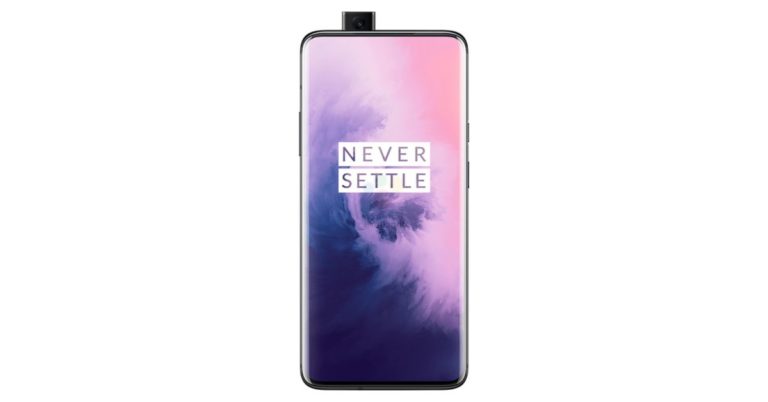
The OnePlus 7 Pro will reportedly sport a 6.67-inch 90Hz refresh rate QHD+ display which has already received an A+ from DisplayMate. Its display will also support the HDR10+ display standards along with Netflix HDR streaming. There won’t be a notch on the display as the device will be holding a pop-up selfie camera. It will be powered by the Snapdragon 855 SoC paired with 6GB, 8GB and 12GB of RAM. OnePlus 7 Pro will be available in 128GB and 256GB storage options. But it will support the UFS 3.0 storage which the company has touted to be a first in the smartphone industry. The smartphone is expected to come with a 4,000mAh battery with 30W Warp charge support.
On the camera department, the OnePlus 7 Pro will be housing a triple-rear camera setup which will reportedly feature a 48MP main camera with an f/1.6 aperture and OIS. The secondary camera will be a 16MP wide-angle lens with an f/2.4 aperture paired with an 8MP sensor with an f/2.4 aperture. The rear camera of the OnePlus 7 Pro is expected to have the 3x optical zoom. While the front camera will have a 16MP selfie sensor with an f/2.0 aperture.
OnePlus 7 specifications (expected)
The OnePlus 7, on the other hand, will come with a 6.4-inch Full HD+ display with 60Hz refresh rate. It will also be powered by the Snapdragon 855 SoC and will pack a 3,700mAh battery with support of fast charging. Unlike the OnePlus 7 Pro, the OnePlus 7 will be holding a waterdrop notched display similar to the earlier 6T. The smartphone is expected to have a dual-SIM support and will run Android 9 Pie skinned with OxygenOS.
On the camera department, the smartphone will feature a dual-camera setup at the back. The main camera will reportedly be a 48MP sensor paired with an unknown sensor. On the front, it will house a waterdrop notched selfie camera.
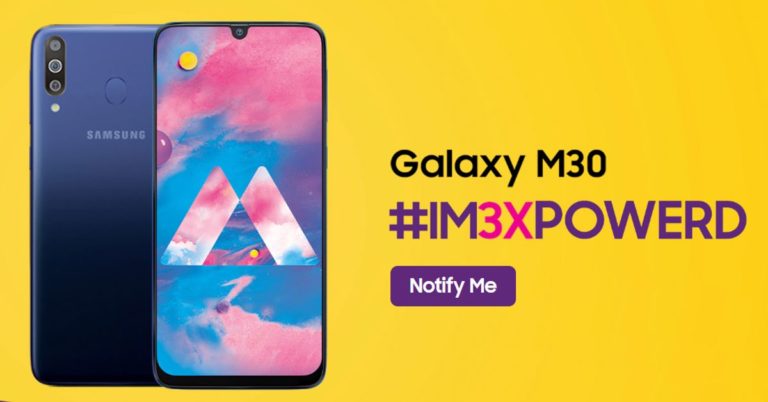
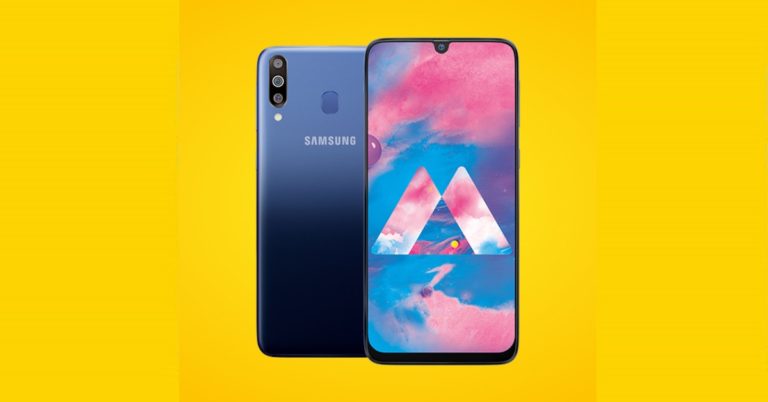
Samsung Galaxy M30 and Galaxy M20 smartphones will be going on sale in India via Amazon India and Samsung Online Shop today. The company launched both Samsung Galaxy M30 and Galaxy M20 earlier this year and said that both the devices are targeted at millennials.
The smartphones are powered by Samsung’s own Exynos processors and house 5,000mAh batteries. Here’s a look at all the details about the sale of Samsung Galaxy M30 and Galaxy M20 in India today:
In This Article
Samsung Galaxy M30, Galaxy M20 price in India
The 4GB RAM/64GB storage variant of Samsung Galaxy M30 costs Rs 14,990, while the 6GB RAM/128GB storage model costs Rs 17,990. The handset is available in Gradation Black and Gradation Blue colours.
Coming to Samsung Galaxy M20, its 3GB RAM/32GB storage variant is available for Rs 10,990, while its 4GB RAM/64GB storage model is priced at Rs 12,990. It is available in Charcoal Black and Ocean Blue colour options. Both the smartphones are set to go on sale via Amazon India and Samsung Online Shop at 12 pm IST
Samsung Galaxy M30 specifications
Samsung Galaxy M30 runs Android 8.1 Oreo skinned with the company’s own Experience v9.5 and features a 6.4-inch full-HD+ Super AMOLED Infinity-U display that has an aspect ratio of 19.5:9. Powered by an octa-core Exynos 7904 processor, the smartphone comes with up to 6GB of RAM.
For imaging duties, Samsung Galaxy M30 has a triple rear camera setup that comprises of a 13MP primary RGB sensor, a 5MP depth sensor, and a 5MP ultra wide angle lens. There is a 16MP front-facing snapper that can be used for selfies and video calls. The device has 128GB of storage and can hold a microSD card of up to 512GB. The smartphone houses a 5,000mAh battery.
Samsung Galaxy M20 specifications
Samsung Galaxy M20 runs Android 8.1 Oreo with Samsung Experience 9.5 UX on top. It has a 6.3-inch full-HD+ Infinity-V display that has an aspect ratio of 19.5:9. Powered by an Exynos 7904 SoC, the device comes with up to 4GB of RAM coupled with Mali-G71 MP2 GPU.
For imaging duties, there is a dual rear camera setup that comprises of a 13MP primary sensor and a 5MP ultra-wide sensor. There is also an 8MP sensor for selfies and video calls.
The handset has 64GB of onboard storage and can hold a microSD card of up to 512GB. It houses a 5,000mAh battery.
Using various online services definitely makes our life so much easier. Take Google as an example. What would we even do without it? But then, it also makes us vulnerable to various risks on the internet. It’s a popular saying that anything that is on the web is not safe. However, there are certain measures that you can take to add a layer of security on your accounts on various platforms. By doing this, you will be able to use the service and your data will remain secure at the same time.
Among the most basic things that you can do is keeping a strong password that has letters of both upper and lower cases, numbers and special characters. In addition to this, it is also often advised that having a unique password for all online services is better than having one password for all.
However, having just a strong password is not enough. Luckily, the option of two-factor authentication is gaining more and more popularity by the day. Once you enable it, you would receive a notification whenever someone (even you) try to log in to your account, particularly if it’s happening from a new, unknown device.
So, if someone tries to hack your account, you would be informed immediately and can then take corrective actions like changing passwords. Today, we’ll be telling you how you can turn on two-factor authentication for your Google account. Since having access to your Google account can give anyone access to your Photos, Drive, Gmail and other connected services like YouTube, there is actually a lot that you have on stake if it gets hacked.
Here’s how you can enable two-factor authentication on your Google account:
Head over to the main two-factor authentication landing page.
Click on ‘Get Started’. You will then be asked to log in.
Enter your details and your phone number.
You will then have to choose if you wish to receive verification codes via a text message or a phone call.
You would also be given the option of using prompts that enable you to click ‘Yes’ or ‘No’ whenever a login attempt occurs.
You can also choose to generate a security link.
In addition to this, we should add that Google gives its users the option of generating backup codes that can be used for offline access. You can generate up to ten at a given time and they can be used only once.
OnePlus is about to launch its OnePlus 7-series smartphones today at simultaneous events in India, the United States and Europe. OnePlus 7 and the OnePlus 7 Pro will be launched with a “Beyond Speed Offer” in India and the company has teamed up to offer benefits worth Rs 9,300. Reliance Jio is offering an instant cashback worth Rs 5,400 on the first recharge of Rs 299. Other than that, there will also be additional partner benefits worth Rs 3,900 for the customers who will be availing the new offer. All these offers will be made available for old as well as new Jio subscribers.
The offer is named the “Jio Beyond Speed Offer” and it will be offering an instant cashback of Rs 5,400. This offer can be availed by new as well as old customers of Reliance Jio, but they would have to recharge from Rs 299. The cashback will be made available in the form of 36 vouchers in the form of Rs 150 each in the MyJio app.
The OnePlus 7 and the OnePlus 7 Pro customers after getting the recharge with Rs 299 under the Jio Beyond Speed Offer, will be offered 3GB data for 28 days. Along with data, they will also be given unlimited voice calls, SMS along with access to all the Jio applications. These Jio applications include the Jio TV, Jio Cinema, Jio News etc.
The Reliance Jio users will also get additional partner benefits worth Rs 3,900. The Rs 3,900 benefits include a discount worth Rs 2,000 or 20% whichever is lower on purchases made through Zoomcar. It also includes Rs 1,550 discounts on flight tickets, hotel bookings along with 15% discounts on bus bookings. Additionally, there will also be Rs 350 discounts on minimum spends of Rs 1,699 through Chumbak.
The OnePlus 7 and the OnePlus 7 Plus will go on its global launch on May 14. The Chinese smartphone maker will be holding launch and press events in three countries simultaneously for the first time. The sale of the OnePlus 7 and the OnePlus 7 Plus will go live from May 19. And the Jio Beyond Speed Offer will be available to Jio subscribers, old and new.
Chinese smartphone brand OnePlus will be making its OnePlus 7 and OnePlus 7 Pro handsets official today. Over the last few weeks, the company has shared a number of teasers about its flagship OnePlus 7 Pro smartphone that has revealed some bits of information about it. Here’s everything that we are expecting to see in the upcoming OnePlus 7 Pro smartphone:
In This Article
Upgraded display
oneplus 7 pro Image credit: Ishan Agarwal
OnePlus has made sure that we all know that the display of the upcoming OnePlus 7 Pro will be a major talking point. The company announced that the smartphone has been awarded the A+ quality rating by DisplayMate. OnePlus has claimed that the device’s display comes with a ‘Safety for Eyes’ certification from VDE Testing and Certification Institute. The smartphone maker has also partnered with Netflix to get the display certified for Netflix HDR content. According to reports, the smartphone’s display will come with a QHD+ resolution with a refresh rate of 90hz.
The most powerful processor
Image courtesy: Sudhanshu Ambhore/ Twitter
OnePlus 7 Pro will be powered by Qualcomm’s Snapdragon 855 SoC, which is currently the most powerful processor in the world. OnePlus has always used flagship processors from Qualcomm, so we aren’t expecting it to do anything different this time.
Triple camera setup on the back
One of the OnePlus teasers has confirmed that the OnePlus 7 Pro smartphone will feature a triple rear camera setup. While the company still has to confirm the sensors that have been used, camera samples shared by the company indicate that it will come with a telephoto lens and a 3x optical zoom lens. Speculations suggest the presence of a 48MP primary camera, an 8MP telephoto lens and a 16MP wide-angle sensor.
A pop-up selfie camera
Image courtesy: WinFuture
Triple rear cameras would not be the only thing to look forward to in OnePlus 7 Pro. This is because the device will reportedly come with a pop-up selfie camera module, which also means that it would have a full-screen display.
A faster UFS 3.0 storage
Image courtesy: Pricebaba, @Onleaks
The company has confirmed that the OnePlus 7 Pro smartphone will come with UFS 3.0 storage. This means that it will offer faster sequential read-write speeds, provide quicker app launch time, take lesser time to load games, etc. It is touted to be the first smartphone to come with UFS 3.0 storage.
Enhanced vibration motor
Image courtesy: The Verge
OnePlus 7 Pro will come with a new vibration motor that is touted to be twice as strong as OnePlus 6T‘s. The users will also have the option of tweaking the vibration output and select between three levels of vibration intensity for the notifications that they get on their phone.
A bigger battery
Image: Winfuture
OnePlus 7 Pro is tipped to house a 4,000mAh battery that will have support for 30W Warp Charge. However, it has already been confirmed that the device will not have support for wireless charging.
Stereo speakers
While not much is known about the audio hardware of the smartphone, but a leak suggests that it will come with stereo speakers. However, it is not clear whether the handset will feature a mono-speaker or a dual stereo speaker hardware.
Some level of water resistance
OnePlus recently shared a video that showed OnePlus 7 Pro being dropped in a bucket of water. Although the company did specify that the smartphone does not come with an IP rating, the teaser suggests some level of water resistance.
Expected pricing
Ahead of the launch, the price of the handset has also been leaked. The 6GB RAM/128GB storage model of OnePlus 7 Pro is expected to be priced at Rs 49,999, while its 8GB RAM/256GB storage version will cost Rs 52,999. The OnePlus 7 Pro variant that will come with 12GB of RAM and 256GB of internal storage is expected to bear a price tag of Rs 57,999.
The Nokia 8.1 was launched back in December 2018 with a price tag of Rs 26,999 for the 4GB RAM/ 64GB storage variant. While its 6GB RAM/ 128GB storage variant cost Rs 29,999 and was launched in February 2019. And now, as we reach midway through May 2019, Nokia 8.1 receives a price cut of Rs 6,000 during the Nokia Phones Fan Festival. In the ongoing sale, Nokia 7.1 and Nokia 6.1 Plus along with Nokia 8 Sirocco are getting discounts worth Rs 1,000.
But it should be noted that the discounts are valid from Monday May 13 only till the smartphones remain in stocks. Interested buyers can reach the Nokia website and get the discounts. According to the official Nokia India’s website, Nokia 8.1 with 4GB RAM has received a price cut of Rs 6,000. But the customers will have to use the promocode “FAN6000” to get the said discount. Similarly, the Nokia 8.1 with the 6GB RAM has received a price cut of Rs 4,000 and it can be availed by using the promocode “FAN4000”. The new price cuts come days after the company announced a temporary price cut on Nokia 6.1 Plus and the Nokia 5.1 Plus smartphones.
Other than the Nokia 8.1, the Nokia 7.1 smartphone has also received a price cut worth Rs 1,000. And as mentioned above, the Nokia 6.1 Plus with both the 4GB RAM and the 6GB RAM has received a discount of Rs 1,000. Even the Nokia 8 Sirocco has received similar Rs 1,000 off from its original price. To get the smartphones with the discounted prices, the customers will have to use the promocode “FANFESTIVAL” when buying any of the three mentioned smartphones. As mentioned above, the discounts end on Monday itself at 11:59pm. All these new price cuts and discounts are part of the Nokia’s ongoing Nokia Phones Fan Festival sale. The sale is currently live on the official Nokia’s India website only.
Other than the above-mentioned smartphones, the Nokia 6.1 and the Nokia 5.1 Plus have also received a limited period price cut. Furthermore, the telecom operator Airtel has also added additional 240GB data on the purchase of these two smartphones during the sale. The price cut was announced by HMD Global last week. The Nokia 6.1 Plus with the 4GB RAM variant along with the 3GB RAM variant of the Nokia 5.1 has received a promotional price cut of Rs 1,750.
Chinese smartphone brand Oppo has slashed the price of its F11 Pro smartphone in India by Rs 2,000. Both the variants of Oppo F11 Pro – with 64GB storage as well as with 128GB storage – have received a price cut. It is worth noticing that the revision comes just days after the company started selling Oppo F11 Pro’s 128GB storage model on Amazon India’s website. The smartphone brand is also set to get the Oppo F11 handset in the country soon. The device was launched in March, but it is yet to go on sale in the country.
According to a tweet that was posted by Manish Khatri of Mumbai-based Mahesh Telecom, the 64GB storage variant of Oppo F11 Pro smartphone has been slashed to Rs 22,990, while the cost of its 128GB storage model has been dropped to Rs 23,990. The revised prices are effective starting May 13.
As we mentioned, Oppo F11 Pro was launched in the country in March and it costs Rs 24,990. The handset was launched in the sole 6GB RAM/64GB storage variant in the country. However, last week, it also added the 128GB storage variant to the lineup at Rs 25,990.
The retailer has also said that Oppo F11 will soon come to India at a price of Rs 17,990. If you are interested in buying the handset, you can pre-order it already at select offline retailers. We should add that the smartphone was launched at Rs 19,990 in India in March this year, however, since then, there has been no word about the availability of the device from the company.
Oppo F11 Pro, Oppo F11 specifications
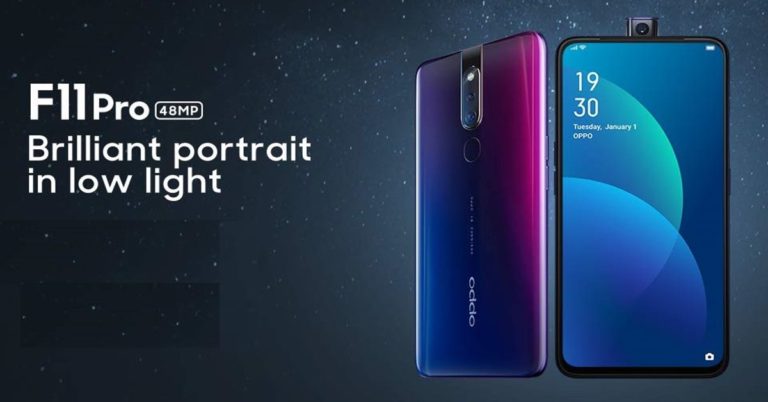
Coming to the specifications, Oppo F11 Pro runs Android 9.0 Pie skinned with ColorOS 6 and sports a 6.53-inch full-HD+ LCD panel that has an aspect ratio of 19.5:9 and a screen-to-body ratio of 90.90%. The smartphone is powered by an octa-core MediaTek Helio P70 SoC clubbed with 6GB RAM.
The device is available in 64GB and 128GB storage options and it has a dual camera setup on its back panel that comprises of a 48MP primary sensor and a 5MP sensor. The handset also has a 16MP pop-up selfie camera. Oppo F11 Pro houses a 4,000mAh battery that has support for VOOC Flash Charge 3.0 fast charging.
It is worth mentioning that Oppo F11 is identical to its elder sibling, however, instead of a pop-up selfie camera, it comes with a waterdrop-style display notch that houses the selfie camera. It packs a 4,020mAh battery and comes with 4GB of RAM and 128GB storage.
Would you be interested in buying either of the two devices from Oppo now that their prices have been revised in India? Let us know in the comments section below.
Apple is gearing up to launch its 2019 models of iPhones in September this year and they will reportedly be powered by the new A13 chips. But other than being powered by a new chipset, they will also run the new operating system – the iOS 13. Although Apple users generally enjoy the constant updates for all the devices – old or new but recent news might change that update cycle. The iOS 12 came with support for each and every Apple device which earlier ran iOS 11. iPhones as old as the iPhone 5S received the new iOS update with the latest iOS 12. But that won’t be happening anymore.
The new iPhones will run iOS 13 and it will be released in 2019 itself. But the new Apple’s OS might not support the older iPhones models such as the iPhone 5S, iPhone SE, iPhone 6 and the iPhone 6 Plus. According to a report by iPhoneSoft, the iOS 13 will also not be compatible with the iPad Mini 2 and the iPad Air. All the devices mentioned here already run iOS 12 but the recent development suggests that they won’t support the new OS. And thus, they won’t be receiving the new OS update.
If the new iOS 13 update won’t be coming to the abovementioned devices then the users of the older iPhone models will have to switch to newer ones which support the new OS to avail the new features. And if not, they can just stick to their old iPhones running the iOS 12.
It is being estimated, that the Cupertino-based tech firm will be announcing the new iOS 13 at its annual developer conference, WWDC in June 2019. With the launch of the new OS, the company might also announce new apps, features, tools and possibly new hardware/ devices at the event. Apple is expected to announce new and upgraded Maps, Reminders, Messages along with many other new features for its Apple Watch as well. Other than the new iOS 13, we could also see a new macOS and watchOS as well. The WWDC event is scheduled for June 3.
It should be noted that the iPhone 6 and the iPhone 6 Plus were launched in 2014. Before the launch of the iPhone 6-series Apple didn’t released any phones with a big display. It just focused on making them thinner and more premium. But the iPhone 6 and the iPhone 6 Plus saw Apple’s entry to the big screened display iPhones and it has continued till now.
AMD competes with Intel in making chipsets and CPUs for computers and laptops. Earlier, there was news that AMD would come with a 16-core next-generation Ryzen CPU. But nothing was confirmed by the company and neither was there any leak, which supported the data. But now, weeks before Computex 2019, a Thai hardware leaker TUM_APISAK has posted specifications about an engineering sample of the 16-core Ryzen CPU on Twitter. The details were also disclosed in an online database of the CPU’s benchmarks.
According to the leaker, the upcoming Ryzen CPU has 16-cores and it has a base clock speed of 3.3GHz with a boost speed of 4.2GHz. But as we mentioned before, it could be an engineering sample of the product. If it is true then we can see considerable improvement in the speed of the upcoming CPU when it launches. The new chip was tested on a motherboard based on the X570 platform controller. Other than that, the chip could also support multi-threading for a total of 32 threads.
Earlier, we saw that that AMD will be bringing the new Ryzen 9 tier CPU to compete with the Intel’s i9 CPUs. The CEO of AMD, Dr Lisa Su showed a working sample of the 8-core Ryzen CPU at CES 2019. The chipset came with an 8-core die and a modular IO die. With Computex 2019 just weeks away, the company could announce the Ryzen 3000 CPUs at the event. The CEO Su, will be delivering the opening keynote at the event and could tease us with a formal launch on July 7. The Ryzen 3000 series CPUs will be built around the Zen 2 architecture, which is an upgrade from the current Zen+ and Zen designs.
But it is currently not known if the AMD X570-based motherboards will be launching at Computex 2019 or not. Previously, the electronic maker MSI had teased an animation about the motherboard model with integrated Wi-Fi 6 andthe number 3000 flashing briefly on screen. So, there is a possibility that we could see a launch in the coming weeks.
Zen2 ES 16 Core Base clock 3.3 Ghzฺ Boost clock 4.2 Ghz MB X570 This CPU name can't decode by decode chart
Further leaks and rumours suggest that the Ryzen 3000-series CPU will support DDR4 RAM at up to 5,000MHz with overclocking. But it is very unlikely that the company will increase the core counts across the Ryzen 3000-series with 6 cores and 12 threads becoming a standard in the Ryzen 3 range. While the 12-core and 16-core options will used in the top-end Ryzen 7 or rumoured Ryzen 9 series. Hopefully, all the misty air and rumours will come to end in a couple of weeks’ time at Computex 2019.
Till now, Samsung has released three smartphones in its Galaxy M-series of devices. The Galaxy M10 and the Galaxy M20 were released back in February in the mid-range smartphone market to compete against the likes of Xiaomi, Realme etc. Then the South Korean tech giant launched the Galaxy M30 in March of 2019 with its Super AMOLED display and triple-rear camera setup. it too was priced in the same category, but slightly higher. And now, according to recent news, Samsung is about to launch its next mobile in the Galaxy M-series of devices – the Galaxy M40 (next month).
The Samsung Galaxy M40 will reportedly hold a price tag around Rs 25,000. According to a report from IANS, the upcoming Samsung Galaxy M40 will be next in line after the Samsung Galaxy M30. The upcoming device might also sport a punch-hole camera display and it is tipped to be the most powerful smartphone in the Galaxy M-series.
Unlike the previous Samsung Galaxy M-series devices, the Galaxy M40 won’t be powered by the Exynos processor. instead, it will be powered by a Qualcomm Snapdragon SoC. Recalling, we see that the Samsung Galaxy M10 was powered by the Exynos 7870, while the Samsung Galaxy M20 and the Samsung Galaxy M30 were powered by the same Exynos 7904 CPUs. But the recent developments states that the Samsung Galaxy M40 will be powered by a Snapdragon 675 SoC.
Talking about the specifications of the device we see that it will reportedly hold 6GB of RAM and 128GB of internal storage. An earlier leak suggests that the Samsung Galaxy M40 will pack a 5,000mAh battery and will sport a Super AMOLED display similar to the Samsung Galaxy M30. The upcoming smartphones is expected to run Android 9 Pie skinned with One UI. Other than that, it will might offer dual-band Wi-Fi (2.4GHz and 5GHz) connectivity.
Other than that, reports also claims that the Samsung Galaxy M40 will be sporting a triple-rear camera setup similar to the Samsung Galaxy M30. Nevertheless, unlike the previous Galaxy M-series devices, the Samsung Galaxy M40 will sport a hole-punch display camera on the front.
The Samsung Galaxy M30 was launched in two variants with 4GB RAM/ 64GB storage variant priced at Rs 14,990. While the 6GB RAM/ 128GB storage variant of the Samsung Galaxy M40 cost Rs 17,990. And if the reports and the leaks are correct then we can see the Samsung Galaxy M40 priced somewhere between Rs 20,000 – Rs 25,000.
Realme 3 smartphone, that was launched at the beginning of the year by the Chinese technology brand, is the No.1 smartphone model on online channels in March 2019, according to research firm Counterpoint.
Speaking about this achievement, Realme India’s Chief Executive Officer, Madhav Sheth said, “We are delighted to share the news of Realme’s latest achievement. Realme has already created records by selling more than 5 lakh units of Realme 3 in just three weeks of its sale. Today it has earned another milestone by receiving the No. 1 position on online channels in March 2019 by Counterpoint Research. We are sure Realme 3 will go a long way with the never-ending love from our customers and fans.”
Counterpoint Research also gave its statement about Realme 3 handset becoming the No.1 in the country. It said, “Realme has a strong momentum in India driven by its aggressive specs and spotting changing market trends. This helped Realme 3 to become the No. 1 model on online channels for the first time in March 2019.”
The Realme 3 smartphone features a 6.2-inch Dewdrop HD+ display that has an aspect ratio of 19:9 and has a layer of Gorilla Glass 3 on top which keeps it protected. Realme 3 smartphone is available in Dynamic Black, Radiant Blue, and Classic Black colours. Powered by 12nm Mediatek AI Master Helio P70 SoC, the handset comes with up to 4GB of RAM and 64GB of onboard storage. The smartphone can hold a microSD card of up to 256GB.
For imaging duties, Realme 3 sports a dual rear camera setup with 13MP and 2MP sensors. The sensors of the Realme 3 device come with Nightscape and ChromeBoost modes. The handset also has a 13MP selfie camera on the front panel for selfies and video calls.
Realme 3 houses a 4,230mAh battery that comes with AI enhancements and screen battery optimization. The device runs Android 9.0 Pie skinned with ColorOS 6.0. The handset is splash and dust resistant.
The company also recently launched its Realme 3 Pro smartphone in India that comes with 6.3-inch Full HD+ (1080 x 2340 pixels) IPS display and is powered by an octa-core Snapdragon 710 SoC paired with Adreno 616 GPU with 6GB of RAM. Another key feature of the smartphone is that it has a dual-rear camera setup which comprises of a 16MP primary camera (IMX519 sensor) with an f/1.7 aperture paired with a 5MP secondary camera (GC5035 sensor) with an f/2.4 aperture.
One would not change their television as a mobile phone. That is because a good TV is an expensive proposition and also does not go bad as quickly as a mobile phone does. These days LED TVs have become cheaper and cheaper, with the emergence of Chinese brands like Xiaomi in the sector. Which might have the price point on its side, but certainly are not the best when it comes to image quality or after sales.
VU is a brand with Indian roots, with R and D facility based in the USA. The company have been building TVs for India for a decade now. They have launched some great looking TVs in the past and 2019 seems to be even better for them. VU Premium Android 4K TV is what the company came up with as its 2019 flagship. Out of the pack of 43, 50, 55 and 65-inches, we reviewed the 55-inch version of this smart tele. We ran it through its paces to understand does this affordable smart TV deliver what the company says or not? Let’s find out.
In This Article
VU Premium Android 4K TV Design and Display
Like we said before, VU does know how to make a television and the VU Premium Android 4K TV is no different. Premium grade plastic and metal have been used all around and the side bezels have been kept to a minimum. This makes the picture area look neater. The front also sports the VU branding right in the middle with an unusually placed power and channel buttons. These can be found at the bottom left side of the screen, where the power icon is made.
Which is good and bad. Good because one can easily access it when it is wall mounted and bad when it is placed on a table top. Since the user would not be able to see which button they are pressing. There are a lot of connectivity ports present in both the side section and also at the back (downward facing). These include 3 HDMI ports, couple of USB ports, a headphone jack and Ethernet plus AV inputs. Using these consumers can connect at least 5-7 devices to the VU Premium Android 4K TV, all at once.
Bluetooth 5.0 and Wi-Fi have also been thrown in the mix, which makes connecting the TV to various other wireless sources such as BT headphone quite easy. The VU Premium Android 4K TV comes with a very modern looking remote control too. This one has got dedicated buttons for YouTube and Google Play as well. Also, one can send voice commands using the remote, which in most cases worked well. Since VU is an Indian brand, it can recognise the Indian accent with ease.
Moving to the display, the 55-inch A+ grade IPS LED-backlit panel on the VU Premium Android 4K TV is one of the best we have seen so far in 2019. It is right up there with the big players such as Samsung and Sony, but with a great price difference. Which works in favour of VU. The videos on this thin panel are vivid and the blacks are deeper than before. With a brightness level of 450 nits, this big screen is excellent for any type of room.
Various aspect ratios are supported but most will use either 16:9 or auto. This is great since most HD channels support this aspect ratio and if you have an HD set top box or watch a lot of HD content online, you are in for a treat. The contrast ratio of the VU Premium Android 4K TV is 10,000,000:1. This means you get richer colours that look close to life.
VU Premium Android 4K TV Performance and Audio Quality
To talk more about its picture quality lets come over the performance sections. The VU Premium Android 4K TV supports VOD upscaler. This means that users can upscale HD or FHD content to 4K on this smart television. We ran a couple of HD and FHD YouTube videos on the TV and the results were spectacular. It is only during fast-paced action scenes that the upscaling did not work super well, but otherwise it was top notch.
We ran a lot of 4K content on it, including latest games such as Mortal Kombat 11. And with each passing video, it kept blowing us away. As much as we wanted to find a fault in the 4K viewing experience we always came empty-handed. The Indian brand has outdone itself in this department on the VU Premium Android 4K TV. And if you thought that was it, the TV kept surprising us as there is HDR10 and Dolby Vision inbuilt too. Overall, we found the movie and game experience on the TV very-very pleasant.
As for the sound, the TV is not bad at all. It has twin 12W RMS down-firing speakers that are neatly tucked under the screen. These support Dolby audio and DXB surround sound as well. We watched the TV from a distance of 20 feet and not once did we felt that the sound is underpowered or we require additional speakers. 8 sound modes are also available on this thin-tube like sports and theatre, which will take care of the most type of viewing and audio experiences.
Switching gears, let’s shed some light on its tech specs and internal hardware. The VU Premium Android 4K TV has 16GB of storage with 1.75GB of RAM. This is paired with a Quad-Core CPU with 1.1GHz clock speed. The graphics are supplied by Mali 450 GPU. The Android version on this smart telly is 8 Oreo. All this (when compared to today’s smartphone) does seem dated, but in television space it is almost top of the line.
What this configuration essentially does is turn on the device, with everything loaded, at a very fast pace. Compared to Blaunpunkt and Xiaomi TVs the VU Premium Android 4K TV boot up much faster. The OS inside is like the rest of the Android TVs with a couple of additional apps like Voot, Alt Balaji etc pre-loaded. Dedicated Netflix and Hotstar apps can also be found on it. Most of the video apps like YouTube and Netflix support up to 4K resolution. However, apps like Hotstar or Amazon prime do not.
Also, 16GB of storage seemed a little less when one wants to keep some videos/larger apps on it. But, if you have USB 3.0 supported pen drive, you can quickly expand the videos and picture storage using the same. Latest video and audio files are supported by the TV and one can additionally download their favourite music streaming apps from the Google Playstore as well. As for the power, this smart LED TV consumes 160 watts when turned that is on the higher side of all things TV.
Verdict
All in all, at a price of Rs 41,999 the VU Premium Android 4K TV is a steal if you want 4K viewing experience at home. Not only does this flat screen TV performs well, but it also has the sass one needs in their living room. If you want a good large screen experience at home, go for it.
Huawei’s sub-brand Honor has announced the Honor Days sale in which all the major smartphones from the company will receive price cuts and offers. The sale will start from today, May 13 and will go on till May 17 on Amazon.in. During this five-days sale, most of the Honor smartphones, tablets and wearables will be available at discounted prices. Some of the best smartphones from Honor, like the Honor View 20, Honor 9 Lite, Honor 10 Lite, Honor 8C and others will go on sale. Other than that, the customers can save up to Rs 10,000 on ten Honor smartphones and four wearables and tablets.
Some of the highlights of the Honor Days sale on Amazon India are:
During the Honor Days sale, Honor View 20 has received a price cut of Rs 5,000 on both its variants. The Honor View 20 with 6GB RAM/ 128GB storage is now selling for Rs 37,999 instead of Rs 42,999. While the 8GB RAM/ 256GB storage variant costs Rs 45,999 instead of Rs 50,999.
The Honor 8X has received a price cut of Rs 5,000 as well on both its variants. The smartphone’s variant with 4GB RAM and 64GB storage is selling for Rs 12,999 instead of its original price of Rs 17,999. While the 6GB RAM/ 64GB storage variant of the Honor 8X costs for Rs 14,999 instead of Rs 19,999.
Similarly, the Honor 8C with 4GB RAM/ 32GB storage has received a price cut of Rs 3,000 and is now selling for Rs 9,999. Its original price was Rs 12,999.
The Honor 7C, on the other hand, has received a price cut of Rs 5,000. The Honor 7C with 3GB RAM/ 32GB storage is now selling at Rs 7,999 instead of Rs 12,999. While the 4GB RAM/ 64GB storage variant of the device is selling for Rs 9,499 instead of Rs 14,999.
The Honor Play with 4GB RAM/ 64GB storage is selling for Rs 13,999 in the Honor Days sale. The 6GB RAM/ 64GB storage variant of the smartphone can be bought at Rs 15,999 instead of Rs 25,999.
The Honor 9N with 4GB RAM/ 64GB storage is selling for Rs 9,999 instead of Rs 15,999 and the 4GB RAM/128GB storage variant of the Honor 9N is selling for Rs 11,999.
Furthermore, the Honor 9 Lite has also received a price cut of Rs 7,000 in the Honor Days sale. The Honor 9 Lite with 4GB RAM/ 64GB storage is selling for Rs 9,999 instead of Rs 16,999. The Honor 10 Lite with 3GB RAM/ 32GB storage, on the other hand, is selling for Rs 10,999 instead of Rs 13,999. The 4GB RAM/ 64GB storage variant of the Honor 10 Lite holds a price tag of Rs 12,999 which is down from its original price of Rs 16,999.
The Honor View 20 and the Honor 8X has got 9 months No Cost EMI offer along with additional Rs 5,000 off if the purchase is made using the Debit or Credit cards. The Honor 9 Lite and the Honor 10 Lite is getting Rs 1,000 off on exchange. The customers will also get an opportunity to buy the HONOR Band 4 at a discounted price of Rs 2,099.
The Honor Mediapad T3 tablet with 2GB RAM/ 16GB storage now costs Rs 10,499 and the Honor Mediapad T3 with 3GB RAM/ 32GB storage costs Rs 11,999. The Honor Mediapad T3 10 with 2GB RAM/ 16GB storage costs Rs 11,999 while the Honor Mediapad T3 10 with 3GB RAM/ 32GB storage costs Rs 13,999.
In terms of wearables, the Honor Band 4 Running now costs Rs 1,399 and the Honor Band 4 costs Rs 2,399. The Honor Watch Magic (L/B) costs Rs 11,999 and the Honor Watch Magic (M/S) can be picked up at Rs 12,999.
Chinese smartphone brand Vivo recently launched its V15 Pro smartphone in India, which was followed by the launch of the V15 handset. Today, the company has rolled out another variant of the device in the country – the 8GB RAM/128GB storage model of Vivo V15 Pro. In addition to this, Vivo has also slashed the price of the base variant of the V15 Pro (review) handset by Rs 2,000 in the country.
That’s not all. The company has also announced that the Vivo V15 will now be available in another colour variant – Aqua Blue. Prior to this, the device was only available in Frozen Black and Glamour Red colour options. Vivo has also announced some offers for the Vivo V15 and Vivo V15 Pro devices.
Vivo V15 Pro launched in India this year in the lone 6GB RAM/128GB storage variant. As we mentioned earlier, the company has now launched a more powerful variant of the handset with 8GB of RAM and 128GB storage. The new variant of Vivo V15 Pro is priced at Rs 29,990. But then, we should mention that the variant is not listed on the company’s official website or on any major e-commerce website.
Coming to the revision at price of the 6GB RAM/128GB storage model of Vivo V15 Pro, the company has reduced the cost of the variant by Rs 2,000. The smartphone was launched at Rs 28,990 and now, it is available at Rs 26,990. We should also mention that the revised price of Vivo V15 Pro’s 6GB RAM/128GB storage model is currently not listed on the company’s website, Flipkart, Amazon or others.
It is worth adding that the news of the price cut first came from Mumbai-based retailer Mahesh Telecom.
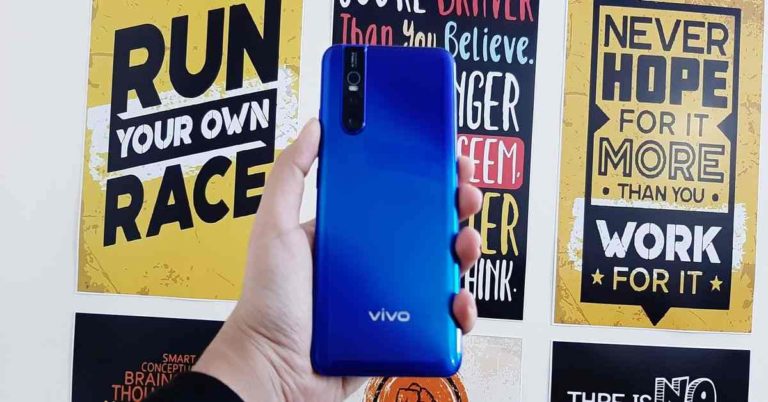
The company has also announced that Vivo V15 will be available in a new Aqua Blue colour that will come with Blue and Black gradient finish on its back panel. The new colour variant will cost as much as the previously launched ones did – Rs 21,990. Vivo V15’s Aqua Blue colour option is now available to purchase from the company’s official online store.
Other offers that have been announced by the company can be availed from online as well as offline stores. You can get up to 12 months of no-cost EMI plans including Bajaj Finance and an additional exchange discount of Rs 2,000. Other than this, there is an option of zero down payment for 8 months or 6 months of EMI for IDFC and HDB customers. Buyers can also get Jio benefits of up to Rs 10,000.
Chinese smartphone and electronics maker Xiaomi is set to launch its flagship smartphone and a laptop this month in India. But before the launch of the smartphone, Xiaomi has launched its Mi Express Kiosks in the country. With it, Xiaomi became the first technology company to sell smartphones using vending machines. According to the company, the new Mi Express Kiosk will be set all across India from which the consumers can buy the gadgets directly.
The Mi Express Kiosk does what its name suggests, it is a Kiosk from which the user can buy gadgets and smartphones directly, in other words, a vending machine of handsets. The Mi Express Kiosk will provide smartphones along with mobile accessories. Xiaomi has designed the Kiosk to accept all sorts of payment method – Credit cards, debit cards, cash and UPI. The user can choose any of these methods to make the purchase.
With the launch of the Mi Express Kiosk, Xiaomi once again took an innovative and different step towards the Indian smartphone market. According to Xiaomi, this new innovative Retail Strategy would help it by reaching the consumers directly and this, in turn, would remove the operational and cost inefficiencies of the consumers. The smartphones sold through Mi Express Kiosk will hold the same pricing as the Mi.com and Mi Home Stores prices.
According to Xiaomi, all the technology put inside the Mi Express Kiosk have been researched and developed in India itself. It makes the Mi Express Kiosk a homegrown product from a foreign company. With the introduction of a new technology and a new way to purchase smartphones, Xiaomi has proved that it is serious about the Indian smartphone business. Xiaomi plans to set more of these Mi Express Kiosk all across India in the coming months and will expand the retail plans in more cities.
The Mi Express Kiosk can be found in metro cities in public areas like tech parks, metro stations, shopping malls and airports. The company has high hopes for these Mi Express Kiosk as it would give the customers the freedom to purchase smartphones from the vending machine itself. The customers can find these vending machines/ Mi Express Kiosk by going on the Mi.com webpage. From there, they can locate the actual locations of the Mi Express Kiosk.
This is a first move by any smartphone maker or a company, in general, to install smartphone vending machine in India. If the Mi Express Kiosk works as intended, it would start a new way by which people can buy smartphones.