Although video calling is now available on WhatsApp, there are some features from Skype that still haven’t made it to the instant messenger. And now, software giant Microsoft has decided to add another feature to make sure that its service has an edge over others.
The company is testing a new change to its video calling service that will let users add up to 50 participants in a conference video call. If this happens, a number of businesses and companies would rely on Skype to hold meetings in which they have to include people who cannot physically be present there.
We should mention that no other video calling app can let you add this many people on a video conference call. This even surpasses Apple‘s limit of adding up to 32 people in a FaceTime group video chat.
It is worth noticing that Microsoft will be managing this number of calls by sending notifications in large video calls, instead of having the app ring all the members involved in the call.
Furthermore, if people don’t respond to the notification, you can also include them by calling them up once the call has started. If you are a beta tester on Skype, you can access these new features already, However, even if you are not, the feature will most likely roll out in a stable update in the next few months.
In an unrelated piece of news, Microsoft has started testing updates to its ‘Your Phone’ app for Windows 10. With this, Android users will be able to mirror a smartphone screen directly to their Windows 10 PC. It is worth noticing that the ‘phone screen’ mirroring feature will be made available to Windows Insider starting this week. However, in order to make the feature work, you need to have the latest test builds of Windows 10 along with the Your Phone app.
To recall, the software giant had earlier demonstrated how the smartphone screen mirroring feature works in Your Phone app at its Surface event that was held in October last year. The app makes the smartphone screen appear directly on to Windows 10 PC and it projects the entire list of Android apps that you have on your device. You can also access these apps by tapping on them and make them appear in the remote session of your device that gets mirrored to your PC that runs on Windows 10.
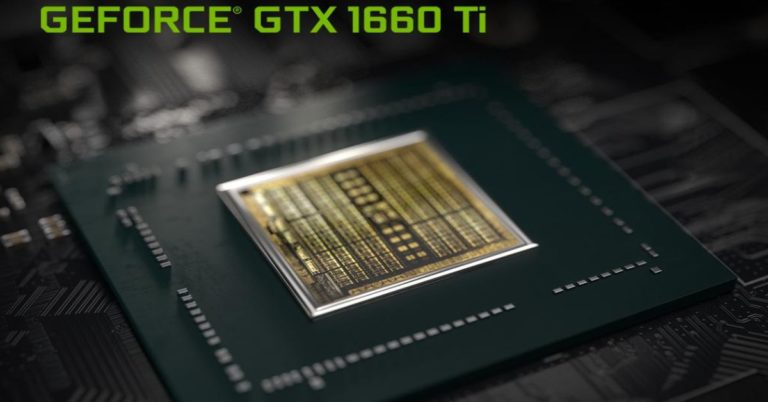
Nvidia has launched its GeForce GTX 1660 GPU in India, which promises to be 130 percent faster than the GTX 960 and 35 percent faster than the GTX 1060 3GB at 1080p, according to the company. This makes it a good option for 1080p gaming at least on paper, however, we will have to wait to vouch for it till we put it to test ourselves. The Nvidia GeForce GTX 1660 GPU is priced at Rs 21,500 and will be be made available in India starting March 14 We should mention that the GPU was launched globally last month.
In India, the company is not launching a Founders Edition variant, but if you wish to buy the GeForce GTX 1660 GPU, you can head to Nvidia’s partners like Asus, Zotac, and MSI. However, it is worth pointing out that each of would be following their own pricing starting at Rs 21,500. The newly launched GPU can be bought via online as well as offline channels.
Other than this, Nvidia has stated that GTX 1660 has the same Turing architecture technology that was found in the GTX 1660 Ti. This means that it would support all sorts of Nvidia features like Ansel, GameStream, GeForce Experience, Highlights, ShadowPlay and Adaptive Shading technology to name a few. We should point out that GeForce GTX 1660 is the second new GPU from Nvidia that doesn’t have its own highly publicised ray tracing technology that the company calls as RTX.
The company has also said that the new GPU comes with improved performance and capabilities in the latest games and it supports G-SYNC Compatible gaming monitors. The GPU has NVENC technology for single-PC broadcasting and its support for Adaptive Shading technology further enhances its performance in the supported titles.
Nvidia has also said that the GTX 1660 GPU comes with 6GB of GDDR5 VRAM, 1408 CUDA Cores, and a boost clock of almost 1.8 GHz.
The company has promised that its GPU is capable of handling most of the AAA game titles of and that it has support for concurrent floating points along with integer operations. The Turing architecture used in the newly launched GPU is more power efficient and the company claims that it delivers 1.5 times instructions per clock as compared to the Pascal architecture that was used previously.
It is worth adding that Nvidia has not shipped any new units into the market for an entire quarter and has now depleted reserves of its GeForce GTX 1080 Ti, GeForce GTX 1080, GeForce GTX 1070 Ti, and GeForce GTX 1070 GPUs. Furthermore, its stocks of its GeForce GTX 1060 will also reportedly run out soon.
Joining in on the foldable device race is the tech titan Google. Samsung and Huawei have already launched their foldable smartphones named Galaxy Fold and Mate X, with Xiaomi closing in on the date of the release of its foldable smartphone.
According to a recent patent application, Google might be experimenting with foldable display technology. These displays are similar to Samsung Galaxy Fold and Huawei Mate X. The patent application was spotted by Patently Mobile and it describes the method of construction of the OLED display panels in a way that it could bend repeatedly and can be used as a ‘modern computing device.’
The image on the patent application shows a screen which could be bent at two places, like the alphabetical Z. Just how the technology giant would manage to produce a glass display with two folds without it breaking is unknown.
But it should be noted that Google as a company itself doesn’t produce any display panels or manufactures smartphones. Instead, it outsources other companies to do the work for it based on its own idea, and the finished products get the Google logo. In the past, HTC and LG both sharing the manufacturing duties had produced the Google Pixel 2. So, if Google has filed a patent about any product, it doesn’t mean that it will be producing the displays of its own, but it would find a proper company to do it.
But it should be noted that Google’s patent doesn’t mention a foldable phone but it talks about how the display could be used by ‘modern computing devices’ which could mean tablets, phones or laptops. On the software part, to support the design foldable aspect of the phones/devices Google has altered its Android OS to support the ‘fold’. So, it could mean that Google realizing the potential of foldable smart devices has started focusing on foldable hardware as well as software.
Cupertino-based technology giant Apple has responded to Spotify’s complaint with the EU antitrust regulators. The company said that the Spotify ‘wants all the benefits of a free app without being free.’ Earlier, Spotify had complained about Apple saying that the company ‘unfairly limits rivals to its own music streaming service’.
It should be noted that Apple too owns a music streaming service Apple Music through which iOS users can stream music online. Spotify blamed Apple that it was hindering with other music streaming rivals so that its own platform would be considered by the users instead of the other apps.
Apple’s App Store is fully controlled by the Cupertino-based technology firm and it decides what app should be kept on the App Store. Spotify said, “Apple’s control of its App Store deprived consumers of choice and rival providers of audio streaming services to the benefit of Apple Music, which began in 2015.” According to Spotify, Apple uses different ways by which it uses its power to make the App Sore an ‘uneven playing field’. To which Apple replied by rebutting most of the points made by Spotify saying ‘time to play fair’.
Spotify also mentioned that Apple’s Voice Assistant, Siri didn’t let the iPhone users play music from Spotify app, when asked to play music, Siri used the Apple Music app. Also, Apple had declined Spotify’s request about letting its app launch on the Apple Watch.
To Spotify’s claims Apple said that it has approved and distributed around 200 app updates in place of Spotify which resulted in over 300 million downloads of the app from the App Store. Apple said, “The only time we have requested adjustments is when Spotify has tried to sidestep the same rules that every other app follows. Spotify is free to build apps for – and compete on – our products and platforms, and we hope they do.”
Apple said that it reached out to Spotify for AirPlay 2 and Siri’s support on many occasions but the music streaming company said that they were working on it.
With the tension growing between one of the major music platforms and Apple, there seems to be no common ground on which both the companies agree to work on. It is not the first time Apple had been highlighted with troubles with other major platforms. Many companies are not letting their apps and services be available on Apple’s App Store because the company is asking an exorbitant amount of royalties and shares. This results in the companies not entering into a partnership with Apple. Netflix, Hulu, New York Times are examples of such companies.
Technology giant Google has always added useful features to its apps. Just yesterday, Google Maps got the ability to report accidents and speed traps. And now, the technology company has rolled out the Google Translate feature to its Gboard app for iOS.
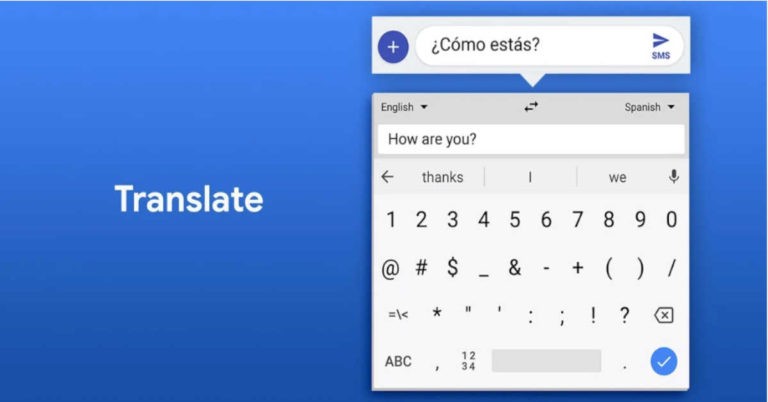
We should mention that Google Translate has been present on Gboard for Android since 2017 and it can be accessed by tapping on the dedicated icon on the suggestion bar. Alternatively, users can also click on Google button to access the Translate feature.
The patch notes of the update for Gboard for iOS says that “all the languages supported by Google Translate” are available. We should mention that at the time of writing, Google Translate had support for 103 languages. Although the software automatically detects new languages and offers to translate them, you can also go and pick languages manually.
The last major update for Gboard for iOS included feedback for keyboard, which is also a feature that is not available in the built-in iOS keyboard. Gboard’s Android version recently got support for support for enhanced offline voice dictation. However, we should point out that the feature is currently only available for English-speaking Pixel smartphone owners.
The artificial intelligence-based offline dictation would speak out the emails and texts to users even when their smartphones are not connected to internet.
Speaking about the new feature, Johan Schalkwyk from Speech Team of Google, wrote in a blog post, “We’re happy to announce the rollout of an end-to-end, all-neural, on-device speech recogniser to power speech input in Gboard which is always available, even when you are offline. This means no more network latency or spottiness — the new recogniser is always available, even when you are offline. The model works at the character level, so that as you speak, it outputs words character-by-character, just as if someone was typing out what you say in real-time, and exactly as you’d expect from a keyboard dictation system.”
He further added, “Our new all-neural, on-device Gboard speech recogniser is initially being launched to all Pixel phones in American English only. Given the trends in the industry, with the convergence of specialised hardware and algorithmic improvements, we are hopeful that the techniques presented here can soon be adopted in more languages and across broader domains of application. We are hopeful that the techniques presented here can soon be adopted in more languages and across broader domains of application.”
Yesterday, Marvel released the first full trailer of the second part of the Avengers: Infinity War – Avengers: Endgame which it went viral as soon as it launched. The Avengers: Endgame will be released globally on April 26, 2019 and it will put an end to the current Marvel storyline.
The trailer begins with the flashback of Tony Stark in Ironman 1 as he fought his way out of the cave he was captured in. Tony is still trapped in space following the aftermath of Infinity War where Thanos wiped out half of the whole universe. Realizing that this could be his final moments, Tony is recording a goodbye message for Pepper Pots describing his life and love for her.
The scene is followed by Steve Rogers’s flashback before he became Captain America. Then we see the retired Clint Barton/Hawkeye spending time with his family. The scene is instantly cut to a rainy night in Japan where we see the revel of Ronin, which is Barton’s another superhero persona. It should be noted that Barton was completely absent from the Infinity War so we expect him to play a big role in Avengers: Endgame.
Then we see Thor’s flashback where he is in Asgard with his father Odin. The scene is quickly cut to the end of Infinity War where most of the Marvel heroes dies as a result of Thanos’ ‘snap’.
The trailer shows the deeper, emotional scars our heroes have been carrying after the death of their loved ones, friends, families. How they haven’t been able to move on with their lives and are searching for a way to bring back their friends. There is a scene with Scott Lang/Antman and Brue Banner/Hulk where they are contemplating the past.
We then see Barton return to the US with Natasha Romanoff/Black Widow and Rocket with War Machine/Jim Rhodes. The trailer then showcases all the remaining heroes as they get ready to face the final battle with an unknown enemy (most probably Thanos). We see the heroes fighting/training different fights which could mean they are fighting separately before reuniting for the big finale.
Then a mid-fight scene is revealed of a bloodied Captain America and Antman as he tries to escape from a raging inferno.
At the end, we are taken back to the Avengers facility where the heroes are shown marching, but they can be seen donning new white suits (most probably Quantum Realm suits). We see Captain America, Antman, Nebula, Hawkeye, War Machine, Black Widow and Ironman marching to an unknown location. Having Tony Stark in the team led by Rogers could only mean one thing, he got saved by someone in space and they are back together.
Then we are shown bits and pieces coming together to form the title of the film. It could mean the undoing of Thanos’s snap and bringing back the dead heroes. In the end we see Thor and Captain Marvel/Carol Denvers interaction, meaning Captain Marvel too will be joining in on the team. Thus, her film’s release before Endgame to set the ground for her entry in the Marvel universe.
With the release of the movie more than a month away we see the original Avengers back in action as they team up before they face the Mad Titan Thanos. And with the Avengers Endgame we will see what a decade of planning has led to and probably say goodbye to the current Marvel heroes.
This week, Google rolled out the developer beta version of Android Q on its Pixel smartphones. The technology giant is also ready to talk in detail about its latest Android version at its Google I/O 2019 developers conference. However, this doesn’t mean that all major smartphone makers have rolled out Android Pie, which was unveiled in 2018 to their smartphones.
Xiaomi, which currently dominates the budget segment of the Indian smartphone market has just shared a roadmap of its devices which will be getting the Android Pie update. The update will be available for a list of Redmi and Mi smartphones. According to Xiaomi’s official MIUI forums, the company will be bringing the new update to at least ten of its smartphones including the Mi 6, Mi 6A, Redmi 6, Mi Mix 2, and Mi Note 3.
On the other hand, smartphones such as Redmi Note 5 and Redmi Y2 will be receiving the Android Pie update this month itself. The newly launched Xiaomi Mi 9 Transparent Edition and Mi 6X along with the company’s Redmi Note 6 Pro will also receive the latest update, however, their dates haven’t been made official yet. The new update can be availed by users of the MIUI China ROM as well as the MIUI Global ROM.
In February, the Chinese smartphone manufacturer started the global testing of the Android Pie update for Xiaomi Redmi Note 5 Pro, Redmi Note 6 Pro and Redmi Y2. The smartphones running Android One like the Mi A1 will also be getting the Android Pie update along with MIUI 10, which is the latest UI version from Xiaomi. The company’s sub-brand, Poco F1 too received the Android Pie update along with MIUI 10.
In January, Xiaomi mentioned on the official MIUI forum that it will bring the Android Pie update to Redmi Note 5, Redmi Note 6 Pro and Redmi Y2 before March. And since we are already half-way through the month, we still have a few days to see the new Android Pie update come to the devices. If Xiaomi manages to roll out the update timely, that is.
It should be noted that Xiaomi isn’t as fast with its Android updates as other smartphones companies like the HMD Global or OnePlus.
But the company claims that it has started taking software updates more seriously now. It even released a new MIUI 10 last year which brought new features and a smooth UI to Xiaomi phones.
With the launch of Android Q right around the corner, the company seems to be focusing to get the current Android to most of its smartphones.
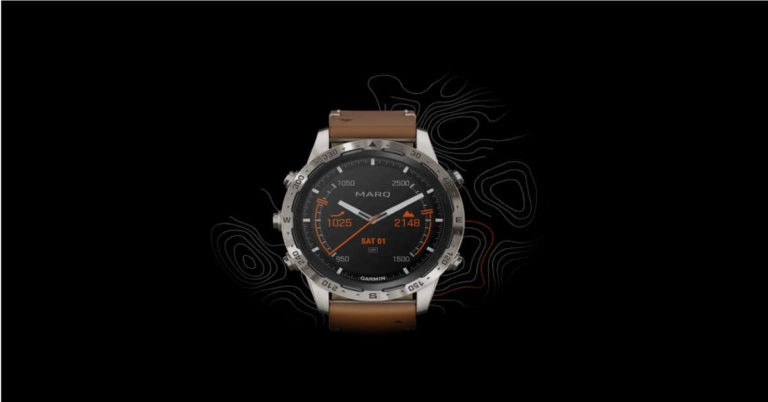
Till now, Garmin has mainly focussed on smartwatches that are aimed at fitness lovers. But now, the smart wearables maker has taken its fitness-focussed smartwatches in a more premium direction by unveiling its new Marq lineup. Garmin‘s Marq range is a series of luxury smartwatches that will be priced between $1,500 and $2,500. With the new smartwatches, the company is targeting the high-end watch market where it will be seen competing with the likes of Rolex, Breitling and Omega.
Under its new Marq range, Garmin has released five smartwatches and each one of them comes with its own speciality. The smart wearables company also seems to have taken some inspiration from what Tag Heuer and Louis Vuitton did and hence, will be merging a high-build quality, materials with the internals of a smartwatch. So all Garmin Marq smartwatches will come with titanium cases, sapphire crystal and house features like notifications, activity tracking and heart rate monitors. Other than this, each Garmin Marq smartwatch will have a unique feature.
The five smartwatches that have been launched by Garmin are:
Marq Driver: Priced at $2,500 and meant for racing. The smartwatch has a pre-loaded data for over 250 tracks and it has some racing-focussed features so it can be used to track lap times, top speed and more.
Marq Aviator: Priced at $1,950 and aimed at pilots. Its unique features include emergency navigation guides to the nearest airport, a map, weather reports and more.
Marq Captain: Priced at $1,850 and targeted at those who love to sail. The smartwatch comes with a special regatta timer, tack assist, autopilot, boat data functions and a ‘man overboard’ feature. As the name suggests, the feature helps in marking a person overboard and helping the sailor navigate towards his location.
Marq Expedition: Priced at $1,750 and meant for hiking. The luxury smartwatch comes with topographical maps, a compass and a dedicated mode that can extend the battery life by weeks in case the wearer has to go on a long trip.
Marq Athlete: The smartwatch costs $1,500 and is aimed at athletes. The device comes with fitness-focussed features and offers performance metrics, running apps and dedicated maps to find cycling and running routes.
However, it can be said that by adding these unique features to its smartwatches, Garmin has made them relevant to very specific audiences. So, the pilot-focussed smartwatch will not be very handy if the pilot one day decides to go for hiking. Or the smartwatch aimed at sailors may not prove to be very useful if the sailor decides to go for a race. While these features surely make these smartwatches unique, they also bring in some downsides.
If there is one thing that has always dominated Apple’s marketing campaigns, it is the level of privacy that the company’s devices offer users. Apple’s latest iPhone ad has not deviated from the usually route and has reinforced how much Apple values its customer’s privacy.
The Apple commercial shows a number of privacy related scenarios. It begins by showing boards saying ‘No trespassing’, ‘Keep Out’, ‘Beware of dog’ and then goes on to show people avoiding an eavesdropping waitress. Then it goes on to show a drawer being locked, a window being closed, followed by some more ‘Keep out’ signs.
The ad also has some moments that are rather hilarious. For instance, it shows a school girl scribbling on a paper, and when her teacher says, “Let me see that”, she keeps it in her mouth. Another such moment in the ad is when a woman is shown to applying makeup on her face while she is sitting in her car. However, till she looks out of her car window, she is unaware of the fact that a man is creepily looking at her. She then rolls up her car window while giving him a stern look.
https://www.youtube.com/watch?v=A_6uV9A12ok
The commercial closes with the tagline, “If privacy matters in your life, it should matter to the phone your life is on.” And then Apple finally declares, “Privacy. That’s iPhone.” The commercial has been posted on Apple’s official YouTube channel.
We should point out that the approach is very similar to the one Apple took at CES 2019 when the Cupertino-based technology giant had its display ad up on a massive billboard that read, “What happens on your iPhone, stays on your iPhone.” Apple not only promoted itself with the billboard, but also took a jab at its rivals like Google, who were presenting their products right across the street.
However, we don’t think that this time Apple is trying to take a dig at its rivals. Instead, it just may be trying to reinforce the fact that it values its customers’ privacy over everything else after the news of FaceTime bug got viral last month.
To recall, the glitch in FaceTime could have been misused by anyone to hear someone else’s conversations. What’s more, in some cases, the person making the call could not only hear the conversation but also go to see the live video of the other person. This happened only when the recipient pressed the volume button to dismiss the call. Apple had to stop group FaceTime calls till it eventually rolled out a fix for the issue.
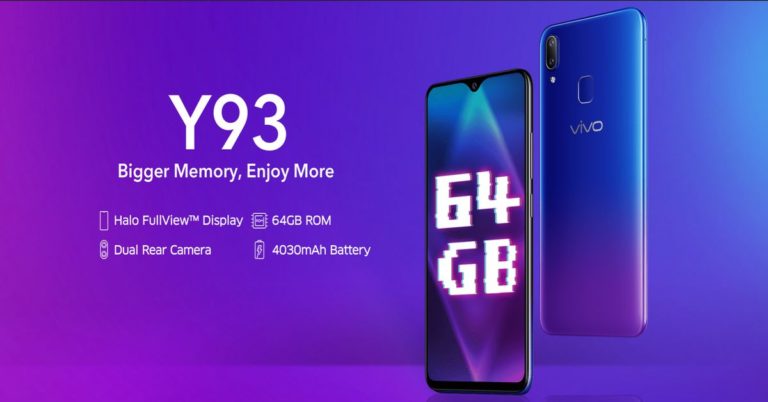
Vivo’s mid-range smartphones Y93 and Y95 were launched in the later months of 2018 in India. And just a few months after their launch, the Chinese smartphone brand is offering a price cut on the Vivo Y93 and Y95 smartphones. The prices of the 3GB and 4GB variants of the Vivo Y93 along with the Y95 have been reduced as per company’s announcement today. The price cut can be availed on online stores as well as via offline retailers. The online prices of the smartphones are yet to be updated but in the offline market, the smartphones are being sold at discounted prices already.
After the discount, Vivo Y93 with 3GB RAM and 32GB storage can be picked up at Rs 11,990 while the 4GB RAM and 64GB storage variant of the smartphone is selling for Rs 12,990. Originally, the two variants of the smartphone held a price tag of Rs 12,990 and Rs 13,990 respectively. On the other hand, the Vivo Y95 is available for Rs 14,990 after discount, and originally it was selling for Rs 15,990. As mentioned above, the online shopping platforms are yet to revise their prices of the smartphones while the offline retailers are selling the handsets at discounted rates already.
Vivo Y93 was launched in India in December of 2018. The smartphone sports a 6.2-inch HD+ (720 x 1580 pixels) resolution Halo FullView display with an aspect ratio of 19:9. It is powered by MediaTek Helio P22 SoC coupled with 3GB or 4GB of RAM and packs a 4,030mAh battery. The smartphone runs Android 8.1 Oreo skinned with FunTouch OS 4.5 UI. On the camera front, there is a dual-rear camera setup comprising of a 13MP primary sensor with f/2.2 aperture paired with a 2MP secondary sensor with an f/2.4 aperture. At the front, there is an 8MP selfie camera with an f/1.8 aperture.
On the other hand, Vivo Y95 was launched in November of 2018 and it sports a 6.22-inch HD+ (720 x 1520 pixels) full-InCell Halo FullView display with an aspect ratio of 19:9. Unlike the Y93, Vivo Y95 is powered by a Snapdragon 439 SoC coupled with 4GB of RAM and 64GB storage. It too runs Android 8.1 Oreo skinned with FunTouch OS 4.5 UI and packs a 4,030mAh battery. For imaging duties, Vivo Y95 comes with a dual-rear camera setup that comprises of a 13MP primary sensor with an f/2.2 aperture paired with a 2MP depth sensor with an f/2.4 aperture. On the front, there is a 20MP selfie camera with an f/2.0 aperture.
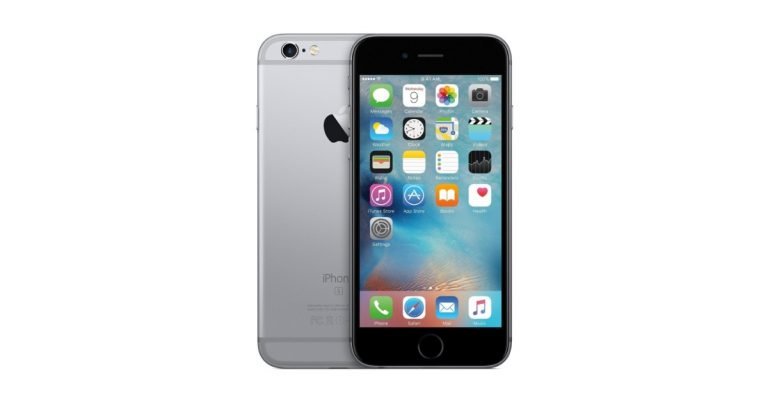
Apple might stop the sale of iPhones from stores and outlets which don’t sell more than 35 devices in a month. The devices that will stop selling are limited to Apple iPhone 6 and iPhone 6 Plus.
According to a report in The Economic Times, three senior industry executives cited the information that the strategy of Apple was to reinforce its premium positioning in India by increasing the cost of the entry level iPhones by more than Rs 5,000. Earlier, Apple had increased the price of iPhone SE and sold it for Rs 21,000 while the iPhone 6 and iPhone 6s costs Rs 24,900 and Rs 29,900 respectively.
An Apple executive said, “It wants to reinforce the brand’s ‘premiumness’ in the Indian market and increase average selling prices. Apple has no plans to immediately drop prices of iPhone 6s, which is locally manufactured.”
Other than increasing the price of the iPhones, the company will also be pulling out its smartphones from the small retail stores who are unable to sell the required number of units every month. Instead, the company wants to expand its exclusive stores or as they are commonly known – ‘Apple Authorised Resellers’. According to Apple, these stores should have more than 500 square feet of space and its trade partners should have more than one such store.
“Apple wants fewer trade partners in India, and to deepen the relationship with them. This is to improve the selling experience and ensure compliance of the store as per its terms. The larger Apple Premium Reseller stores, too, are a big focus area,” an Apple executive said.
Apple is ending its partnership with many retailers and distributors so that it can start afresh and gain its place once again in the premium smartphone market in India. Ashish Chowdhary, who was the part of Nokia’s global leadership team had joined the Apple’s India operations as the new country head in January. And since his joining he has been touring the market and meeting key trade partners of the company in the country.
As Android smartphones have become cheaper and more accessible, iPhone retailers are facing a problem selling the high-priced devices to users. Even people who love and prefer iOS over Android are opting for Android smartphones because they are more affordable than iPhones.
For instance, iPhone 6 32GB which was launched way back in 2014 currently sells for more than Rs 22,000 and doesn’t offer as many features as the Samsung Galaxy S6, that was released in 2015 and sells for lesser money.
It seems to be the week of outages. First several Google services like Gmail and Google Drive faced an outage, followed by Facebook, Instagram and WhatsApp. And now, Apple also joined the other two technology giants, and surprisingly, all of this happened in the same week.
The Cupertino-based technology giant reported about issues in all of its iCloud services, which resulted in an outage that lasted more than four hours. While the outage started at 11 AM ET (8:30 PM IST, Thursday), it went on till 3.28 PM ET (12:58 AM IST, Friday).
However, we should add that Apple did not give any details about the kind of issues that resulted in the outage. The company just said that “some users are affected” adding that “users may be unable to access this service.” Although no details about the issues was provided, Apple’s support page did say that the problem was widespread. The services which were affected during the outage include iCloud sign in, Backup, Calendar, Contacts, Mail, Keychain, iCloud Drive file storage, iWork, Photos, Notes, Reminders, Find My iPhone among others.
Now, Apple has updated its support page and it shows that all of the company’s services are available and are working fine.
Prior to this, this week Facebook and Instagram faced an outage that was the biggest ever for the two platforms. The two services were affected globally and users could not access them. WhatsApp and Facebook Messenger could also not be accessed in some parts of the world.
Some users also took to social media to say that when they attempted to sign in to apps like Tinder and Spotify using their Facebook account, they couldn’t do that successfully. When they tried, an error popped up on the users’ screens saying that the feature isn’t available right now. This goes to show the extent to which the outage affected people. But then, we should also add that people who had already signed into Spotify were not logged out because of the outage.
While Google’ outage also lasts for more than three hours, Facebook and Instagram’s outage surpassed that. Facebook acknowledged the outage on its Twitter page at 11:19 pm IST on Wednesday, and then posted a follow-up tweet at 12:33 am IST on Thursday. The two services became fully functional only on Thursday during the day, making it the longest among the three outages.
The search giant, Google has taken another step towards creating and providing a safe platform for the users by banning misleading and inappropriate ads. On Thursday, the California-based technology company announced that it banned around 2.3 billion misleading ads which violated its advertising policies in 2018. Along with that, Google also introduced 31 new policies.
In its 2018 ‘Bad Ads Report’ Google said that six million ads were banned every day.
Speaking about the step, Scott Spencer, Director of Sustainable Ads of Google, said in a statement, “At Google, we take our responsibility to help create a healthy and sustainable advertising ecosystem that works for everyone, seriously. Our ads are meant to connect users with relevant businesses, products and services; but bad ads ruin the experience. We, at Google, have been working towards protecting the users, advertisers and publishers by investing significant technological resources.”
Furthermore, around 7,34,000 publishers and app developers were terminated from Google ad network and the ads were removed completely from around 1.5 million apps. Through its ‘Bad Ads Report’, the company shares key actions and other data to keep the Google ecosystem safe through its policies across platforms.
“This will continue to remain our top priority as bad ads pose a threat to users, Google’s partners, and the sustainability of the open web itself,” Spencer added.
After banning the ads, Google also identified and terminated around 1 million bad advertiser accounts who posted such ads. It should be noted that the company had banned half the amount of bad advertiser accounts in the year 2017. So, the double growth of such accounts shows the serious challenge that is being faced by the technology giant. Moreover, the company has taken granular actions by taking the ads off from around 28 million webpages which violated the publisher policies.
With the launch of new accessibility apps, apps aimed for the growth of children and by banning inappropriate and misleading ads Google is not only creating a safe platform for its users but it is also proving itself as a company who thinks about the users and the overall growth of the society.
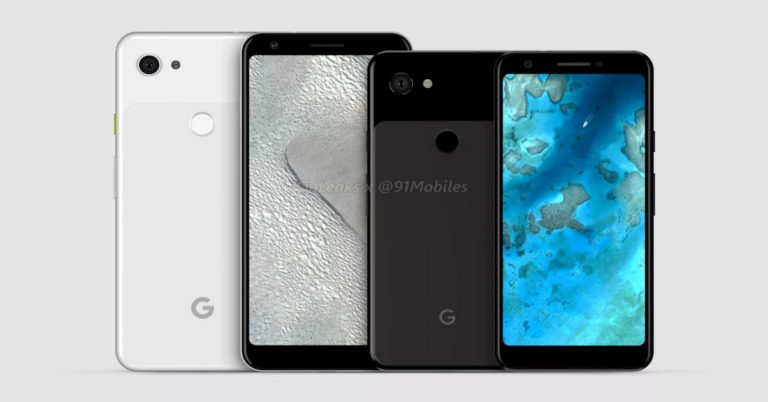
Google Pixel smartphones are known for their top-of-the-line specifications and great camera performance. Google has released 3 iterations of the Pixel line-up with Pixel 3 and Pixel 3XL being the latest of the lot. But now, Google is rumoured to add two-mid range smartphones in its Pixel line-up.
The two devices of Pixel mid-range line-up are codenamed ‘sargo’ and ‘bonito’ and are speculated to be called Google Pixel 3 lite and Pixel 3 XL Lite. But recent developments confirm that the mid-range smartphone from Google will be called Google Pixel 3a and Google Pixel 3a XL.
According to a report from XDA developers, both the upcoming mid-range smartphones will look more like the Pixel 3 and Pixel 3 XL. On the design department, they would follow the old designs. Renders of the smartphones show that both the smartphones will hold the 3.5mm headphone jack which has not been present in any handset by Google since Pixel 2.
Also, the Pixel 3a and Pixel 3a XL will reportedly have a poly-carbonate back instead of the soft glass back panel we saw in Pixel 3. There are other changes in the design department of the Google Pixel 3a and Google Pixel 3a XL like the presence of stereo speakers onboard, but they won’t hold the speakers on the bottom bezel but the bottom edge of the device. They will also lack the notch which was a much-criticised part of the Google Pixel 3 series.
Being mid-range smartphones, the Pixel 3a and Pixel 3a XL will most probably be priced lower than the Pixel 3 and Pixel 3 XL which are the flagship devices of the company. Also, their specifications and camera quality will be lower than the flagship devices but it will definitely won’t disappoint holding the Pixel name.
Image Credit: 91Mobiles
Google Pixel 3a and Pixel 3a XL rumored specifications
Google Pixel 3a will reportedly sport a 5.56-inch IPS display with 2220 x 1080-pixels resolution. It is speculated to be powered by the Snapdragon 670 SoC coupled with 4GB of RAM. The onboard storage, the smartphone is expected to come with 32GB with no microSD card slot.
The device might house 2,915mAh battery and come with a 12MP camera with dual flash. The front facing camera will most probably be an 8MP camera. There might also be the presence of a 3.5mm headphone jack along with USB Type-C with Android 9.0 Pie as the OS.
On the other hand, the Google Pixel 3a XL will have similar specifications as the Pixel 3a with change of only the screen size and the processor. The Pixel 3a XL will reportedly sport a 6-inch Full HD+ display and be powered by the Snapdragon 710 SoC.
Although, these are rumoured specifications so they should be taken with a pinch of salt. There is no official release date of these devices but they might start selling in the markets in the coming months of 2019.
Elon Musk’ electric carmaker Tesla has finally taken wraps off its new compact SUV, Model Y. The long-range version of Tesla Model Y is priced at $47,000 (approximately Rs 32,53,528) and will be able to travel 300 miles on a single charge. The car would also have a performance version which, according to Tesla, will be able to go up from 0 to 60mph in 3.5 seconds.
Tesla Model Y is the fifth car that has been made by Elon Musk and with the newly launched vehicle, the company will attempt to mass-market an electric car for the second time. Musk summed up the capabilities of Tesla Model Y by saying, “It has the functionality of an SUV, but it rides like a sports car.”
The Tesla Model Y version that will have a range of 300 miles will be made available in the fall of 2020. Musk also added that the company will also be launching a model that will come with an all-wheel drive dual motor and is priced at $51,000 (approximately Rs 35,30,424) and a performance version that costs $60,000 (approximately Rs 41,53,440). These two models will be made available in fall 2020 too. A more affordable version of the electric car will sell for $39,000 (approximately Rs 26,99,736), however, it won’t be available till 2021.
Tesla Model Y has more room than the previously launched Model 3 and can accommodate seven people at a time.
We should point out that Tesla Model Y has been launched at a time which is very crucial for the company. When Model 3 sedan’s full-year production started, it managed to grab the title of the best-selling electric car in the world in 2018. However, this was just in North America and Musk pointed out that making that many Model 3 cars nearly killed Tesla. Furthermore, it is being speculated that the demand for the car in the United States may have been exhausted, which explains why Tesla has shifted its focus towards Europe and China. But then, the early sales of the Model 3 have been rather slow there.
As an attempt to reach more customers, Tesla recently also announced a ‘standard range’ Model 3 that is priced at $35,000 (approximately Rs 24,22,840). However, the release of the electric car was very close to Tesla’s decision to close most of its stores and switch to online sales. The two announcements being back-to-back resulted in the ‘standard range’ Model 3 getting a lack-lustre response.
While the decision to go mostly online did help Tesla to lower the cost of other cars, the company got a lot of backlash for it from customers and employees. So the electric car maker put a halt in the store closings, and that led to a surge in pricing again.
It is worth noticing that Tesla Model Y has a lot in common with Model 3, which means that at least theoretically, the company did not have to use too many of its resources on it. Since SUV sales are increasing a lot in the United States, Model Y gets a good opportunity for Tesla. But then, since space is already dominated by German automakers, Tesla will need to execute their plan well if the company wants to make the most of this opportunity.
If there is one lesson that PUBG Mobile has taught us, it is that with great popularity, criticism and hatred follow. The multiplayer battle royale game has seen a tremendous surge in its popularity since it made its way to smartphones. However, it has faced a lot of criticism for being very addictive too. So much so, that it has started facing ban in certain parts of India.
Gujarat is one of the states that have taken strict action against the game because it is too addictive and violent. However, some college students did not take this ban too seriously and they got arrested by the police for playing PlayerUnknown’s Battlegrounds on mobile. So even if people are not, the authorities are taking the ban on the game very seriously. The students were released later on bail.
According to the Police, the students were so engrossed in playing PUBG Mobile, that they did not even look up and notice them coming for the arrest.
We should mention that in the rest of the country, PUBG Mobile is still legal and Gujarat imposed a ban on the game after consistent complaints from parents and educators. Persistent complains about the game being too violent and addictive to the extent that it distracted students from studying led the government to take this decision.
We should also add here that although the game is currently legal in other parts of India, educators have voiced their concern about the game being a distraction.
A student body in Jammu and Kashmir has also sought a ban on the game as according to them, it contributed to their poor performance in examinations. A boy from Maharashtra is also seeking a pan India ban on PUBG Mobile.
Last month, PUBG Mobile’s parent company addressed the issue by saying, “we also believe that it is extremely important for us to be a responsible member of the gaming ecosystem. To this end, we constantly work and shall continue to work with … parents, educators, and government bodies, and listen to their feedback on what we can do.”
However, PUBG Mobile has not said anything about the arrest of ten students in Gujarat yet.
It is worth noticing that PUBG Mobile’s rival Fortnite has not as yet faced any legal restrictions. A number of reasons may have contributed to that. Firstly, Fortnite does not have a realistic feel like PUBG, instead, it is based in a fantasy world. Furthermore, the game has to be downloaded from Epic Games’ website.
Microsoft Xbox is one of the most popular videogame consoles out there and each year the console receives many awesome and cool AAA titles. Last year, we saw the release of some really good games for the console. And this year, we are looking forward to the release of some of the most anticipated games of the year. Here’s a list of some of the best upcoming games for Xbox:
In This Article
Cyberpunk 2077
From the creators of one of the best games created – Witcher 3: Wild Hunt, comes another game named Cyberpunk 2077. After being delayed multiple times for years, the game is finally set to release around June 2019 (expected). Last year in November 2018, CD Projekt had released a 48-minute-long walkthrough gameplay of the game which looked pretty neat. But it was mentioned multiple times that the game was still in development and subjects and graphics might change on the time of actual release. Cyberpunk 2077 is set in a futuristic city called Night City and will be an open-world Role-Playing Game (RPG). In short, the game is like GTA with change in setting of the game, the company. On a different note, it is possible that the game developers might be looking forward to releasing or teasing (again) the game at the E3 scheduled to be held at June 11 and if this happens, the game’s release date might shift again.
Halo infinite
The sixth instalment in the Halo series will most probably release in November 2019. In this instalment, the players would take control of the main-protagonist of the game – Master Chief. The story of Halo Infinite won’t be a remake or remastered but it will be a sequel to the Halo 5 and will take the story further. At the end of Halo 5 we saw that Chief’s trusty AI, Cortana turn against humanity and him. Also, she will most probably be one of the biggest antagonists of the Halo Infinite. A teaser of the game was released back in E3 2018 where the 343 Industries teased us with a glimpse of Master Chief. The company behind Halo has revealed that they would show us more about the game at the upcoming E3 2019.
Doom Eternal
Bethesda, the company behind some of the greatest game series like The Elders Scroll and Fallout will be taking hold of the publishing of Doom Eternal while ID software is behind the development. Doom is already a cult-classic and we have already seen how crazy and fast-paced the game could be with the release of Doom in 2016. Doom Eternal will be the fifth instalment of the Doom series and it will bring the first-person action of the Doom series back once again. The company had released a gameplay video of the Doom Eternal in 2018 which further led to more talk about the game.
The Division 2
The second instalment in The Division series will be releasing today. The game has been produced by the company behind Watch Dogs 2, Ubisoft. And just like the first instalment of the game, the Division 2 will be a third-person shooter with choice-based action. Unlike the previous game which was set in New York, the Division 2 is set in Washington DC and the players would team up once again to battle it out with other factions and the main bosses of the game along with fighting with the infected. Also, The Dark Zone makes its return in the Division 2 where players would be fighting against players. There is also a multiplayer mode in the game.
Sekiro: Shadows Die Twice
The makers of Bloodborne and Dark Souls have come up with another hack and slash game which will be released on March 22. Since it is from the creators of ‘one of the most difficult games’ Dark Souls series, the players could expect Sekiro to be really tough to win. The game is set in 16th Century Japan and you will play as a Shinobi. And since it is from the same creators, the game is going to be hard to beat, and the player may have to die many times. But the creators of the game have said that even death has a part to play in the game. So, it would be interesting to see what kind of game Sekiro: Shadows Die Twice will be and how does it hold up against Dark Souls.
Mortal Kombat 11
Mortal Kombat will be another classic which will be getting another instalment added to the series with Mortal Kombat 11. The game is developed by the same NetherRealm Studios and published by Warner Bros. It is set to release on April 23. Mortal Kombat 11 will somewhat be different than its predecessors as we would be fighting with two versions of the same character, as seen in the gameplay trailer released by the company. The game will also be bringing back Cassie Cage, Jacqui Briggs, and Erron Black to its wide roaster of characters. Mortal Kombat is known for its bloody and gory, over-the-top fighting action and the 11th instalment won’t be any different. The company had released its trailer previous month where we got to see Raiden going up against Scorpion in a bloody and gory fight. And we couldn’t wait to get out hands on the controller to get that sweet Fatality.
The Sinking City
The Sinking City is the upcoming action-adventure horror mystery game developed by Frogwares. It will be releasing on June 27. The game is set in the fictional Oakmont, Massacheusetes in the 1920s and the main point of the game is its Lovecraftian deities who have and will wreak havoc in the game. The game is set mainly underwater; thus, the name and you will be facing the Lovecraftian deities with nothing but guns and regular mortal weapons. The character you play will be a private investigator who will be caught between the web of conspiracies. The trailer of The Sinking City was mysterious and creepy and with the release of the game we would find out if it really is such mysterious as the trailer shows.
Google Maps is an extremely useful application. And the search giant makes sure to add more features to it time and again in order to make it even more useful for users. The latest such feature to be added to Google Maps is the ability to report accidents and speed traps. So, if you are using the app for navigation and encounter an accident somewhere which may lead to a traffic jam, you can mark it on the map so that others can avoid that route.
We should mention that this feature is inspired by Waze and was first spotted last year. However, the search giant has now brought the update for all its users globally. As of now, the new feature that helps users report accidents and speed traps is only available on Android. It is also being speculated that the feature will soon make its way to iOS too.
According to what users on Reddit report, the new Google Maps feature has now started rolling out to all Android smartphones across the globe. A new dedicated ‘Add a report’ function has been added to the app. Using this, you can report speed traps and accidents while you are getting directions from Google Maps.
The new feature works a lot like Waze’s does. If you are on your way to your destination and find an accident or a speed trap, you can select ‘Add a report’ option by pressing on the upward arrow from the bottom of the screen of your device. Alternatively, you can also press on the report button directly from the navigation on the Google Maps app. The report button on the app is placed right next to the audio and magnifying glass buttons.
On you tap on the ‘Add a report’ option, you can report about the accident or the speed trap that you have come across. We should add that Google Maps also shows the number of people who have reported about the accident or speed trap. With this, it is easier for users to decide if they wish to continue on the same route or take an alternate one.
We should add that the feature only becomes visible once you start using navigation on Google Maps. Also, the reporting feature on Waze that inspired this Google Maps feature offers far more options. Waze users can not only report about accidents and speed traps, but also about road closures and hazards.
Cupertino-based technology giant Apple has announced the dates for it World Wide Developers Conference 2019. Apple WWDC 2019 will commence on June 3 and will go on till June 7. At the conference, we expect to see the new version of iOS, mac OS, tvOS, watch OS among other announcements. Apple has assigned a tagline for the upcoming event that reads “Write code. Blow minds.”
The key highlight of the event will be iOS 13, which is expected to bring some radical changes to the core user interface of iPhones and iPads. According to reports, Apple has been working to give an overhaul to ‘Springboard’ UI, and it is expected to roll it out at WWDC this year. Other than this, iOS 13 will also include some other improvements over iOS 12.
One thing that we are hoping to see is multi-user support coming to iPad Pro. Although Apple hasn’t said that it will be getting the feature this time, we can hope to see it as it is a much-anticipated one. Besides this, other improvements for iPad Pro can also be expected considering the fact that the device has powerful hardware, but somehow also has some software limitations.
However, that’s still not the biggest change that we are looking forward to. This WWDC will see Apple bring iOS and macOS closer together. The company plans to do this by allowing iPad apps to the Mac. Although it has not been specified, we might get to see iPhone apps on Mac too. This initially started with macOS Mojave, however, that was only on a few Apple apps.
In the upcoming WWDC 2019, Apple is expected to open this up to more developers and it is being speculated that the company will also improve its so-called ‘Marzipan’ apps. As of now, these apps on Mac are considered to be overpowered and some say that they also feel a little foreign on the operating system.
We should mention that in February, a report by MacRumours correctly predicted the dates of Apple’s developer conference. Although not much is known about what all Apple can do in June at its event, we’ll be looking out for some clues on the Cupertino-based technology giant’s March 25 event.
The registrations for the event have begun and will end on March 20 at 5 pm PT. If you are a developer, it will cost you $1599 to attend if you manage to land a ticket. In addition to this, Apple is offering 350 scholarships to attend this year.
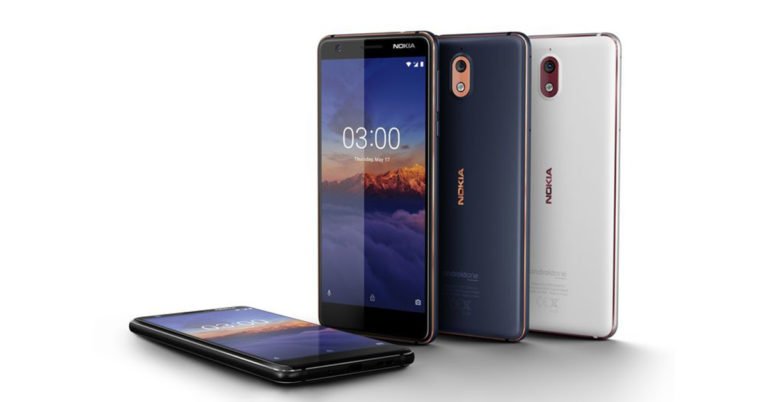
Do you own a Nokia 3.1 smartphone? If the answer is yes, you have a reason to be happy about. HMD Global has announced that it has started rolling out the Android Pie software update to the Nokia 3.1 smartphone. We should mention that just six months back in September 2018, the Nokia 3.1 started receiving the Android 8.1 Oreo update.
We would have been surprised to see such a quick Android Pie update had it been any other smartphone, but considering HMD Global’s record of keeping all its devices updated with the latest Android version, we can only say that we are impressed once again.
However, it is worth noticing that Android Pie for Nokia 3.1 is not being rolled out globally as of now and it is limited to a few regions.
It was tweeted by HMD Global’s Juho Sarvikas that the roll out of the Android Pie update for Nokia 3.1 has begun. But we should mention that it has not been specified whether the roll out of the update is phased or not. Another thing that has not been mentioned is whether the Android Pie update on Nokia 3.1 gets the latest Android security patch.
To celebrate @AndroidAuth recognizing us for the best pie delivery in the industry, it is our pleasure to cater you a very special serving 😋🍰! Your premium companion, Nokia 3.1 now offers the sweetest experience with Android 9, Pie! Nokia smartphones get better with time! pic.twitter.com/Wa9bIaJBxt
With Android Pie, Nokia 3.1 will get the following new features:
App Actions – Helps get things done faster by predicting the user’s next move and displaying the right action.
Slices – Identifies relevant information of favourite apps to make them more easily accessible when required.
Adaptive Battery – Uses deep learning to understand usage patterns and prioritise battery power on important apps.
Adaptive Brightness – Automatically adapts phone brightness by learning from user interactions with different settings.
New system navigation – Features a single home button that provides intelligent predictions and suggestions (user enabled).
Digital Wellbeing – Gives users a complete picture of their digital habits and disconnect when they want to.
To recall, Nokia 3.1 sports a 5.2-inch HD+ (720×1440 pixels) display that comes with an aspect ratio of 18:9 and is protected by a layer of Corning Gorilla Glass. Powered by an octa-core MediaTek MT6750N processor, the smartphone comes with 3GB of RAM and has 32GB of internal storage. It can also hold a microSD card of up to 128GB. Nokia 3.1 has a dual rear camera setup with 13MP and 8MP sensors and packs a 2,990mAh battery.
Last month, HMD Global also rolled out the Android Pie update to Nokia 3.1’s successor – Nokia 3.1 Plus. We should mention that all Nokia smartphones by HMD Global are a part of Google‘s Android One programme, which means that the company ensures that they get timely Android updates and security patches.
This week, Apple announced that it will be holding an event on March 25 and right after the company made the announcement, speculations about what the company has up its sleeve started circulating on the internet. Although a number of speculative media reports have surfaced online, most of them agree on two things that Apple may be launching on March 25: A video streaming service and a subscription-based news service.
And now, a new report in Bloomberg claims that the Cupertino-based technology giant is expected to reach deals with HBO, Showtime, and Starz in time, so its much-awaited and talked-about video service will be able to make a debut on March 25. The report also said that most of the shows and movies on Apple’s service at the time of launch will be from third-parties.
However, we should also add that the company has spent money on original programming and has also signed deals with a number of big names, however, in spite of this, Apple wouldn’t have a lot of exclusive content right at the inception of the service. But then, it does have some existing content of its own Carpool Karaoke: The Series.
It has also been reported that three premium networks are still in negotiations with Apple over user experience and marketing. However, a deal with a few of them is expected to be finalised by the end of this week.
Previous reports have indicated that both Netflix and Hulu don’t want to partner with Apple for its upcoming service. While Hulu has some of its content listed on Apple TV app, the company is not very interested in strengthening its relationship with Apple more than this. Netflix has a different story altogether. It is reported to be tired of Apple’s subscription terms to the extent that it doesn’t even allow customers to sign up directly from its iOS app.
From Bloomberg’s report, it seems like Apple is signing content partnerships with various content creators to make an all-in-one streaming service like Netflix. However, there are certain indications that suggest that the technology company will be selling its subscriptions to some partner video apps from the TV app. However, we would have to wait till March 25 to know what exactly Apple has up its sleeve. Another question that will remain unanswered till March 25 is that what Apple TV app will have to offer to non-subscribers once these services are made available.
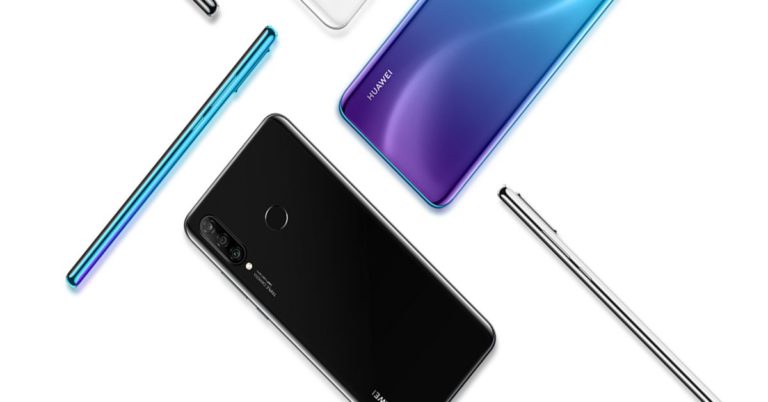
Chinese smartphone maker Huawei has unveiled its Nova 4e smartphone in China today. The new smartphone will be a part of Huawei’s mid-range line-up of smartphones and it will come with double-curved glass body, rear-mounted fingerprint scanner and a triple-rear camera. Along with the Chinese market, the company also introduced the smartphone in the Malaysian market.
In This Article
Huawei Nova 4e price
Huawei Nova 4e is priced at CNY 1,999 (approximately Rs 21,000) for the 4GB RAM/ 128GB storage variant. On the other hand, the 6GB RAM/ 128GB storage variant of the Nova 4e costs CNY 2,299 (approximately Rs 24,000).
The smartphone will be available for pre-order today onwards in China but the official sale of the Nova 4e will start from March 21.
Furthermore, in Malaysia, Huawei will be selling the Nova 4e at an earlier date than the Chinese market. In Malaysia, the smartphone would be available for purchase from March 16 and it will carry a price tag of MYR 1,199 (approximately Rs 21,000) for the 6GB RAM and 128GB storage variant. The Nova 4e will come in three colour options — Garland Blue, Pearl White, and Magic Night Black.
Other than China and Malaysia, there is no information about the launch of Huawei Nova 4e in other markets.
Huawei Nova 4e specifications
Huawei Nova 4e sports a 6.15-inch Full HD+ (1080 x 2312 pixels) resolution IPS display with pixel density of 415ppi. The device is powered by an octa-core HiSilicon Kirin 710 SoC and it runs Android 9.0 skinned with EMUI 9.0.1. Huawei Nova 4e comes in two variants – one with 4GB RAM and the other with 6GB RAM. But both the variants come with the same 128GB storage capacity. It also supports a microSD card of up to 512GB and packs a 3,340mAh battery.
On the camera front, Huawei Nova 4e packs a triple-rear camera setup comprising of a 24MP wide-angle lens with f/1.8 aperture paired with an 8MP ultra-wide-angle lens and a 2MP depth sensor. On the front, there is a 32MP selfie camera with f/2.0 aperture.
For connectivity, the Huawei Nova 4e comes with Wi-Fi 802.11ac, Bluetooth 4.2 and 4G VoLTE.
It should be noted that the launch of Huawei Nova 4e in the mid-range segment comes days before the launch of the company’s upcoming smartphones – P30 and the P30 Pro – which are scheduled to be launched on March 26 in Paris, France. Huawei P30 Pro will be a top-of-the-line smartphone from the company and it would go toe-to-toe with the Samsung Galaxy S10 series.
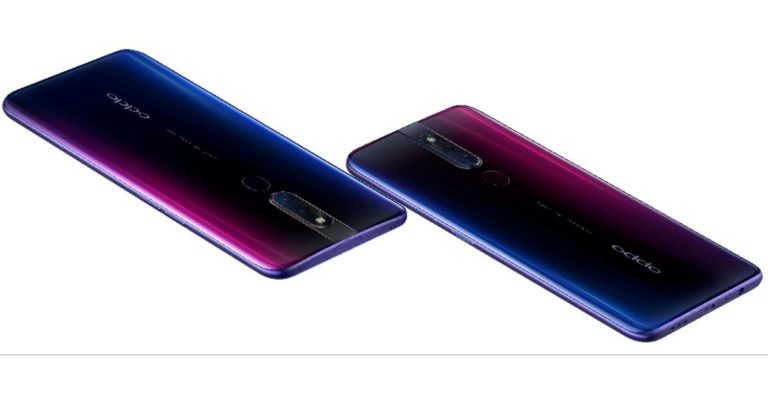
If you have been planning to buy a mid-range smartphone, we have some news for you. The recently launched Oppo F11 Pro will go on its first sale tonight at 12 pm. The device will be available on Flipkart, Amazon.in, Snapdeal, Paytm, and all Oppo stores. The smartphone packs powerful specifications and it is powered by the MediaTek Helio P70 SoC. Oppo F11 Pro comes in two colour options – Thunder black and Aurora Green.
In This Article
Oppo F11 Pro price and launch offers
The Oppo F11 Pro has been launched in only one variant in India – which comes with 6GB RAM and 64GB storage and costs Rs 24,990. The smartphone will be available on Flipkart, Amazon.in, Paytm, Snapdeal and Oppo stores.
If you pay for the purchase of Oppo F11 Pro using an HDFC Bank debit or credit cards, you will get a 5% cashback on EMI transaction. Other than this, customers will also get a full accidental damage protection for 180 days after the purchase of the smartphone. Along with that, customers can avail a discount of Rs 1,000 on flight tickets and Rs 175 off on bus tickets via ixigo. During the first sale of the Oppo F11 Pro, the customers would get 3 months free subscription worth Rs 3,400 and will also get up to 3.2TB of data and benefits up to Rs 4,900 on Reliance Jio. The customers would also get free mobile insurance for one year but it will only be applicable on finance cased from IDC first through IDFC. All the offers on Oppo F11 Pro is valid from March 15 to March 17.
Oppo F11 Pro specifications
Oppo F11 Pro sports a 6.5-inch full-HD+ Panoramic LCD display with 90.9% screen-to-body ratio. The device is powered by MediaTek Helio P70 SoC coupled with 6GB RAM and 64GB storage. Oppo F11 Pro sports a dual-rear camera setup that comprises of a 48MP primary sensor and a 5MP secondary sensor. The front camera is a pop-up selfie camera of a 16MP sensor with Face ID technology. The front-facing snapper comes with f/1.79 aperture, ball-bearing closed-loop VCM, 6P lens, and 1/2.25-inch image sensors to bring more light for low-light photography.
The Oppo F11 Pro runs Android 9.0 Pie skinned with Color OS 6.0. It packs 4,000mAh battery and has VOOC 3.0 charger for fast-charging.
Will Yang, CMO of OPPO South Asia said, “With the launch of the OPPO F11 Pro, we aim to enhance the power and style quotient of our Indian customers enabling them to explore and master the low light photography experience. Today, we are delighted to announce the exciting first sale of OPPO F11 pro and we are hopeful that the device too will receive the same love and appreciation that we have received for the rest of our devices so far.”
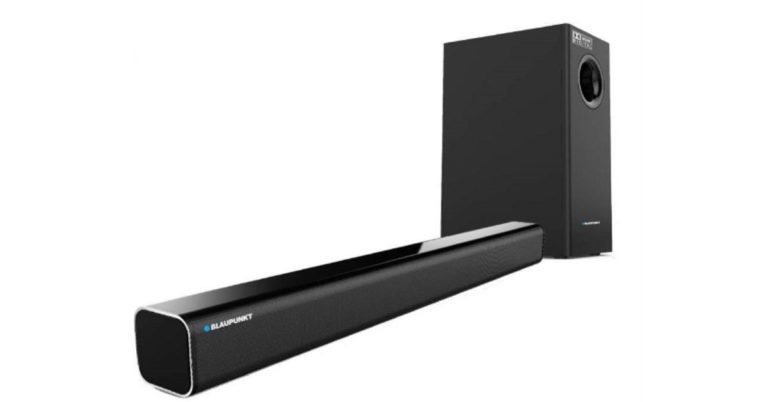
German audio equipment manufacturer Blaupunkt has launched new range of soundbars in India named SBW-50 (120W) and SPW-01 (80W). The newly launched soundbars come with wired subwoofers and the company has promised that they will be able to deliver heavy bass with 3D cinematic sound. Blaupunkt has also stated that it will launch more audio equipment and products in the coming months in India. With the launch of SBW-50 (120W) and SPW-01 (80W) soundbars, the company hopes to increase its traction in the Indian audio equipment market. Here’s a look at the price and specifications of the newly launched soundbars by Blaupunkt:
In This Article
Blaupunkt SBW-50 (120W) and SPW-01(80W) price and availability
While Blaupunkt SBW-50 (120W) bears a price tag of Rs 12,990, the SPW-01 (80W) soundbar is priced at Rs 17,990.
Both the products are available online through e-commerce shopping platforms – Flipkart and Amazon India.
Blaupunkt SBW-50 (120W) and SPW-01 (80W) specifications
The Blaupunkt SBW-50 (120W) packs a 120W RMS and it comes with one 6.5-inch woofer with two 2.25-inch speakers. It can be used by plugging in an AUX cable, by Bluetooth, by USB cable and optical audio. Its woofer is a side firing type and it has LED display through which it is able to show the details about the activity. The Blaupunkt SBW-50 (120W) comes with 4 pre-sets, namely, equaliser mode, movie, news, sports and music and it is 80 x 6.7 x 6.7 cm in dimension.
Blaupunkt SBW-50 (120W)
Andrzej Cebrat, Managing Director of Blaupunkt said, “Blaupunkt SBW-100 Soundbar with its performance-tuned surround sound will surely become the first choice of Indian users in the home audio market. Blaupunkt with its century-old legacy of impeccable innovation and 20+ years of experience in Indian audio products segment aims to raise the bars in India market and meet consumer demands with home audio products. With Envent as our India partner for Audio products, we believe that our home audio products including our exclusive SBW-100 Soundbar will become perfect companions for Indian youth and music lovers, that too in a price range that fits every pocket.”
On the other hand, the Blaupunkt SPW-01(80W) packs an 80W RMS. Similar to the SBW-50 (120W) it comes with one 6.5-inch woofer along with two 2.25-inch speakers. The SBW-01 (80W) too supports an AUX cable, Bluetooth, USB cable and optical audio. It holds a side-firing woofer, but unlike the other soundbar it comes with DOLBY surround sound. The SPW-01 (80W) comes with digital signal processor and is 80 x 6.7 x 6.7 cm in dimensions.
Chinese smartphone brand Honor took the wraps off its View 20 smartphone in India recently. The Honor View 20 smartphone is the first handset to come with a punch hole display in India. It also comes with a 48MP primary camera and is powered by 7nm octa-core HiSilicon Kirin 980 processor. We spent a few days with the newly launched the Honor View 20 handset and here is what we think of it:
In This Article
Design and Display
Like always, we’ll begin by talking about the design of the smartphone. Honor has made sure that its View 20 smartphone manages to make quite an impression with its appearance on the users. The Honor View 20 smartphone comes with a glossy back panel, but unlike most other devices in the same range, the company has added a V-shaped pattern here that reflects light when the handset is placed at certain angles. Honor View 20 was launched by the Chinese smartphone brand in three colour variants – Midnight Black, Phantom Blue and Sapphire Blue. The device that we got for review was dressed in Sapphire Blue and we should also add that if you wish to buy the Phantom Blue coloured option, it is only available in 8GB RAM/256GB storage version.
We found the design of the Honor View 20 to be very premium and the company has made efforts to make the smartphone look different from its rivals. One-handed usage is easy on the device as its curved sides make it comfortable to use. The rear panel of Honor View 20 smartphone is made of glass and its frame is made of metal. As we mentioned earlier, Honor View 20 smartphone has V-shaped patterns on its back panel that are visible only at certain angles. It adds a jazzy look to the design of the handset.
Besides this, the back panel of the smartphone houses the dual rear cameras. While one sensor is in one module alone, the other is coupled with the LED flash of the device. And they are placed horizontally rather than vertically. The fingerprint sensor and the Honor branding are also on the back of the handset. The power and the volume buttons of the Honor View 20 smartphone are placed on its right edge, while the SIM tray is on the left. On the top edge, you will see that the 3.5mm headphone jack, an IR emitter and an ambient light sensor are placed. At the bottom, the USB Type C port, the loudspeaker and the primary microphone of the handset are present.
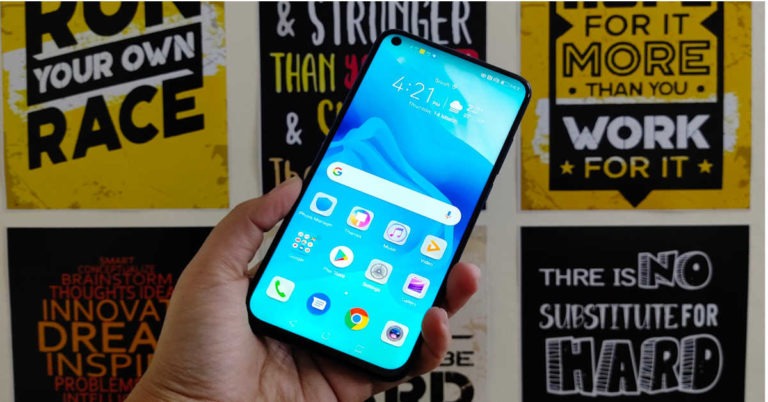
The front panel of the Honor View 20 smartphone is dominated by a 6.4-inch full HD+ display that has a punch hole on the top left to house the selfie camera. We should mention that Honor View 20 is the first smartphone to launch in India to come with a display like this. Otherwise, we have seen devices with notches, sliders or pop-up cameras. Although we were apprehensive about the punch hole display hampering the video watching experience on Honor View 20, it surprisingly didn’t pose any issues during our time with the mobile. The primary reason for this is that the hole is located in the corner of the display so it didn’t hinder the experience too much. In fact, notches are more of a distraction than the hole.
We really liked the display of this smartphone. It showed bright colours that remained consistent at different viewing angles and projected sharp images. Never did the images or videos on Honor View 20‘s display lose clarity. Furthermore, there is an option of adjusting the colour temperature on the handset’s display, so you can make them warmer to keep your eyes protected. In addition to this, you can choose the option of ‘Smart Display’ so that the resolution of the smartphone can be reduced to HD+ (automatically) to save power.
To sum it up, we would say that the design and the display of Honor View 20 really impressed us. The look and feel were very refreshing and premium. The display kept us hooked to our handset as we couldn’t stop watching our favourite shows on it, too.
Performance and Cameras
Before we talk about the performance of the smartphone, let’s talk about its specifications. Honor View 20 handset runs Android Pie skinned with Magic UI 2.0 and is powered by Huawei’s 7nm octa-core HiSilicon Kirin 980 processor clubbed with 6GB/8GB RAM. The 6GB RAM model has 128GB of internal storage and the 8GB RAM has 256GB storage. Honor View 20 has a dual rear camera setup that comprises of a 48MP Sony IMX586 sensor with an f/1.8 aperture and a 3D ToF sensor. For selfies and video calls, there is a 25MP front-facing snapper. The device houses a 4,000mAh battery and it has support for 4G VoLTE, Bluetooth v5.0, Wi-Fi, GPS, and USB Type-C.
Coming to the software of the smartphone, it has a number of customisations. Although Android 9.0 Pie skinned with Magic UI is present, we should point out that it looks a lot like EMUI. The UI has been designed so that using the device with punch hole display remains a smooth experience. So, you will see that all the notifications on the display are placed on the right instead of the centre.
The Honor View 20 smartphone also comes with Digital Balance, that we earlier saw on Huawei Mate 20 Pro. The feature lets you manage how much time you spend on your smartphone. You can also opt for gesture navigation and a navigation dock instead of using the usual Android navigation buttons. We should add here that the navigation dock is actually a single floating button on the display of the smartphone that can be used to navigate.
The device had some pre-installed apps including Honor Club, Party Mode, HiCare, Camera360, Vigo Video, Facebook, Facebook Messenger, and Netflix. We should mention that some apps that are the company’s own cannot be uninstalled.
Speaking of the performance of the smartphone, we were really impressed by it. The combination of the Kirin 980 SoC and 6GB RAM managed to pull off some very heavy-duty tasks on the Honor View 20. We could easily launch and switch between a number of apps and even when we had 7-8 apps running in the background, we noticed no lag in the smartphone’s performance. We often used the Honor View 20 smartphone for multitasking like playing games and using it for navigation at the same time. Sometimes, we even watched shows on Netflix while using the device for getting directions to a certain place. Honor View 20 handled it all well.
Next thing to notice is that the smartphone does not come with an in-display fingerprint sensor. It has a physical fingerprint scanner and comes with face unlock, too. However, we personally didn’t find it to be an issue as we have a preference for physical fingerprint scanners over in-display fingerprint sensors since they don’t really match up to them in terms of accuracy. The face unlock of the smartphone worked perfectly in well-lit conditions, but in dimly lit areas, it at times failed to unlock the smartphone.
We ran a few benchmark tests on the smartphone. While it scored 3,237 and 8,693 in Single and Multi-core scores on Geekbench, in Antutu it scored 2,57,424.
Coming to gaming, even heavy games like PUBG Mobile or Asphalt 9: Legends ran well on the smartphone. If you are someone who loves to spend hours playing games on your smartphone, Honor View 20 wouldn’t disappoint you. And it was a sheer cakewalk to play games like Temple Run 2 and Alto’s Odessey on this mobile device.
However, we must add that at times, when we used the mobile phone for heavy games and navigation, it did heat up a bit, like most other handsets with a glass back panel.
Coming to the 4,000mAh battery of the smartphone, it takes about an hour to be charged completely. And with usage that involves Google Maps, gaming, watching YouTube videos, and using social media apps, the battery lasted more than a day.
Moving on to the cameras of the smartphone, Honor View 20 sports a 48MP primary shooter coupled with a TOF 3D camera. The camera app of Honor View 20 smartphone comes with a regular photo and video modes, AR Lens, Night, Pro, Portrait, Aperture, Panorama, Artist and HDR modes. The images taken by Honor View 20 turned out to be superb. Although the camera is set on 12MP by default, you can adjust the settings to click images that are 48MP in resolution. This is something that we also saw in Huawei Mate 20 Pro.
In well-lit conditions, the images were clear and sharp and had very accurate colours. When we enabled AI, there was a very visible difference as the contrast became higher and more details were added to the images.
In low-light, the images turned out to be good too. We even clicked some pictures in a room that had literally no light at all, and still, the shots turned out to be great. Enabling AI made the shots taken in dimly lit areas better too.
We clicked some Portrait shots and some shots with HDR mode on, and in both cases, we were happy with the results that we got. In the Portrait mode, there is an option of slimming the person down and making them look thinner by adding beauty modifications.
We simply loved the selfie camera of the device. To test how it works in conditions where there is literally no light, we clicked some pictures in a cinema hall. And our selfies turned out to be great, even without AI and beauty mode on. When we enabled them, the images became even better. In daylight, the shots taken were obviously better than the ones taken in dimly-lit areas.
As a whole, you can say it has one of the best cameras on it in this price range. If you are a photography lover, you would not be disappointed at all.
Verdict
At Rs 37,999, Honor View 20 smartphone is a great buy. The design is unconventional, the display is vibrant, the cameras are great and the device has an incredibly smooth performance. Some may not like the idea of having a display with a punch hole, since they may feel it’s a hindrance in watching videos, we did not encounter this issue during our time with our phone. There were instances when we felt that the handset warms up when we multitasked, but then that is an issue with all smartphones with glass back panels.
The software is extremely customised, so if that is not your cup of tea, you can go for OnePlus 6T for a cleaner UI at the same price from brands like Nokia. The facial recognition could have been better, but that is surely not a deal-breaker as the fingerprint sensor works just fine. None of these ‘issues’ is big enough, in our opinion. You would certainly not be disappointed if you buy the Honor View 20 smartphone. It is a solid performer and is great to look at too.