Xiaomi Black Shark 2 with up to 12GB RAM, Snapdragon 855 SoC launched in India: Price and specifications

Chinese smartphone brand Xiaomi has launched its Black Shark 2 smartphone in India today. The gaming smartphone had launched in China in March this year and its key highlights include a massive 12GB of RAM and Qualcomm Snapdragon 855 processor. The Xiaomi Black Shark 2 handset also comes with some gaming-centric features like Liquid Cool 3.0 technology and a touch response rate of 240Hz. Here are the price details and specifications of the newly launched Xiaomi smartphone in India:

Xiaomi Black Shark 2 price in India

Xiaomi Black Shark 2 is available in two storage variants in India. While the base variant has 6GB of RAM and 128GB of internal storage, the high-end model has 12GB of RAM and 256GB storage. The former is priced at Rs 39,999, and the latter would cost you Rs 49,999. Black Shark 2 smartphone is available Shadow Black and Frozen Silver colour options. Both the variants of the Black Shark 2 smartphone will be available starting June 4 on Flipkart’s website.

Xiaomi Black Shark 2 specifications

Xiaomi’s Black Shark 2 smartphone is the successor of the Black Shark smartphone that the company launched last year. It comes with the Liquid Cool 3.0 technology that is claimed to increase the heat dissipation by 20 times. The handset also houses Qualcomm’s Snapdragon Elite Gaming that helps it in delivering an enhanced gaming experience on the go. The smartphone also has a pressure-sensing Magic Press technology.

The smartphone has support for dual SIM cards and it runs Android 9.0 Pie operating system. The device features a 6.39-inch full-HD+ AMOLED display that has an aspect ratio of 19.5:9 and comes with TrueView Display support. Powered by an octa-core Qualcomm Snapdragon 855 SoC, the smartphone comes with Adreno 640 GPU and up to 12GB of RAM.

For imaging duties, the Black Shark 2 has a dual rear camera setup that consists of a 48MP primary sensor with an f/1.75 aperture and a 12MP secondary sensor with an f/2.2 aperture. The camera of the smartphone has support for 2x optical zoom. The device has a 20MP selfie camera with an f/2.0 lens.

The Black Shark 2 comes with up to 256GB of UFS 2.1 storage. For connectivity, there are options like 4G VoLTE, Wi-Fi, Bluetooth v5.0, GPS/ A-GPS, and USB Type-C port. Sensors on Xiaomi Black Shark 2 include accelerometer, ambient light, and a gyroscope. It also has an in-display fingerprint scanner and houses a 4,000mAh battery.

For the latest gadget and tech news, and gadget reviews, follow us on TwitterFacebook and Instagram. For newest tech & gadget videos subscribe to our YouTube Channel. You can also stay up to date using the Gadget Bridge Android App.

OnePlus 7 Pro receives a new OxygenOS 9.5.4 update with camera improvements and bug fixes

0

It has not even been a month since the launch of OnePlus 7 Pro and the company has already released a new software update for the new smartphone. The new OxygenOS update will come with camera improvements for the device. The new update for the OnePlus 7 Pro is bringing the new OxygenOS 9.5.4 in India and various other markets as well and as OxygenOS 9.5.5 in Europe. The new update for the OnePlus 7 Pro comes with HDR support and it enhances the low light image quality of the device. Other than that, the general system improvements have also been made to the OnePlus 7 Pro along with optimizations designed for Double Tap to Wake. There is also Ambient Display included in the OnePlus 7 Pro update.

When launched, the camera of the OnePlus 7 Pro was supposed to be one of its major selling point, but the fans and critics were disappointed with the camera performance of the device. So the new camera improvements update will enhance the imaging performance of OnePlus 7 Pro. The update was announced on the official OnePlus forum.

In the blog post, the company said about the update, “This OTA will have a staged rollout, the OTA will be received by a limited number of users today and will have a broader rollout in a few days after making sure there are no critical bugs.”

According to the official announcement, the new OxygenOS 9.5.4 update and the OxygenOS 9.5.5 update will be rolling out in India, Europe and other markets for the OnePlus 7 Pro. As mentioned above, the new update brings improvements to the Image Quality in HDR and low light conditions. Other than that, the new update for the OnePlus 7 Pro also fixes the white balance and focus issues of the device.

System improvements of the OnePlus 7 Pro includes Double Tap to Wake and Ambient Display. The new OxygenOS update has also fixed the issue of audio delay which happened when connected to a Bluetooth headphone when playing games. Lastly, there are bug fixes and general overall improvements that have been made in the new update for the OnePlus 7 Pro.

The new update comes as an OTA (over-the-air) rollout and would take some time to reach all the OnePlus 7 Pro. It is 182MB in size and when it will reach the users’ respective regions, they will be notified about the update. But if its not, they can go to Settings, and then to System Update to manually look for the update.

For the latest gadget and tech news, and gadget reviews, follow us on TwitterFacebook and Instagram. For newest tech & gadget videos subscribe to our YouTube Channel. You can also stay up to date using the Gadget Bridge Android App.

Huawei CEO will be ‘the first to protest’ if the Chinese government retaliates to US trade ban

Founder and CEO of Chinese smartphone brand Huawei, Ren Zhegfei, has done a number of interviews in the last week in which he has spoken about the US trade ban on his company. In an interview with Bloomberg, Zhengfei has said that he neither expects nor hopes for a retaliation from the Chinese government when it comes to the ban placed on Huawei placed by Trump’s administration. He said, “That will not happen, first of all. And second of all, if that happens, I’ll be the first to protest.”

Since the US government has imposed a ban on all companies in the country on doing business with Huawei, a number of technology websites have halted their dealings with the Chinese smartphone brand. These include Google, which has revoked the company’s license to use Android and its other services, Intel, Qualcomm, Broadcom, ARM and Microsoft. It should be noted that ARM is based in the UK, but it has stopped its business after the US trade ban with Huawei because of some of its processors are produced in the US.

We should mention that the American security agencies have called out the situation as a national security threat and it has urged people to not buy smartphones from Huawei. Allegations regarding intellectual property and trade secret theft have been levied on the Chinese smartphone brand and this has tarnished its reputation in spite of the fact that no material evidence of wrongdoing has been found yet.

President Trump recently said that the measures taken by him and his government are more of a trade negotiation move against China than a real security response to the smartphone brand.

In a situation like this, it may be right for Huawei to look for the Chinese government’s support. However, CEO Zhegfei has taken a very different approach to the matter. He has said that the company’s current situation is like managing an aircraft with a hole on its side, so it’s far from being great, but at least the plane is still up. The company will have to make appropriate adjustments too.

We should also add that it has been reported that the company has stockpiled components from each of these companies that will last them three months to a year. However, stockpiling is not a permanent solution and the company would have to think of a way to deal with this problem with a more long-term and effective solution if it wants to survive.

For the latest gadget and tech news, and gadget reviews, follow us on TwitterFacebook and Instagram. For newest tech & gadget videos subscribe to our YouTube Channel. You can also stay up to date using the Gadget Bridge Android App.

AMD’s 3rd gen Ryzen 3900X with a boost clock speed of 4.9GHz launched at Computex 2019

The Computex 2019 is scheduled to be held tomorrow on May 28, 2019 and will go on till June 1, 2019 in Taipei, Taiwan. Ahead of the event, Intel announced its new Core i9-9900KS CPU with a clock speed of 5GHz. Now, AMD has officially announced its new 3rd Gen high-performance Ryzen CPU – the AMD Ryzen 3900 which costs 50% less than the Intel’s Core i9-9920X CPU. The new AMD Ryzen 9 3900X is based on the 7nm architecture which consumes less power. The newly launched 7nm Ryzen 9 3900X is a 12 core CPU with 24 threads and holds a price tag of $499 (approximately Rs 35,000).

The new top-end CPU from AMD, the Ryzen 9 3900X has a smaller Thermal Design Power (TDP) at 105W unlike the Intel Core i9-9920X. It has a boost clock speed of 4.9GHz on all twelve cores. The company also showed a demo at the Computex 2019 where the Ryzen 9 3900X was put against the Intel’s Core i9-9920X. The Ryzen 9 3900X is 19% faster than the Core i9-9920X. The Ryzen 9-3900X is also twice the price of Intel’s CPU making it cost efficient.

Counting all the launched CPUs by AMD in is new 3rd Gen Ryzen CPUs we see that the AMD Ryzen 9 3900X will be the top-end processor launched by the company. The new Ryzen 9 3900X has 12 cores and 24 threads. It will have a boost clock speed of 4.9GHz and will pack 70MB cache. The top-end CPU will be powered by 105W TDP and will hold a price tag of $499 (approximately Rs 34,656). The next in line is the AMD Ryzen 3800X which comes with 8 cores and 16 threads. It has a boost clock speed of 4.5GHz and 32MB cache. It is powered by 105W TDP and holds a price tag of $399 (approximately Rs 27,711).

The Ryzen 3700X is the next in line and comes with 8 cores and 16 threads. It has a boost clock speed of 4.4GHz, has 36 MB cache and 65W TDP. It is priced at $329 (approximately Rs 22,849). The last in line and the cheapest of the lot is the AMD Ryzen 3600 which comes with 6 cores and 12 threads. It has a boost clock speed of 4.4GHz and has 36MB cache. The Ryzen 3600 is powered by 65W TDP and is priced at $199 9 approximately Rs 13,820).

All the new AMD 3rd Ryzen CPUs will be made available from July 7, 2019 onwards.

The company also launched new GPUs along side its CPUs at the event – the new AMD Navi graphics units. The new AMD Navi graphic units will be powering the upcoming Radeon RX 5000GPUs which will be made available in the markets in July 2019.

For the latest gadget and tech news, and gadget reviews, follow us on TwitterFacebook and Instagram. For newest tech & gadget videos subscribe to our YouTube Channel. You can also stay up to date using the Gadget Bridge Android App.

Intel has previewed its new 10nm ‘Ice Lake’ CPU for Ultrabooks and Core i9-9900KS CPU

0

Ahead of the upcoming Computex 2019, Intel previewed its new 10nm ‘Ice Lake’ CPUs meant to be used in the Ultrabooks laptops. These Ice Lake CPUs will have integrated Gen11 graphics capabilities. Intel also showed the performance numbers of the CPU and these numbers were better and higher than the current Intel’s Gen9 integrated CPUs and the AMD’s Ryzen 3000 series APUs for laptops. According to Intel, the Gen11 Ice Lake CPUs also support VRS (variable rate shading) which is a DirectX 12 feature that allows games to drop the shading part of frame which doesn’t need it. In addition to this, the Gen11 CPUs will reportedly achieve a 1 Teraflop of computing bandwidth.

The 10nm Ice Lake CPUs also comes with AI performance acceleration using the VNNI (Vector Neural Network Instructions). Intel also said that the AI inference instructions running on Ice Lake CPUs with Gen11 graphics is up to 8.8 times faster than any other comparable CPU. The graphs show that the performance of Ice Lake CPUs is 1.42x and 2.08x across the number of demanding games and benchmark scores running at 1080p. While comparing it to a similar AMD CPU, the numbers vary from 0.94x and 1.16x. These numbers were generated by the company itself in its own labs but the real-world performance of the CPU is not currently known.

Although the Ice Lake CPUs was previewed by Intel and more details of it will be revealed at Computex 2019, but they will launch in the second half of the year. But Intel is also expected to provide the 10nm chips for the thin and light Ultrabooks, while for gaming and other heavy usage laptops, the 14nm chips will be used.

Other than that, the company also announced a new consumer-based CPU – Core i9-9900KS with a base clock speed of 4GHz. But it can also be pushed to 5GHz using the Turbo Boost speed on all cores. The new Core i9-9900K will be able to reach 5GHz but only on two cores, while its all-core Turbo Boost speed is 4.7GHz. Other details about the new Core i9-9900KS chips have been announced by the company and it is not yet confirmed whether it will work within the same 95W TDP as the earlier Core i9-9900K or not. Also, the pricing and the availability of the new chip is currently not known. More details about the new chip will be announced at the Computex 2019.

For the latest gadget and tech news, and gadget reviews, follow us on TwitterFacebook and Instagram. For newest tech & gadget videos subscribe to our YouTube Channel. You can also stay up to date using the Gadget Bridge Android App.

 

Xiaomi Black Shark 2 to launch in India today: How to watch the live stream

Chinese smartphone brand Xiaomi is all set to launch its Black Shark 2 gaming smartphone in India today. The launch of the Black Shark 2 smartphone is all set to take place in New Delhi at 1 pm IST. The company has also made the live stream of the launch of the smartphone available, so you would be able to see the Xiaomi Black Shark 2 get unveiled in India. The smartphone was launched in China in March this year, so we already know its specifications. The key announcements today will be its price and availability details. Read on to get more details about the smartphone launch:

Xiaomi Black Shark 2 price in India (expected)

In China, the Xiaomi Black Shark 2 smartphone is available in four storage models – 6GB RAM/128GB storage, 8GB RAM/128GB, 8GB RAM/256GB storage and 12GB RAM/256GB storage. While the base model is priced at CNY 3,199 (approximately Rs 32,700), the 8GB RAM/128GB storage model costs CNY 3,499 (approximately Rs 35,800) and the 8GB RAM/256GB storage variant is priced at CNY 3,799 (approximately Rs 38,800).

The most high-end model is priced at CNY 4,199 (approximately Rs 42,900). Even in India, the smartphone is expected to be priced similarly. We have attached the live-stream of the launch event of the Black Shark 2 here, so you can also come to the thin page to watch the launch. You can also head to the company’s YouTube channel at 1 pm to watch the device getting launched.

Xiaomi Black Shark 2 specifications

Xiaomi Black Shark 2 has already been unveiled in China as well as Europe. So, most of the specifications of the smartphone are expected to remain the same. Powered by the Snapdragon 855 SoC, the Black Shark 2 comes with up to 12GB RAM.

The handset has up to 256GB of internal storage. Xiaomi Black Shark 2 smartphone sports a 6.39-inch AMOLED display. According to the company, the Black Shark 2 uses the world’s first ‘direct touch multilayer liquid cooling system’ that is claimed to keep the CPU 14-degrees cooler.

For imaging duties, the Black Shark 2 smartphone has a dual-rear camera setup on its back panel that has a 12MP primary camera and a 12MP secondary camera with 2x optical zoom. The smartphone has a 20MP front-facing snapper on its front panel that is meant for selfies and video calls. The Black Shark 2 houses a 4,000mAh battery and sports an in-display fingerprint scanner.

For the latest gadget and tech news, and gadget reviews, follow us on TwitterFacebook and Instagram. For newest tech & gadget videos subscribe to our YouTube Channel. You can also stay up to date using the Gadget Bridge Android App.

Oppo Reno Z with 48MP primary camera, 6.4-inch display launched: Price and specifications

After the launch of Oppo Reno, Reno 10x Zoom and Reno 5G smartphones, the Chinese handset maker has launched its Oppo Reno Z mobile in Europe. The smartphone comes with a water-drop style notch display, a pop-up selfie camera and is powered by Qualcomm’s Snapdragon 710 SoC. Here are the price details and specifications of the newly-launched Oppo Reno Z smartphone:

Oppo Reno Z specifications

The Oppo Reno Z smartphone features a 6.4-inch AMOLED display that comes with an aspect ratio of 19.5:9 and has a full HD+ resolution of 1080 x 2340 pixels. The display of the smartphone has a fingerprint scanner embedded on it. Powered by Qualcomm Snapdragon 710 mobile platform, the smartphone comes with 6GB of RAM and 128GB of internal storage. The handset can hold a microSD card for more storage. Oppo Reno Z smartphone runs Android 9.0 Pie skinned with ColorOS 6.0.

On the camera front, Oppo Reno Z has a dual rear camera setup that has a 48MP Sony IMX596 sensor and a 5MP depth sensor. For selfies and video calls, there is a 32MP sensor in the pop-up camera module.

The rear panel of the smartphone has a glass back and it features an O-Dot ceramic point that protects the camera sensors of the smartphone when it is placed on flat on the surface. Oppo Reno Z houses a 3,950mAh battery that has support for 20W VOOC 3.0 Flash Charge technology. Connectivity options of the smartphone include 4G VoLTE, Wi-Fi, Bluetooth 5.0, GPS, NFC, USB-C and 3.5mm audio jack.

To recall, Oppo Reno 10x Zoom Edition has a 6.6-inch panoramic AMOLED display and is powered by an octa-core Snapdragon 855 SoC clubbed with up to 8GB RAM and up to 256GB inbuilt storage. The Oppo Reno 10x Zoom Edition houses a 4,065mAh battery that has support for VOOC 3.0 support.

For imaging duties, the Oppo Reno 10x Zoom Edition comes with a triple-rear camera setup with a 48MP Sony IMX586 sensor, a 13MP periscope telephoto lens and an 8MP super wide-angle lens. For selfies and video calls, Oppo Reno 10x Zoom Edition sports a 16MP swing front facing camera.

Oppo Reno Z price and availability

The Oppo Reno Z smartphone is available only in 6GB RAM/128GB storage option that costs EUR 150. In Europe, the sale of the smartphone will begin in June and it will be available in Ocean Green and Jet Black colour options. As of now, there is no word on when the device will be available in other markets including India.

For the latest gadget and tech news, and gadget reviews, follow us on TwitterFacebook and Instagram. For newest tech & gadget videos subscribe to our YouTube Channel. You can also stay up to date using the Gadget Bridge Android App.

Google to soon announce its Stadia’s price, game titles and launch information soon

Google unveiled its new cloud-based gaming service called Stadia at its GDC 2019 (Game Developers Conference) in March. At the event, the company didn’t reveal the exact price or game titles that Google’s Stadia will come with. But now, Google may announce the price and upcoming game titles which will be coming to the Stadia among other information.

This was confirmed by Google Stadia’s official Twitter handle where it announced that it would be revealing the price, game announcements and launch information about the platform. It also said that “Stay tuned here for more Stadia details coming soon.” This tweet reveals that the company will soon be launching the game and price of the Stadia. The company might share these above-mentioned details this summer itself.

Talking about Google Stadia, the Stadia is a cloud-based infrastructure where the game developers can easily design and write the games. Then they would also be able to run those games directly on Google’s hardware at data centres. According to Google, game developers will not be limited to just computing the games and will be able to create them with “nearly unlimited resources”. This is Google’s first serious attempt on making games and games consoles.

But it should be noted that Google Stadia won’t be coming to India right after its launch as the country’s internet and technology infrastructure is not strong enough to support the Stadia. And according to Google, the Stadia might be launched in India in the next two years. The local partners in India have already been talks with Google about its India launch and they are suggesting that the platform will be launched in the country in 2021. But it would mean that the Stadia will be the first game streaming service of its kind to be launched in India. Currently, Google Stadia will be released officially in the US, the UK, Europe, Canada this year.

Microsoft and Sony, the two of the major console makers, are also looking forward to releasing their upgraded and new console this year or the next. So, the gaming industry will soon see a boom in game titles, and player numbers as well as the gaming industry in general.

For the latest gadget and tech news, and gadget reviews, follow us on TwitterFacebook and Instagram. For newest tech & gadget videos subscribe to our YouTube Channel. You can also stay up to date using the Gadget Bridge Android App.

A laptop with 6 dangerous malware is on sale via auction, costs over $1 million

More often than not, people want their gadgets to be as away from viruses as possible. If your laptop or PC gets a virus it may cause issues in the device’s performance, and it’s a more serious one, it may lead to loss of money or personal information. In a rather eyebrow-raising piece of news, internet artist Guo O Dong has created a new ‘piece of art’ which is basically a laptop that has six of the world’s most dangerous pieces of malware. He calls it ‘The Persistence of Chaos’ and it is supposed to be absolutely safe as long as you don’t connect it to your Wi-Fi or plug in a USB.

Speaking about ‘The Persistence of Chaos’ laptop, Guo O Dong said that via the laptop, he wanted to physically show the threats that come with the digital world. He said in a statement to technology website The Verge, “We have this fantasy that things that happen in computers can’t actually affect us, but this is absurd. Weaponized viruses that affect power grids or public infrastructure can cause direct harm.”

As we mentioned earlier, there are six viruses in the 10.2-inch Samsung NC10-14GB laptop and all of them have been chosen on the basis of the magnitude of economic damage that has been caused by them. The malware in the laptop includes the ILOVEYOU virus from the 2000s which looked like a love letter in emails and Wannacry ransomware virus. We should mention that WannaCry was spread in various parts of the world in 2017 and made computers shut down till money was paid via bitcoin to hackers. North Korea was blamed for this virus.

Speaking about WannaCry, Guo said that it is the perfect example of how attacks in the digital world can cause physical harm. He said, “WannaCry caused the (UK’s National Health Service) the equivalent of $100 million in damages and led to the cancellation of tens of thousands of doctors’ appointments. It is not a leap to say this caused significant human harm, though it might be hard to pinpoint the effects exactly down to the patient.”

He also mentioned that the six viruses that are present in the laptop have caused physical damage of up to $95 billion. ‘The Persistence of Chaos’ was commissioned by DeepInstinct and is now being auctioned. There is a live stream of the laptop also available that shows how it behaves and its price. At the time of writing, the price of the unique laptop was $1,200,749. Although most people would think that this is a lot for a laptop that is full of malware, others may want to pay the price for the idea behind it.

For the latest gadget and tech news, and gadget reviews, follow us on TwitterFacebook and Instagram. For newest tech & gadget videos subscribe to our YouTube Channel. You can also stay up to date using the Gadget Bridge Android App.

OnePlus 5 and OnePlus 5T will be getting the new Android Q update soon

0

Android Q is the newest OS offering from Google after Android 9 Pie. Till now, Google has released a list of smartphones which will be getting the new Android Q update after its official release. Today, OnePlus has confirmed that the OnePlus 5 and the OnePlus 5T will be getting the Android Q update once it rolls out. OnePlus announced this news on its official OnePlus forum where it states that the OnePlus 5 and the OnePlus 5T will be getting the new OS update. But the company has also said that the users shouldn’t expect a launch timeline of the new OS update anytime soon.

It should be noted that the company in 2018 has promised that the OnePlus 3 and the OnePlus 3T will be getting the new Android 9 Pie update by December 2018. And the devices got the new Android Pie update earlier this year after a delay of around 6 months. That’s why the company hasn’t revealed the rollout date of the new update till now. So, users will have to wait until the arrival of Android Q sometime later.

As mentioned above, the official OnePlus forum states that the OnePlus 5 and the OnePlus 5T will be receiving the Android Q update. Both the devices had launched back in 2017 and were promised to get two years of regular Android updates and three years of security updates.

The company said, “We have already released Android Q Developer Preview on the forum for the OnePlus 7 Pro and OnePlus 6/6T, available. For those wondering, rest assured: Android Q will also make its way to the OnePlus 5 and 5T. Just remember, there are no ETAs.”

Other than the OnePlus 5 and the OnePlus 5T, the company hasn’t revealed if any other smartphones will be receiving the Android Q updates. But earlier, the company had shared a link for Android Q Beta 3 for the OnePlus 7 and the OnePlus 7 Pro users. Interested users can download the new Android Q Beta 3 update for their new OnePlus 7 series smartphones by visiting the website. But it should be noted that the update is still in its beta phase now so it would be filled with bugs. Users should update to the new Android Q Beta 3 update on their OnePlus 7 series devices on their own risk.

For the latest gadget and tech news, and gadget reviews, follow us on TwitterFacebook and Instagram. For newest tech & gadget videos subscribe to our YouTube Channel. You can also stay up to date using the Gadget Bridge Android App.
Google Assistant, Search and Maps can now be used to order food

0

Google is making sure that all of its popular services and platforms become more useful.  Google’s AI Assistant is also one of the best AI voice assistants in the industry. And now, the California-based tech giant has improved its AI assistant so that the US users can now order food online using the Google Assistant. Other than that, Google Assistant now can also be used to open Google Maps or Google Search. For that, the users just need to put their voice inputs (speak aloud) to Google Assistant and it will display the search results, and open the Maps to order food online.

The Google Assistant also has gotten a new ‘order online’ button which can be used to order the food. Currently, it supports DoorDash, Postmates, Delivery.com, Slice and ChowNow but Google will also be adding Zuppler and other services in the coming weeks. To order food, the user doesn’t need any other accounts or apps as his Google account will be enough to order the food. The menus of the restaurants are shown on the smartphone or the device the user is ordering the food from. They can also see the complete costs and choose extra add-ons for their food. By doing this, Google has integrated the food services to Google Assistant so that everything will be available at one place. In addition to this, the users will be shown everything on the screen before him including the delivery charges and the total amount of the food. The user then can decide the way he wants to pay for the food and share his delivery address.

To order through the Search or Maps apps, the user can simply search for their choice of restaurants supported by Google Assistant. Then can ask Google Assistant and give them commands like “Hey Google, order food from (restaurant’s name)” and it takes you to the ordering and menu page. All the restaurants supported by Google Assistant will support Google Pay for making the payments. With this, the company has taken away the need to give out their credit card details to the restaurant or Google Assistant.

Currently, the food ordering services of Google Assistant is available in the US only. Google hasn’t revealed if this service will be made available in countries other than the US and if yes then when?

For the latest gadget and tech news, and gadget reviews, follow us on TwitterFacebook and Instagram. For newest tech & gadget videos subscribe to our YouTube Channel. You can also stay up to date using the Gadget Bridge Android App.

Microsoft’s Project xCloud will be able to stream all the games of Xbox One

Gaming is becoming one of the most rapidly growing platforms of the current times. PUBG, Fortnite and Battlefield FireStorm have brought online gaming to a new level. Earlier this week, Sony revealed its plans about its upcoming PlayStation 5 and what specifications it will bring. Although the new PS5 will be launched next year, some of the specifications have already been confirmed by the company. One of the major selling points of Xbox One is backward compatibility, which means that it would support all the games of all the Xbox and Xbox 360. It gave the Xbox One a game collection of more than 3,500 titles. Now, Microsoft has revealed that its cloud-based gaming system Project xCloud will be capable of streaming any of the Xbox games without the developers needing to make any changes.

According to the developers, when they update the Xbox One game, it would also be automatically applied to the Project xCloud versions. The company also said that custom Project xCloud blades are being deployed for Azure data centres in 13 regions. The Microsoft Azure platform will have a focus on game development hotspots of North America, Europe and Asia. Microsoft Azure is the new cloud-based platform from Microsoft, and Capcom and Paradox Interactive (the major game developers) and it will soon be testing the games directly with the Project xCloud as well.

An earlier update of the Xbox Developer Kit includes deeper support for streaming. This will allow the games to adjust their features and functionality when they are running on the cloud. Such adjustments could include hosting multiplayer matches on a sole server to minimize the latency of the game. The developers can also tweak the font sizes when they are playing the game on the device in a smaller screen along with increased accessibility.

Microsoft and Sony have recently entered into a strategic partnership to develop image sensors, chips, and more. Sony is also planning to use Microsoft’s Azure platform for cloud gaming. With this partnership, we could see a better game development between the companies. But this is not just limited to games as both the companies have something to gain from this partnership. Sony will be entering into the cloud gaming and streaming business with this partnership.

For the latest gadget and tech news, and gadget reviews, follow us on TwitterFacebook and Instagram. For newest tech & gadget videos subscribe to our YouTube Channel. You can also stay up to date using the Gadget Bridge Android App.
Apple rolls out iOS 12.3.1 for iPhones and iPads, brings new improvements and fixes

Earlier this month, Cupertino-based technology company Apple rolled out a new update for iPhones, iPads, Apple Watch, Apple TV and Macbooks. And now, Apple has rolled out its new iOS 12.3.1 which fixes three issues in the iPhones and iPads. The new update for iOS has fixed bugs and as mentioned above, it has come two weeks after the new update iOS 12.3. Although the new update for the iOS doesn’t come with any new security flaws, it fixes the issues related to the VoLTE calls of iPhones and iPads. Other than that, the iOS 12.3.1 also fixes two other issues related to the Messages application of iPhones and iPads.

Apple’s iOS updates page lists out that the new iOS 12.3.1 update will fix the issue of VoLTE voice calling which earlier prevented the users from making or receiving the VoLTE calls on their devices. Other than that, it fixes the Messages application which caused the messages from unknown sources to appear in the conversation list of the user even though the Filter Unknown Senders is enabled. Lastly, the new iOS 12.3.1 comes with a fix that prevents the Report Junk Link from appearing in the Messages threads from unknown senders.

Although the users of the iPhones and iPads will automatically be notified of the new iOS 12.3.1 update. But if not, then they can manually check for the new updates. For that, they need to go to Settings, then to General and then to Software Update. After that, the devices will start downloading the new update. But before installing the iOS 12.3.1, the iPhones or iPads should have 50% battery.

Other changes the new iOS 12.3.1 brings is the bug fixes of the last iOS 12.3. The company is also expected to bring out its new iOS 13 in for its next iteration of iPhones and iPads at the WWDC 2019, which is scheduled to begin on June 3. The new iPhones are also touted to be launched next year and it will come with the new iOS 13. The new iOS 13 will be getting the much-awaited Dark Mode, and other UI improvements, animations and features. There is also swipe typing support on the official keyboard.

For the latest gadget and tech news, and gadget reviews, follow us on TwitterFacebook and Instagram. For newest tech & gadget videos subscribe to our YouTube Channel. You can also stay up to date using the Gadget Bridge Android App.

Microsoft Windows 10’s May 2019 update comes with a major security flaw

Microsoft’s Windows 10 recently received its new May 2019 security update for all the users. Windows 10 has got a new security update, general fixes and overall improvements to the PCs. Along with improvements, the Windows 10 May update has also brought a major security flaw which could leave the updated PC open for hackers. The new security flaw was found by a security researcher named ‘SandboxEscaper’.

The flawed code of the Windows 10 May update was published on GitHub. The posted code shows how any hacker can enter the PC at the root level and gain the administrator level of the computer. From there he can do whatever he wishes, and get information from the PC about the user. This flaw of the Windows 10 new update is called ‘zero-day vulnerability’ which was first reported by ZDNet. It has been given that name as it is a flaw known to the software vendor. We should point out that until now, the fix of this flaw hasn’t been found. The hackers and the cybercriminals use this exact flaw of Windows 10 to exploit the PC of the user. The zero-day vulnerability is called a ‘local privilege escalation (LPE)’.

The security flaw was found in the Task Scheduler of the Windows 10. And using this, the attacker could access the system level files of the PC which could give him the control of the entire machine. Currently, the flaw is still in the new update and till now Microsoft has not released a patch to fix this issue.

It is not the first time a big flaw/ security issue has been found in the Windows 10 as earlier too the company has rolled out an update which had some flaws. After that, the company rolled out a feature through which the users can roll back to their previous version of the update in case a new update is flawed. Although bugs and flaws are common with updates, this security flaw poses a bigger threat than it appears. It is because the flaw can give the administrator access to the hackers and then they can enter the system and control everything. If any malware was left out in the system then it would be powerful enough to destroy the entire system.

For the latest gadget and tech news, and gadget reviews, follow us on TwitterFacebook and Instagram. For newest tech & gadget videos subscribe to our YouTube Channel. You can also stay up to date using the Gadget Bridge Android App.

Snap signs licensing deals with top record labels to get songs on Snapchat

To compete with its rivals, Snap is in talks with some of the music industry’s biggest brands in order to add new features to Snapchat. These brands include Sony Music Entertainment, Universal Music Group and Warner Music Group. Snap wishes to license songs for users to embed in their posts. Once the deal is final and made, the users will be able to access to an immense category and catalogue of songs to post on the Snapchat. This feature will be similar to the popular social apps such as TikTok and Instagram Stories which already uses songs to be used on their platforms.

According to a report by the Wall Street Journal, Snap’s deal with other music companies comes when many tech companies and social media platforms are leaning towards it. They want to integrate the music and songs as a core part of their platforms so that the users of these platforms can engage more with the app and has better features than their competitors.

TikTok is one such platform which uses songs as an integral part where the users can choose songs which are available on the application and use them to post videos on the app. Many songs have been popularised due to their placement in memes and other funny videos. One such song is the Lil Nas X’s song called the Old Town Road. This song was made popular on TikTok as a meme and it has climbed to the Billboard Top 100 for several weeks now.

Earlier in 2018, Facebook too secured a deal with three major record labels which allowed it to put licensed music on its platform. It gave the users the ability to use this licensed music in their videos across all the platforms owned by Facebook – Instagram, Messenger, Facebook and Oculus. Other than that, Facebook also used its song license to bring new features such as the Lip Sync Live which was similar to the Musical.ly (now TikTok). TikTok, a Chinese application whose parent company is ByteDance is currently working on securing even more licensing deals. It is also reported that the company will be bringing out its own music streaming service soon.

But Snap’s deal of licensing music will be solely for its own platform so that it can compete against the likes of Instagram and TikTok.

For the latest gadget and tech news, and gadget reviews, follow us on TwitterFacebook and Instagram. For newest tech & gadget videos subscribe to our YouTube Channel. You can also stay up to date using the Gadget Bridge Android App.

Some OnePlus 7 Pro users are complaining about ‘phantom tap touchscreen problems’: Report

OnePlus 7 Pro has become one of the best smartphones launched in 2019. It competes against premium handsets like Samsung Galaxy S10, iPhone XS and the Huawei P30 Pro. However, it is much lesser in price. It also comes with many new features which are specific only to the OnePlus 7 Pro, along with many other features. The company has put its first pop-up selfie camera, triple rear camera and a 90Hz display in the OnePlus 7 Pro. But no matter how advanced and premium it may be, it also comes with its own fair share of problems. Some early buyers of the smartphone are reporting phantom screen presses. This means that the apps are being open automatically and behave as if something on the screen has been tapped even when the user isn’t interacting with it.

According to the Android Police, the company is already aware of this problem of OnePlus 7 Pro and it says that it is treating it as a high priority. The company is working on the fix of this problem after successfully being able to reproduce the problem. But it is not known if the phantom presses are a hardware issue or a software issue of the OnePlus 7 Pro. If it is a software issue then it can be definitely fixed with an update, but if it’s a hardware issue then very little can be done about it.

The users of the OnePlus 7 Pro took to the official OnePlus forum to report the problem. According to the users, the OnePlus 7 Pro’s phantom presses are seen on apps such as CPU-Z. But other system applications such as Messages, Contacts and many other applications are also suffering by the phantom taps and it is proving to be irritating for the users. Since it is not one particular app that is receiving these phantom taps, the issue can’t be blamed on any specific application as well.

It should be noted that this problem on the OnePlus 7 Pro doesn’t seem to be universal. Although the company hasn’t as yet released a software update with the fix for this problem, it may release an update in the coming days.

For the latest gadget and tech news, and gadget reviews, follow us on TwitterFacebook and Instagram. For newest tech & gadget videos subscribe to our YouTube Channel. You can also stay up to date using the Gadget Bridge Android App.

Huawei banned by SD Association, the company’s future smartphones would not support microSD and SD cards

0

The troubles of Chinese smartphone maker Huawei are increasing by the day. In the last few days, a number of companies have suspended its business with the smartphone maker. The reason for this is that the US government has placed a ban on all the companies based in the country from doing business with Huawei. Once the United States government made this announcement, Google revoked Huawei’s license for using its Android platform in the future along with other its products and services. Followed by this, Intel, Qualcomm, ARM, and Microsoft also halted their business with Huawei. And now, joining in on the ban is the SD Association (the trade group which agrees upon the standardized specs of the SD and microSD cards. The SD Association has removed Huawei from being a member of the association. So now, Huawei won’t be able to put the official SD or microSD card support in its future smartphones or laptops.

According to 9to5Google, after the ban Huawei won’t be able to put microSD or SD cards in its future smartphones or laptops. But the existing devices will still work and support the microSD and SD cards.

The news was confirmed by the SD Association to Android Authority that Huawei’s removal from the group was a result of Donald Trump’s executive order. Earlier, Huawei made it clear that it was working on its own OS for its future smartphones and laptops and after being banned by Google it said that it had planned that move in the past. But as the ban’s noose is tightening around Huawei from all the major electronics maker of the world, the company’s problems are far from over and the way out seems lost for the company.

Although losing the capability to put SD cards in their devices might not be a big blow to Huawei as it has its own proprietary Nano-Memory cards. These cards are smaller than the microSD cards and in its newer devices, Huawei has replaced the more universal standards entirely.

As mentioned above, before SD Association, Google, ARM, Intel, Qualcomm and Broadcom have also broken their ties with Huawei. In addition to this, the Wi-Fi Alliance (the Wi-Fi standards setter) has also ‘temporarily restricted’ Huawei’s membership after the US trade ban. Huawei has also left JEDEC (a semiconductor standards group known for defining the RAM specifications) voluntarily. As mentioned above, all the roads for Huawei lead to a dead end and if this continues up we could see the Chinese electronic maker crumble to peices.

For the latest gadget and tech news, and gadget reviews, follow us on TwitterFacebook and Instagram. For newest tech & gadget videos subscribe to our YouTube Channel. You can also stay up to date using the Gadget Bridge Android App.

OnePlus 7 Pro receives the April Android Security patch, other improvements via update

0

OnePlus 7 Pro is garnering a lot of appreciation in the world of technology and it is competing against the flagship devices that are way more expensive than it. OnePlus is known for being regular about its updates. Earlier, OnePlus 6 and OnePlus 6T got a new update with many new features. Then, the OnePlus 3 and OnePlus 3T got the much-awaited Android 9.0 Pie update. Now, the company has said that it has rolled out the new software update in which the company has brought new improvements and features to its new flagship devices. The company has also put the software update support page live for the OnePlus 7 Pro smartphones. Currently, the software support page shows the OxygenOS 9.5.3GM21AA – which is the current official software build for the OnePlus 7 Pro.

The company has made its official software build available for download for the users of the OnePlus 7 Pro smartphones. There are updates that have been made available – an official one and a beta build of the update. These can be downloaded by the users who want to try the new features the update brings.

The support page for the OnePlus 7 Pro update currently only has the official build which can be downloaded by visiting the page and downloading it. But the company will also be rolling out its new open beta program and once it is rolled out, it will be put on the support page as well for the users to download.

The newest version of the OxygenOS 9.5.3GM21AA is 2.03GB in size and it will be rolled out through an OTA (over the air) update to all the OnePlus 7 Pro users. The new update brings the 2019 April Security patch. There are several features which the new update brings such as Fnatic Mode, improved smooth-scrolling experience. There are also bug fixes and overall improvements to the OnePlus 7 Pro along with optimized photo quality.

Talking about the OnePlus 7 Pro, it comes with a 90Hz Quad-HD AMOLED display and is powered by the Snapdragon 855 SoC. It comes with up to 12GB of RAM and up to 256GB of internal storage. Currently, the OnePlus 7 Pro comes with a starting price of Rs 48,999 for the 6GB RAM/ 128GB storage variant and is available on Amazon India.

For the latest gadget and tech news, and gadget reviews, follow us on TwitterFacebook and Instagram. For newest tech & gadget videos subscribe to our YouTube Channel. You can also stay up to date using the Gadget Bridge Android App.

Vivo Y17 receives a discount in India; now available at Rs 15,990

Last month, Vivo Y17 smartphone was launched in India. The smartphone is a part of the Y-series from the Chinese smartphone maker and comes with a triple-rear camera setup, 5,000mAh battery along with a MediaTek Helio processor. The handset comes with features such as Ultra Gaming Mode paired with Dual Turbo mode. Just a month after its launch, Vivo Y17 smartphone has received a discount in India. Here’s a look at the revised price of Vivo Y17 smartphone after discount in India:

Vivo Y17 price in India (revised)

Vivo Y17 smartphone was launched in India last month at a price tag of Rs 17,990. It has now received a price cut of Rs 2,000 and is available for Rs 15,990. It is worth noticing that the smartphone will be available on Amazon India, Flipkart, Paytm Mall, or the Vivo E-Store. It has been confirmed by Mahesh Telecom that the new price is also via available offline.

Vivo Y17 specifications and features

Vivo Y17 features a 6.35-inch HD+ (720 × 1,544 pixels) Halo FullView display that has an aspect ratio of 19.3:9. The display of the smartphone comes with a waterdrop-shaped notch. Powered by an octa-core MediaTek Helio P35 SoC, Vivo Y17 is paired with 4GB of RAM. The handset runs Android 9.0 Pie skinned with Funtouch OS 9. The smartphone has 128GB of internal storage onboard and it packs a 5,000mAh battery. The battery of the smartphone comes with support for Dual Engine fast charging.

For imaging duties, the Vivo Y17 comes with a triple-rear camera setup that comprises of a 13MP primary camera with an f/2.2 aperture paired with an 8MP Wide Angle camera that has an f/2.2 aperture. In addition to these, a 2MP depth sensor with an f/2.4 aperture is available. On the front, the Vivo Y17 sports a 20MP selfie camera for selfies and video calls.

The connectivity options include 4G, Bluetooth 5.0, Wi-Fi, GPS, FM radio, and a Micro-USB 2.0 port.

In another piece of news, Vivo Y15 smartphone in India has also received a price cut. We should mention that the device’s price has been slashed for the second time since it was launched two months back. The smartphone is a watered-down variant of the Vivo V15 Pro smartphone and it comes with a pop-up camera module on its top edge that houses its front-facing snapper.

You can read more about the revised pricing details of the Vivo V15 smartphone here.

For the latest gadget and tech news, and gadget reviews, follow us on TwitterFacebook and Instagram. For newest tech & gadget videos subscribe to our YouTube Channel. You can also stay up to date using the Gadget Bridge Android App.

Realme 3 Pro sale via 8,000 stores in India to begin from May 28

Realme 3 Pro smartphone will be going on sale in India via offline retail stores, the company has announced. Realme is one of the most popular smartphone brands in the budget segment of the Indian market. The company recently launched its Realme 3 Pro handset in the country that costs Rs 13,999. The handset has been on sale since April 29, however, till now, it was available via online channels like Flipkart and Realme’s website.

Starting May 28, the smartphone will be available via offline channels. The company has announced that it will be going on sale in 8,000 offline stores. But then, we should point out that only two variants of the smartphone will be going on sale via offline medium – 6GB RAM/64GB storage variant and 6GB RAM/128GB storage model. While the former is priced at Rs 15,999, the later costs Rs 16,999. The devices will be available in Carbon Grey, Lightning Purple, and Nitro Blue colours. If you pre-book the smartphone between May 25 and May 27, you will be able to get an introductory offer as well. Those who pre-book will get a 1-year extended warranty for the smartphone.

Speaking about the offline availability of Realme 3 Pro, Madhav Sheth, CEO, Realme India said, “Considering the rapidly growing customer demand towards Realme 3 Pro we are making the device available at our offline stores. Initially, the device was available for sale in Flipkart.com and our official website and saw a phenomenal response. The initiative is to fulfil our commitment to deliver the best consumer experience to our customers.”

Realme 3 Pro specifications

Realme 3 Pro smartphone runs ColorOS 6.0 based Android 9.0 Pie and features a 6.3-inch full-HD+ display with a 19.5:9 aspect ratio. Powered by Qualcomm Snapdragon 710 SoC, Realme’s smartphone comes with up to 6GB of RAM and up to 128GB of internal storage. The Realme 3 Pro device can also hold a microSD card of up to 256GB.

On the camera front, the device has a dual rear camera setup that comprises of a 16MP primary sensor and a 5MP sensor. There is a 25MP front-facing camera on Realme 3 Pro selfies and video calls.

For connectivity, the smartphone has a fingerprint sensor, dual-SIM support, 4G LTE, and Widevine L1 certification. Realme’s new handset houses a 4,045mAh battery.

For the latest gadget and tech news, and gadget reviews, follow us on TwitterFacebook and Instagram. For newest tech & gadget videos subscribe to our YouTube Channel. You can also stay up to date using the Gadget Bridge Android App.

Xiaomi teases a 16GB variant of the Redmi Go; to be launched in India soon

0

The most affordable smartphone from Xiaomi, Redmi Go, was launched earlier this year. When launched, the Redmi Go came with only one variant that has 1GB of RAM and 8GB of internal storage. The company had aimed the device at first time Android users who didn’t want to burn a hole in their pocket buying a costly device. But now, through a tweet, Xiaomi has confirmed that the Redmi Go is getting a new variant with more storage. Xiaomi’s tweet indicates that the company might be launching the new Redmi Go with 16GB internal storage but it is unclear if the RAM of the device will also be increased or not.

Earlier today, the company revealed through a tweet with the hashtag #AapkiNayiDuniya. It should be noted that the company has earlier used this hashtag before when it launched the Redmi Go. The tweet also had the catchphrase ‘Zyada space = Zyada apps’ which further indicates that the Redmi Go will be coming with increased internal space. Although the company didn’t reveal the exact date when the new variant of the Redmi Go will launch in India, it is expected to launch soon.

Redmi Go Price

The Redmi Go with the 1GB RAM and 8GB internal storage holds a price tag of Rs 4,499. It can be purchased through Flipkart and Mi.com.

The upcoming variant of the Redmi Go might have a price tag of Rs 5,000 to Rs 5,500.

Redmi Go specifications and features

The Redmi Go sports a 5-inch HD (720 x 1280 pixels) display and is powered by the Snapdragon 425 SoC paired with Adreno 308 GPU. It packs 1GB of RAM and 8GB of internal storage but with the arrival of the new variant of the Redmi Go, there will be 16GB of internal storage on the smartphone. It supports a microSD card for extra storage and packs a 3,000mAh battery. The Redmi Go supports dual-SIM (Nano) and runs Android 8.1 Oreo (Go Edition).

On the camera front, the Redmi Go features a single rear camera of an 8MP lens with an f/2.0 aperture and LED flash. On the front, there is a 5MP selfie camera for selfies and video calls.

Other features of the Redmi Go includes 4G VoLTE, Wi-Fi 802.11 b/g/n, Bluetooth v4.1, GPS/ A-GPS, Micro-USB, and a 3.5mm headphone jack.

The Redmi Go with the 8GB storage doesn’t have much storage to install many apps. That’s why the new 16GB variant of the device could solve the problems.

For the latest gadget and tech news, and gadget reviews, follow us on TwitterFacebook and Instagram. For newest tech & gadget videos subscribe to our YouTube Channel. You can also stay up to date using the Gadget Bridge Android App.

Huawei Mate X, Huawei P30 Pro removed from Android website: Report

The US trade ban on Huawei has resulted in a number of problems for the technology company. Among the biggest of these is that Google has suspended its business with the manufacturer and revoked its license for the Android operating system. This has put a dark cloud on Huawei’s smartphone business, considering that Android is the most popular mobile operating system in the world.

In the latest development on this front, the company’s two premium smartphones – Huawei Mate X and Huawei P30 Pro – have been delisted from Android.com. We should mention that the website has details of every smartphone that runs on the software. The Huawei Mate X and P30 Pro were a part of the featured list till now, along with other premium smartphones like Samsung Galaxy S10, LG V50 ThinQ 5G. In addition to this, the Huawei Mate 20 Pro has also been removed from the Android Q beta page.

There is absolutely no mention of the Huawei Mate X and Huawei P30 Pro from Google’s official Android homepage. We should add here that while Huawei Mate X is the company’s first 5G foldable smartphone, the P30 Pro is the first ever device to come with 50x optical zoom. This development was first spotted by 9to5Google.

It is worth noticing that these aren’t the only smartphones that have been delisted from Android forums. The Huawei Mate 20 Pro has also been removed from the Android Q beta device list. The Chinese smartphone company had taken registrations for the Android Q Beta 3 two weeks back. However, the participation was limited to developers who have at least one app published on the Google Play Store.

Besides Google, other companies like Intel, Qualcomm, Broadcom and ARM have also suspended their dealings with Huawei. We should point out that all of them that the leading chipmakers in the world. Since all of them have now halted their respective businesses with Huawei, it definitely spells trouble for the Chinese smartphone company.

This is particularly true for ARM, as the company took designs from the chipmaker to make its own processors. While ARM is actually based in the United Kingdom, is halted its business with Huawei because it produces some of its chips in the United States.

While Huawei is said to have stockpiled enough components from these companies to last three months to a year, it is not a permanent solution for the smartphone maker. The company is bound to run out the stock one day and it will be nearly impossible for it to produce a smartphone without these companies then.

For the latest gadget and tech news, and gadget reviews, follow us on TwitterFacebook and Instagram. For newest tech & gadget videos subscribe to our YouTube Channel. You can also stay up to date using the Gadget Bridge Android App.

Vivo V15 price in India slashed by Rs 2,000: Here are all the details

0

Vivo V15 was launched earlier in March 2019 and it came with a pop-up selfie camera along with a triple-rear camera setup. The Vivo V15 held a price tag of Rs 23,990 at the time of its launch, but since last month its price has been dropped to Rs 21,990. A month after its first price cut, the price of Vivo V15 has been slashed once again, which makes a second price cut on the device just two months after its launch. According to Vivo, the Vivo V15, after the price cut has become one of the most affordable smartphones in India with a pop-up selfie camera. Here are all the details about it:

Vivo V15 price (revised)

The price cut on the Vivo V15 was announced on May 24, and now it is being sold for Rs 19,990. The new price is Rs 4,000 down from the time it was launched and it is Rs 2,000 off from its earlier price cut.

As mentioned above, the Vivo V15 was launched earlier in March of 2019 and it can be purchased from Flipkart, Amazon.in and Vivo e-Store.

Although the company has announced its price cut, on the e-commerce platforms the price of the Vivo V15 is still Rs 21,990. The revised price will soon appear on the e-commerce platforms after which the interested customers can get their hands on the device.

Vivo V15 specifications and features

The Vivo V15 sports a 6.53-inch Full-HD+ (1080 x 2340 pixels) InCell FullView Display with an aspect ratio of 19.5:9 and Corning Gorilla Glass 5 protection on top. It is powered by an octa-core MediaTek Helio P70 CPU paired with 6GB of RAM. The Vivo V15 runs Android 9 Pie skinned with Funtouch OS 9. The smartphone supports dual-SIM cards and packs a 4,000mAh battery. The Vivo V15 comes with a 64GB internal storage with support of microSD card up to 256GB and it comes with a rear-mounted fingerprint scanner.

On the camera front, the Vivo V15 features a triple-rear camera setup which comprises of a 12MP (dual-pixels) main sensor, an 8MP camera along with a 5MP lens. On the front, there is a 32MP pop-up selfie camera with an f/2.0 aperture.

Other features of the Vivo V15 include 4G VoLTE, Bluetooth v5.0, Micro-USB (with OTG), GPS/ A-GPS, and 3.5mm headphone jack. While the sensors include accelerometer, ambient light sensor, digital compass, gyroscope, and proximity sensor.

For the latest gadget and tech news, and gadget reviews, follow us on TwitterFacebook and Instagram. For newest tech & gadget videos subscribe to our YouTube Channel. You can also stay up to date using the Gadget Bridge Android App.

Samsung Galaxy M30, Galaxy M20 and Galaxy M10 to get Android 9.0 Pie update from June 3

1

Samsung’s reply to Xiaomi and other Chinese smartphone makers was the Galaxy M-series devices which were priced at the mid-range and budget segment. When launched, all the devices of the Samsung Galaxy M-series – Samsung Galaxy M10, Samsung Galaxy M20 and the Samsung Galaxy M30 – ran Android 8.0 Oreo skinned with Experience UI. But now, the South Korean tech giant has revealed that Android Pie update for all the devices of Samsung Galaxy M-series will roll out from June 3 onwards. The company also claimed that the Android Pie update will improve the performance of the Samsung Galaxy M smartphones.

This announcement was made by Samsung by a press note which was issued by the company earlier today. According to it, Samsung is getting closer to releasing the Android Pie update for the Galaxy M10, Galaxy M20 and the Galaxy M30. The company also mentioned that the new update will bring improvements and important fixes along with security patches to all the Samsung Galaxy M-series devices. Although it revealed the roll out date of the much-awaited Android Pie update but it hasn’t revealed the changelog of the new update. But it is estimated that the new update will bring adaptive battery, adaptive brightness along with app actions, app timers and an overall performance improvement etc.

The Samsung Galaxy M10 and Galaxy M20 were launched back in January 2019, and with it Samsung introduced the Galaxy M-series in India. Both these devices were priced in the sub-10K range and offered a good competition to the Xiaomi smartphones. Later, in February 2019, the company launched the Samsung Galaxy M30 with better specifications, AMOLED display, triple-rear cameras and a better overall performance. Other than that, the Samsung Galaxy M10, Galaxy M20 and the Galaxy M30 come with octa-core CPU, waterdrop design, dual-SIM VoLTE support and runs Android 8.1 Oreo with Experience UI on top.

Furthermore, the South Korean technology giant is reportedly preparing to launch the next smartphone in its Galaxy M-series – the Samsung Galaxy M40. The Samsung Galaxy M40 will reportedly come with 128GB of inbuilt storage, a huge 5,000mAh battery and 6GB of RAM. Unlike the other Samsung Galaxy M-series devices, the Galaxy M40 will be powered by an octa-core Snapdragon 675 SoC. It is clear that the upcoming Galaxy M40 will be the next in line in the Galaxy M-series and will be the successor of the Galaxy M30.

For the latest gadget and tech news, and gadget reviews, follow us on TwitterFacebook and Instagram. For newest tech & gadget videos subscribe to our YouTube Channel. You can also stay up to date using the Gadget Bridge Android App.
Xiaomi Redmi 7A with 4,000mAh battery and Snapdragon CPU unveiled: Here are the specifications

0

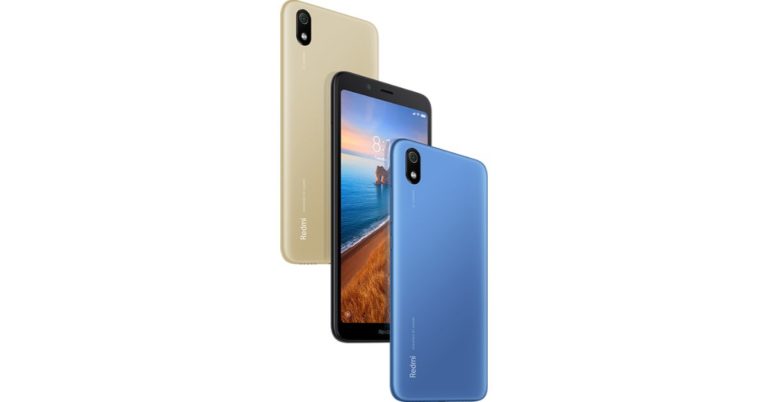
Xiaomi earlier launched its Redmi 7 smartphone this year which was the successor to the Redmi 6. And now, the company has made the Redmi 7A official as it was unveiled in China today. Earlier the device was spotted on the Chinese regulator TENAA website. The Redmi 7A is the watered-down version of the Redmi 7 and comes with budget segment worthy specifications. And it shouldn’t be a surprise that the Redmi 7A is the successor to the Redmi 6A. Highlights of the Redmi 7A includes a traditional smartphone design with top and bottom bezels. There isn’t a notch or a punch-hole camera on its 5.45-inch display. It packs a 4,000mAh battery and comes with a 13MP rear camera.
Although the company hasn’t announced the price of the device yet but it is clear that it would be a budget segment device. According to the predecessors of the Redmi 7A, it could be priced around Rs 6,000 – Rs 8,000. The device comes in two colour options – Blue and Matte Black.

The company announced about the new Redmi 7A on its official Weibo account. The Redmi 7A will be launched in China on May 28, which is also the launch date of the Redmi K20. So, there is a possibility that the company will be launching both these devices at the same time and at the same launch event.

Redmi 7A specifications and features

The Redmi 7A sports a 5.45-inch HD (720 x 1440 pixels) resolution with an aspect ratio of 18:9. It is powered by a 2.0GHz octa-core Qualcomm Snapdragon 439 SoC. Currently, the company didn’t reveal about the RAM or the internal storage of the device. But it did reveal that the Redmi 7A will come with microSD card support of up to 256GB. The Redmi 7A runs Android 9.0 Pie skinned with MIUI 10. As mentioned above, the Redmi 7A packs a big 4,000mAh battery with 10W fast charging support. The device comes with special modes for senior citizens and a Family Guardian Function. It also come with a P2i splash resistant coating which makes it resistant against accidental splashes and rain damage.

On the camera front, the rear camera of the Redmi 7A comes with a 13MP main sensor with PDAF. There is also a 5MP selfie camera with AI Face Unlock Support.

Other features of the Redmi 7A include P2i splash resistant coating, 3.5mm audio jack, and a Micro-USB port. For connectivity, we could see 4G VoLTE, Wi-Fi, Bluetooth 4.2, and GPS in the Redmi 7A.

For the latest gadget and tech news, and gadget reviews, follow us on TwitterFacebook and Instagram. For newest tech & gadget videos subscribe to our YouTube Channel. You can also stay up to date using the Gadget Bridge Android App.