In This Article
Vivo Z1x design and display
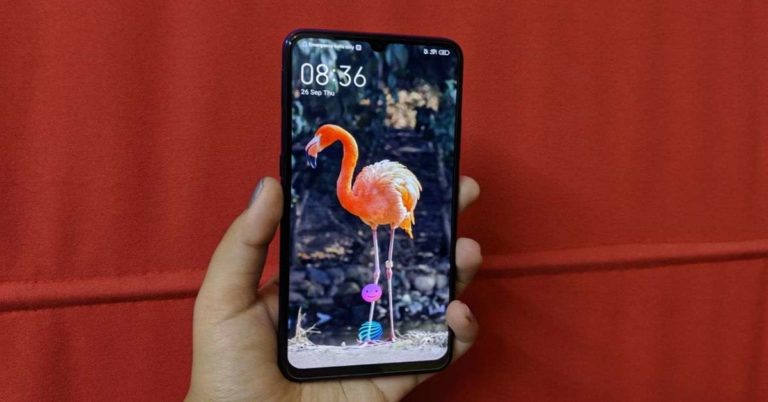
If you like your smartphone to grab all the attention in the room, you are most likely to get it with the Vivo Z1x. The back panel of the latest offering by Vivo has different shades of the same colour. To describe it in a better manner, we should specify that the lighter shade of purple is in the centre while the darker shade is placed on its either sides. Besides the alternate colours, the back panel also has a pattern beneath its surface that can be seen very evidently. According to the company, it deployed a nanocoating process to get this design in place. The smartphone is available in Fusion Blue and Phantom Purple colours and we got the latter one for review. The colour scheme and the unique pattern on the Vivo Z1x do make it stand out if you compare it to other devices that are available. Apart from this, there is also the gold-coloured Vivo branding on the rear panel, which further adds on to the flashy look. On flipping over, you will see that the front panel of the handset is dominated by its display that has a coating of Schott Xensation 3D glass and sports a waterdrop notch on the top. The fingerprint scanner on the display is also denoted with a symbol that is very different from the usual one. While typically we get a fingerprint symbol that depicts the fingerprint scanner icon, the one on Vivo Z1x looks more like a globe.
The right edge of the smartphone has volume rocker keys and the power button, while the left edge has the Google Assistant button and the SIM tray sandwiched in it. The top has a secondary microphone, while the bottom houses the speaker, USB Type-C port, 3.5mm headphone jack and the mic.
We found the device to be compact in its design and one handed usage was not a problem for us. However, we have to admit that there was one thing about the smartphone’s design that could have been better. The device was very slippery and we would really recommend you to put a cover on it to save it from damage in case you drop it. It may not look as beautiful as it does otherwise then, but this is one choice that the users of Vivo Z1x will have to make.
To conclude, we would say that the design of the smartphone will definitely be appealing to those who like flashy-looking devices. However, if you are someone who likes gadgets that sport a design that is simple and elegant, we would recommend you to go for something subtler.
Coming to the 6.38-inch full-HD+ (1,080×2,340 pixels) Super AMOLED display of the smartphone, Vivo Z1x’s screen is definitely among the pros of the handset. The display projects bright and vibrant colours that remain consistent at different viewing angles. If you find the default settings too warm or cold for your taste, you can adjust the same in the Settings of the app.
On flipping over, you will see that the front panel of the handset is dominated by its display that has a coating of Schott Xensation 3D glass and sports a waterdrop notch on the top. The fingerprint scanner on the display is also denoted with a symbol that is very different from the usual one. While typically we get a fingerprint symbol that depicts the fingerprint scanner icon, the one on Vivo Z1x looks more like a globe.
The right edge of the smartphone has volume rocker keys and the power button, while the left edge has the Google Assistant button and the SIM tray sandwiched in it. The top has a secondary microphone, while the bottom houses the speaker, USB Type-C port, 3.5mm headphone jack and the mic.
We found the device to be compact in its design and one handed usage was not a problem for us. However, we have to admit that there was one thing about the smartphone’s design that could have been better. The device was very slippery and we would really recommend you to put a cover on it to save it from damage in case you drop it. It may not look as beautiful as it does otherwise then, but this is one choice that the users of Vivo Z1x will have to make.
To conclude, we would say that the design of the smartphone will definitely be appealing to those who like flashy-looking devices. However, if you are someone who likes gadgets that sport a design that is simple and elegant, we would recommend you to go for something subtler.
Coming to the 6.38-inch full-HD+ (1,080×2,340 pixels) Super AMOLED display of the smartphone, Vivo Z1x’s screen is definitely among the pros of the handset. The display projects bright and vibrant colours that remain consistent at different viewing angles. If you find the default settings too warm or cold for your taste, you can adjust the same in the Settings of the app.
 We watched a lot of content on YouTube during our time with the smartphone and it was an enjoyable experience. Even videos that we played at 1080p resolution looked great on the smartphone. However, the sunlight readability of the handset could be better. While we had no problem in performing tasks like checking our Instagram or emails, watching videos and playing games under the sun was not a very good experience. Speaking of the in-display fingerprint scanner, it worked well for us most of the times. It couldn’t recognize our fingerprint when our fingers were moist, but then, that is the case with most other smartphones too, so we can’t really complain.
Vivo Z1x performance and cameras
Before we start talking about the performance of the Vivo Z1x, let’s take a look at its specifications. The device is powered by an octa-core Qualcomm Snapdragon 712 SoC clubbed with 6GB of RAM and up to 128GB of UFS 2.1 storage. It runs Android 9.0 Pie skinned with FunTouch OS and comes with Multi-Turbo and Ultra Game Mode. The handset sports a triple rear camera setup that includes a 48MP primary sensor with an f/1.79 aperture, an 8MP wide-angle sensor with 120-degree field of view and a 2MP portrait lens with an f/2.4 aperture. For selfies and video calls, there is a 32MP front facing snapper. The device houses a 4,500mAh battery that has the company’s proprietary 22.5W FlashCharge standard. Coming to the software of the Vivo Z1x, it may take some time for you to get used to it, especially if you have been using a device that has stock Android. The smartphone’s quick settings are not integrated with its notification centre. Instead, one has to swipe up from bottom to access it, just like iOS. One thing that really caught our attention was the sound and brightness bars in the Quick Settings section. They are much bigger than usual and that’s why you will have to scroll down to access some of the options present in the Settings. The software of the device has support for navigation gestures, however, we preferred sticking to the usual navigation buttons. On swiping left on the Home Screen, you would be able to see the rest of the apps on your smartphone. But if you swipe right, you will be taken to Jovi Smart Scene page where you may find some useful shortcuts and tools. One thing we found very useful was the ability to create a second instance of a compatible app on the home screen. Users also have the option of choosing from various fonts and themes that they can use on the device. To add more privacy to the device, Vivo has added a feature that lets users hide files. Another feature that we really liked was the Dark Mode. It really extends the battery life of the handset, so we preferred using it during our time with the smartphone. However, we must point out that the handset has a considerable amount of bloatware. Besides Google’s suite of apps, there is WebNovel, PhonePe, Paytm, Opera and others. To sum it up, we would say that while most of the features of the software of Vivo Z1x offer a pleasant experience, those who like to use stock Android may not like it instantly.
Finally, let’s talk about the performance of the device. As we mentioned earlier, the handset is powered by Qualcomm’s Snapdragon 712 SoC and the chipset proved to be good enough for handling most day to day tasks as well as for multi-tasking. If you are someone who has very heavy usage, the Vivo Z1x will not disappoint you. We often used the smartphone for doing multiple things at once, like gaming or watching videos along with navigation, and the handset took it with ease.
In fact, if you are fond of gaming, you will really like the Vivo Z1x smartphone. We tried a number of games on the device ranging from Alto’s Odyssey to graphic-hungry ones like Asphalt 9: Legends. The experience of playing games was a very pleasant one on the device. We did not encounter any problems whatsoever. Even after an hour of playing Asphalt 9: Legends, the smartphone did not heat up. This indeed is very impressive, especially if you consider the material it is made up of.
Moving to the 4,500mAh powered battery life of the Vivo Z1x, it is another plus of the smartphone. No matter how heavy our usage was, the device always lasted us more than a day. We used it for long phone calls, watching YouTube videos, browsing social media apps, playing games and listening to music, and even then, the smartphone’s battery lasted more than a day for us. When we charged the smartphone from 0-100%, it just took us a little over an hour to do so.
Now, let’s talk about the cameras of the Vivo Z1x. The handset sports a triple rear camera setup with a 48MP primary Sony IMX582 sensor, an 8MP ultra-wide-angle camera and a 2MP depth sensing lens. When we speak of Sony IMX582 sensor that is 48MP in resolution, the pictures taken obviously have to be great. And yes, the lens on the Vivo Z1x did live up to our expectations in most cases. The sensor clicked very good shots that were rich in terms of details and projected accurate colours. However, when we switched the mode to Landscape, some level of details did go down. Some shots were even grainy towards the sides. But then, the AI mode in the camera did improve the quality of such shots. The Bokeh shots that we took using the 2MP depth sensor were mostly good. The Bokeh effect did not look too unnatural and the app did inform us that the lens does the best job when clicking pictures within two meters.
One thing we found very useful was the ability to create a second instance of a compatible app on the home screen. Users also have the option of choosing from various fonts and themes that they can use on the device. To add more privacy to the device, Vivo has added a feature that lets users hide files. Another feature that we really liked was the Dark Mode. It really extends the battery life of the handset, so we preferred using it during our time with the smartphone. However, we must point out that the handset has a considerable amount of bloatware. Besides Google’s suite of apps, there is WebNovel, PhonePe, Paytm, Opera and others. To sum it up, we would say that while most of the features of the software of Vivo Z1x offer a pleasant experience, those who like to use stock Android may not like it instantly.
Finally, let’s talk about the performance of the device. As we mentioned earlier, the handset is powered by Qualcomm’s Snapdragon 712 SoC and the chipset proved to be good enough for handling most day to day tasks as well as for multi-tasking. If you are someone who has very heavy usage, the Vivo Z1x will not disappoint you. We often used the smartphone for doing multiple things at once, like gaming or watching videos along with navigation, and the handset took it with ease.
In fact, if you are fond of gaming, you will really like the Vivo Z1x smartphone. We tried a number of games on the device ranging from Alto’s Odyssey to graphic-hungry ones like Asphalt 9: Legends. The experience of playing games was a very pleasant one on the device. We did not encounter any problems whatsoever. Even after an hour of playing Asphalt 9: Legends, the smartphone did not heat up. This indeed is very impressive, especially if you consider the material it is made up of.
Moving to the 4,500mAh powered battery life of the Vivo Z1x, it is another plus of the smartphone. No matter how heavy our usage was, the device always lasted us more than a day. We used it for long phone calls, watching YouTube videos, browsing social media apps, playing games and listening to music, and even then, the smartphone’s battery lasted more than a day for us. When we charged the smartphone from 0-100%, it just took us a little over an hour to do so.
Now, let’s talk about the cameras of the Vivo Z1x. The handset sports a triple rear camera setup with a 48MP primary Sony IMX582 sensor, an 8MP ultra-wide-angle camera and a 2MP depth sensing lens. When we speak of Sony IMX582 sensor that is 48MP in resolution, the pictures taken obviously have to be great. And yes, the lens on the Vivo Z1x did live up to our expectations in most cases. The sensor clicked very good shots that were rich in terms of details and projected accurate colours. However, when we switched the mode to Landscape, some level of details did go down. Some shots were even grainy towards the sides. But then, the AI mode in the camera did improve the quality of such shots. The Bokeh shots that we took using the 2MP depth sensor were mostly good. The Bokeh effect did not look too unnatural and the app did inform us that the lens does the best job when clicking pictures within two meters.


Verdict
The pluses of the Vivo Z1x overshadow its minuses. The smartphone has a very sturdy build quality, a highly impressive AMOLED display and a very lasting battery. Its facial unlock feature, great gaming experience and the ability to handle heavy multi-tasks are also its plus points. However, a few things could have been better too. Firstly, the design may be liked by some, but then there will be those who will find it too flashy. Secondly, the performance of the cameras was not very consistent. And lastly, the heavily customised software is not something that everyone will like. We should also point out that the device does not come with expandable storage, so those who buy the 64GB storage option may encounter some trouble in the long run. However, at a starting price of Rs 16,990, Vivo Z1x is a much better buy than most other smartphones in the same range. You will be happy to buy it. Pros- Vibrant display
- Lasting battery
- Gaming is excellent
- Accurate facial unlock
- Heavily customised software
- Inconsistent camera performance
- Lack of expandable storage
For the latest gadget and tech news, and gadget reviews, follow us on Twitter, Facebook and Instagram. For newest tech & gadget videos subscribe to our YouTube Channel. You can also stay up to date using the Gadget Bridge Android App.

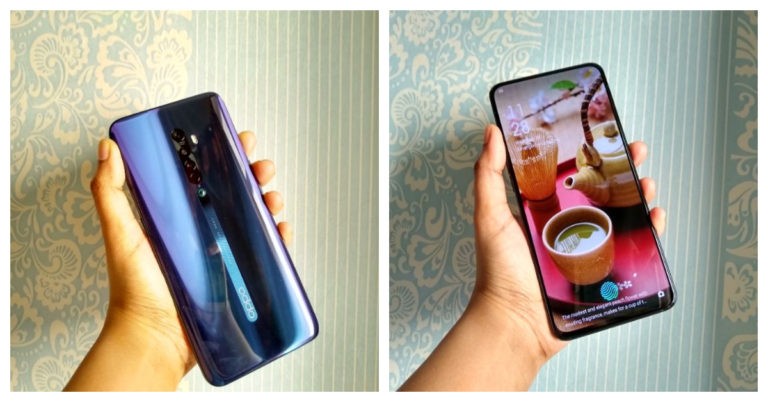
 The company has launched the smartphone in two attractive colours options, Luminous Black and Ocean Black. For the review, we got our hands on a sparkling and polished Ocean Black colour option that shows different shades of the night when moved around, which is one of our favourite aspects of the phone. There is a blue strip in deep shade in the centre on which Oppo’s branding has been stamped on the rear panel along with an O dot that saves the camera setup from inadvertent scratches. This time Oppo has gone with the glossy finish instead of a matte finish, which we already saw on the Reno 10x Zoom. The shiny back grabs hold of fingerprints easily.
 When we say Oppo Reno 2, it seemed like a carbon copy of its predecessor. And to an extent it really is. Like it has come with a similar design concept on the front also. It comes with a
 Even while using the phone outdoor under the bright sunlight its presentation was up to the mark. Viewing a movie on the Oppo Reno 2 was simply a treat to our eyes as the colour blossomed on it. It comes integrated with Widevine L1 standard that means you can watch your favourite shows on Netflix, Amazon Prime Video and Hotstar as well. While steaming the content in a dark environment it doesn’t strain your eyes as there are a number of features such as Eye Care mode, DC-Dimming and Night Shield that save our eyes from harmful bright lights.
Performance and Cameras
What makes it less powerful is its Snapdragon 730G SoC octa-core processor based on the 8nm process along with Adreno 618 GPU while its forerunner Reno 10x Zoom came with the 855 SoC under the hood. It offers 8GB of RAM paired with 256GB internal storage that is non-expandable. However, during our review, we did not face any lag or deceleration. The performance was smooth even on extensive use.
Even while using the phone outdoor under the bright sunlight its presentation was up to the mark. Viewing a movie on the Oppo Reno 2 was simply a treat to our eyes as the colour blossomed on it. It comes integrated with Widevine L1 standard that means you can watch your favourite shows on Netflix, Amazon Prime Video and Hotstar as well. While steaming the content in a dark environment it doesn’t strain your eyes as there are a number of features such as Eye Care mode, DC-Dimming and Night Shield that save our eyes from harmful bright lights.
Performance and Cameras
What makes it less powerful is its Snapdragon 730G SoC octa-core processor based on the 8nm process along with Adreno 618 GPU while its forerunner Reno 10x Zoom came with the 855 SoC under the hood. It offers 8GB of RAM paired with 256GB internal storage that is non-expandable. However, during our review, we did not face any lag or deceleration. The performance was smooth even on extensive use.
 To give it life Reno 2 houses a 4,000mAh battery, which offers full-day battery life even after nominal use. But if you are a movie buff and love streaming video content on Netflix or else on Prime video, playing games, streaming music, a social media addict then at the end of the day you need to put it on a charge. The best part is, it comes with 20W charge VOOC 3.2 fast charger that charges the phone to a 100%in less than an hour.
 The biggest selling point of the Oppo Reno 2 is its quad-camera setup that includes a 48-megapixel Sony IMX586 sensor that is supported by optical image stabilization (OIS) and electronic image stabilisation (EIS). Assisted by, a 13-megapixel telephoto lens, an 8-megapixel wide-angle camera and a 2-megapixel macro lens.
Furthermore, it offers a 5x hybrid zoom and
The biggest selling point of the Oppo Reno 2 is its quad-camera setup that includes a 48-megapixel Sony IMX586 sensor that is supported by optical image stabilization (OIS) and electronic image stabilisation (EIS). Assisted by, a 13-megapixel telephoto lens, an 8-megapixel wide-angle camera and a 2-megapixel macro lens.
Furthermore, it offers a 5x hybrid zoom and  Even macro shots, as well as
  The elevating shark fin-shaped selfie camera is the best part on the Reno 2 smartphone. Firstly, it is hidden inside the phone to offer a full display screen experience, secondly it so different from the other motorized pop-up selfie cameras that are being offered in the market on other devices. Then it comes with a great bokeh effect, even the videos offer bokeh effect also.
Verdict
In the end, we would say there are a number of companies that are dominating the market that offer premium smartphones with high asking price, but the fact is not everybody is rich enough to own such smartphones. If you also desire to have a premium-looking device and love photography without burning a hole in your pocket then you can definitely go for Oppo Reno 2.
It is a good looking smartphone with a fancy motorised selfie camera, gleaming display, not so powerful but a good chipset and above all the 48-megapixel quad camera set up that fulfils all your photo demands.
Pros
Eye-catching glass design
High-quality camera performance
Vivid Display
Cons
Run of the mill battery life
Could have been a little cheaper
Delicate to handle
For the latest
The elevating shark fin-shaped selfie camera is the best part on the Reno 2 smartphone. Firstly, it is hidden inside the phone to offer a full display screen experience, secondly it so different from the other motorized pop-up selfie cameras that are being offered in the market on other devices. Then it comes with a great bokeh effect, even the videos offer bokeh effect also.
Verdict
In the end, we would say there are a number of companies that are dominating the market that offer premium smartphones with high asking price, but the fact is not everybody is rich enough to own such smartphones. If you also desire to have a premium-looking device and love photography without burning a hole in your pocket then you can definitely go for Oppo Reno 2.
It is a good looking smartphone with a fancy motorised selfie camera, gleaming display, not so powerful but a good chipset and above all the 48-megapixel quad camera set up that fulfils all your photo demands.
Pros
Eye-catching glass design
High-quality camera performance
Vivid Display
Cons
Run of the mill battery life
Could have been a little cheaper
Delicate to handle
For the latest 


 Xiaomi took to Weibo sharing a teaser that signifies Mi Mix Alpha will come equipped with a 100-megapixel camera. Separately it also shared a few images revealing the camera capabilities of its upcoming smartphone. The shared captures images confirm that the camera will be offering 12,032 x 9,024 of a resolution confirming the presence of 108-megapixel sensor also pointing out that the phone employs the
 The newly launched smartphone will be available for purchase via e-commerce platform