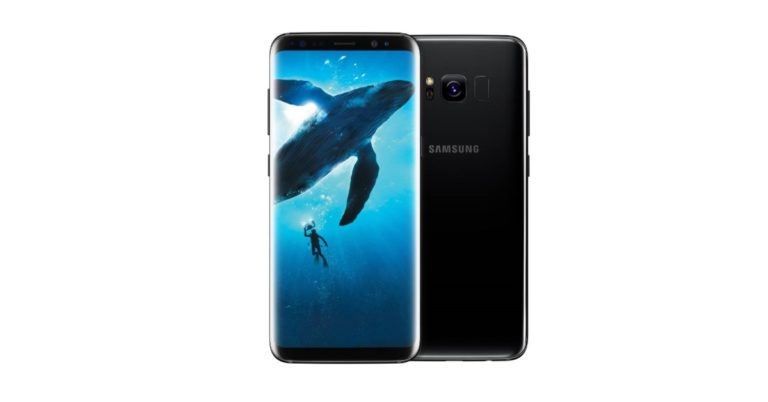
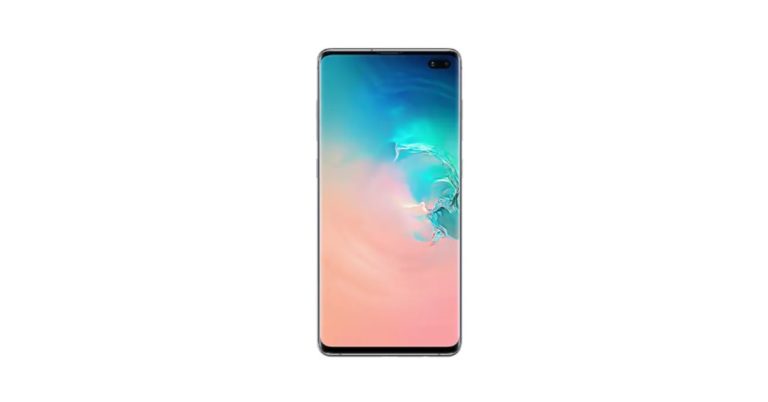
Samsung seems to be grabbing all the headlines now with its newest offerings to the smartphone world – the Galaxy S10, Galaxy S10+ and Galaxy S10e. The smartphones come with the top-of-the-line processor, Infinity-O display, great camera setup and much more. This time the camera of the S10+ has grabbed the headlines as it has been ranked as the best selfie camera smartphone right now. The Galaxy S10+ beat Google’s Pixel 3, which held the title earlier and which happens to be known for its photography-centric features.
Samsung Galaxy S10 and Samsung Galaxy S10+ both come with a triple rear camera setup but it is the plus-sized variant of Galaxy S10 which has the dual front camera. The front camera setup of the Samsung Galaxy S10+ comprises of a 10MP primary selfie camera with 1.22-micron pixels, f/1.9 aperture and Dual-Pixel autofocus + an 8MP f/2.2 RGB secondary sensor for depth sensing. Google Pixel 3 too had dual selfie camera and it was ranked at the top of the charts, but Galaxy S10+ overthrew the old champion of selfie cameras.
In a test by DxOMark, Samsung Galaxy S10+ has got a selfie camera score of 96, which is the highest any Samsung smartphone has ever scored. Google Pixel 3 and Samsung Galaxy Note 9 both score 92 in the selfie camera test. So, Galaxy S10+ became the first Samsung phone to score that high on the charts. Samsung Galaxy S10+ got an overall score of 109 in the camera test, which is the same as other smartphones like the Huawei Mate 20 Pro and Huawei P20 Pro. Both these phones from Huawei had great cameras.
DxOMark is an independent image quality measurements and rating website for smartphones, cameras and lens since 2008. The website recently started reviewing and scoring selfie cameras of smartphones and till now the Pixel 3’s dual selfie cameras were standing at the top.
DxOMark said that the Samsung Galaxy S10+ has “the best front camera performance for both still images and video.” The review of the website talks about the picture detail of the Galaxy S10+ camera, its low noise and its improved bokeh effect in Portrait mode.
But it should also be noted that when testing the rear camera of the Galaxy S10+, it did not beat Huawei Mate 20 Pro and P20 Pro, instead, it had the same score as them. The rear camera of Samsung’s plus-sized flagship comprises of a 12MP primary camera with 1.4-micron pixels and Dual Aperture (f/1.5-2.4), Dual-Pixel autofocus and OIS + a 16MP secondary camera with an ultra-wide-angle f/2.4 lens + a 12MP telephoto f/2.4 camera with PDAF and OIS.
Coming to camera samples, DxOMark said that the still photo performance of the device is great and it does an ‘outstanding’ job with its dynamic range. The pictures taken from Galaxy S10+ were great in their exposure, bokeh and colour. Samsung Galaxy S10+ is currently selling for a starting price of Rs 73,900.
Japanese consumer electronics maker Sony will soon be seen unveiling its new Xperia smartphone lineup at the upcoming Mobile World Congress 2019, which is scheduled to begin on February 25. However, there is no need for you to wait until then to see what the company will be launching.
This is because a report has surfaced on technology website 91mobiles with the leaks of the entire lot along with images, specifications and pricing details. The report says that Sony will be seen launching four smartphones at the upcoming technology show. These include Sony Xperia L3, Xperia 10, Xperia 10 Plus and the company’s flagship smartphone – Xperia 1.
We should mention that the names of the smartphones are the same as a previous leak by renowned tipster Evan Blass. The tipster had shared the images of Xperia 1, Xperia 10 and Xperia 10 Plus on his Twitter profile just a few hours before the report had surfaced online.
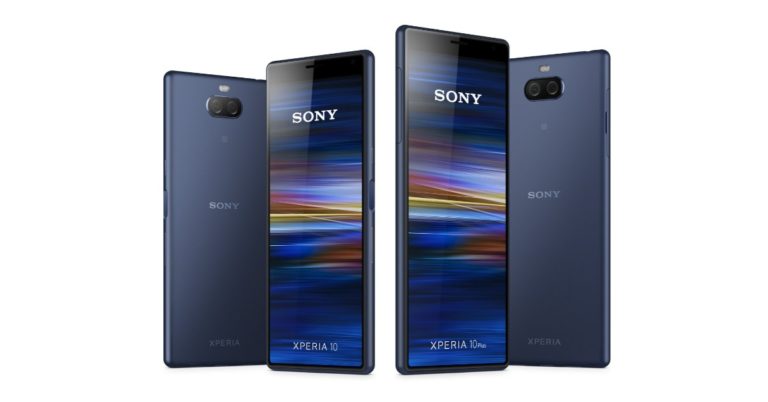
In the image, it can be seen that Sony is not changing the Xperia look too much. All the four devices will sport a design that is similar to Sony Xperia XZ2 and Xperia XZ3 that was launched last year. The devices will have curved metal edges and come with a side-mounted fingerprint scanner that will be embedded in the power buttons. However, even in this day and age, the bezels of the smartphone will be disappointingly large.
So, if you thought that Sony’s smartphones will come with an edge-to-edge display, you will have to be disappointed. But then, Sony will be getting something different as the devices will come with a 21:9 aspect ratio on its higher-end devices. The company even has a name for this kind of display and it will be calling it ‘Cinema-wide.’ This suggests that the display of smartphones will prove to be excellent when used for watching videos. Here’s a look at the rest of the specifications of the upcoming devices from Sony:
Sony Xperia 1
6.5-inch 4K HDR OLED display with an aspect ratio of 21:9; support for recording 4K HDR video in 21:9 format, and super slow-mo videos
Triple rear camera setup with 12MP sensors (one regular wide-angle; one super-wide; one telephoto).
Qualcomm Snapdragon 855 processor clubbed with 6GB of RAM and 128GB of internal storage (microSD card support of up to 512GB)
3,300mAh battery with fast charging
Android Pie
Price: CHF 1,099
Sony Xperia 10
6-inch full HD+ display with 21:9 aspect ratio
Qualcomm Snapdragon 630 processor paired with 3GB of RAM and 64GB of internal storage
13MP+8MP dual rear cameras, 8MP selfie camera
2,870mAh battery
Android Pie
Price: CHF 399
Sony Xperia 10 Plus
6.5-inch full HD+ display with 21:9 aspect ratio
Qualcomm Snapdragon 636 processor with 4GB of RAM and 64GB of internal storage
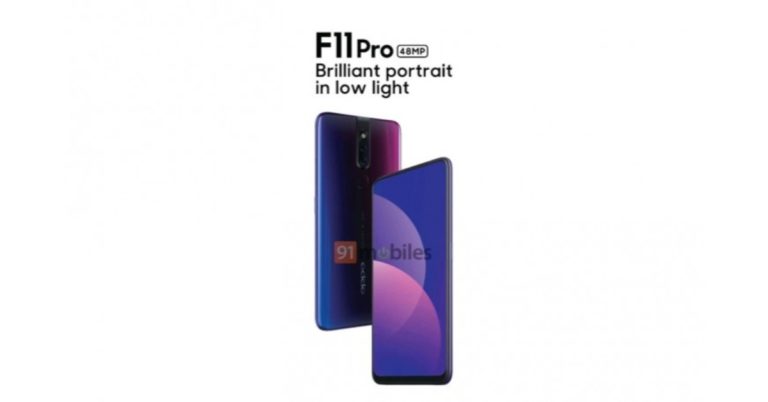
Only a few days are left for the Oppo F11 Pro to launch. The much-awaited smartphone that has been leaked on a continuous basis will launch on March 5, as pert the company. According to previous teasers publicised by Oppo, the F11 Pro model will come with a 48MP rear camera sensor, 5MP front camera sensor, and a 3D gradient casing.
Another key highlight of the Oppo F11 Pro is that the device will have a Super Night Mode for enhanced low light photography. The Chinese smartphone manufacturer has also confirmed that the device uses AI to produce professional quality photos. The Super Night mode will utilise AIe,Ultra clean engine as well as colour engine to give its user exceptional shots, as per the company. OIS (optical image stabilisation) is also going to be part of the package.
Other key highlights of the Oppo F11 Pro include VOOC 3.0 fast charging support, a notchless display and a screen with minimum bezels. Also, it has been confirmed by the company that the handset will have a fingerprint sensor. Another big news about Oppo surrounds its August, 2018 launched smartphone—the Oppo F9 Pro. This smartphone has received a price cut of Rs 2,000. Where it earlier costed Rs 21,990, it now comes at a price of Rs 19,990. The smartphone sports a 6.3-inch 1,080×2,340 display with 19.5:9 aspect ratio.
It has 4GB and 6GB RAM variants, both of which carry an internal storage of 64GB data. With the help of a microSD card, the device can hold up to 256GB of extra data. There is a dual rear camera setup that consists of a 16MP and a 2MP sensors. On the other side, on the front panel, there is a 25MP camera sensor meant for clicking selfies. Connectivity options of the Oppo F9 Pro includes WiFi 802.11, Bluetooth 4.2, GPS and microUSB 2.0 charging port.
For the latest gadget and tech news, and gadget reviews, follow us on Twitter, Facebook and Instagram. For newest tech & gadget videos subscribe to our YouTube Channel.
Facebook’s Onavo Protect app is about to shut down in the coming days, and this will cease it from accessing data of users for market research. However, it will continue operating as a Virtual Private Network for a limited period of time in order to allow users to find a replacement. The recruitment of new users for the Facebook Research app has also completely stopped.
However, Facebook Research app studies which are ongoing will continue. It has decided to run paid programs where users will be remunerated for giving up their privacy since more scrutiny of privacy violation has begun by search engines.
Onavo has billed itself in such a way, that it is able to curb apps from using background data. It will provide a secure VPN network so that your personal information remains reticent. However, it will take into account, the amount of time you spend using apps, mobile and WiFi data you use per app, websites you visit, your country, device and network type.
A Facebook spokesperson said, “Market research helps companies build better products for people. We are shifting our focus to reward-based market research which means we’re going to end the Onavo program.”
To recall, Facebook acquired Onavo in 2013 for a price of $200 million so that it can use its VPN app and gather data about what people are doing on their smartphones. Last year Apple made Facebook remove the Onavo VPN app from app store due to privacy concerns. However, Facebook repurposed Onavo code to use it in its Facebook Research app. This app was reportedly paying $20 gift cards to users in the US between the age group of 13 to 35 years per month in return of letting them spy on them.
The social media giant ran an obscure program, which informed nothing to users other than whom it recruited for its Facebook Research program. A Facebook spokesperson reportedly said that there is nothing secret about this. However, it threatened users with legal action if they discussed anything publicly about the programme.
For the latest gadget and tech news, and gadget reviews, follow us on Twitter, Facebook and Instagram. For newest tech & gadget videos subscribe to our YouTube Channel.
Japanese electronics company Panasonic has launched new ranges of air conditioners in India named Advance series and Arch series. The ACs come with Twin Cool Inverter, Aerowings and 4-way Airflow, which provides ample cooling and saves energy. The company has stated that the new range of ACs are capable of removing harmful particles from the air like PM 2.5. It also comes with Nanoe technology and AG Clean Filter which is capable of making the air clean.
According to the company, the newly launched AC ranges are durable, tough and have corrosion-free parts in them. With its new ranges of ACs, Panasonic’s aim is to provide ‘Quality Air for Life’ to its customers, according to the company. They are priced from Rs 39,900 to Rs 53,990 and come in 3-star and 5-star category. Their models come in 1 ton, 1.2 ton,1.5 ton and 2 ton variants. These ACs can work between a range of 145 V to 285 V and can be used without setting up a stabilizer. The newly launched air conditioners come with a 10-year warranty on inverter compressor and a 5-year warranty on eco tough outdoor casing.
Speaking about the new devices, Gaurav Sah, Business Head of Air Conditioners Group, Panasonic India said, “Our new range not only aims at improving indoor air quality, but also promotes better and healthier living among consumers by helping them make informed choices.”
The newly launched ACs have three vital elements – Maximizing comfort, prioritizing health of the user and the durability of the product. The Aero-wings in the ACs has 4 way swings which give a wider air flow. After reaching the temperature set by the user, blades of the AC direct the air towards the ceiling so that it can give ‘Shower Cooling effect’. This feature makes sure that the air and the temperature spreads evenly in the room rather than cooling only the front of the AC. They also have a powerful mode which cools the room/environment quickly.
Sah further added that, “Panasonic air conditioners have been commanding No. 1 position in Japan for the last 10 years. We are also the No 1. Brand in the Asia Pacific and worldwide we have sold more than 10 Cr ACs. India is a strategic market for our growth in the segment and with such advancements, we are looking at growing our market share by 15% in the next three years.”
The company guarantees that the Nanoe technology used in the AC purifies the air and removes 99% of dust, PM2.5, stops virus and bacteria growth. The technology uses ‘nano-sized electrostatic atomized water particles to deodorize and remove the harmful substances’ from the air even when the AC is turned off. The newly launched Panasonic Arch series uses AG clean filter which uses silver ions that have anti-bacterial effect and it also improves the air-quality of the room.
Chinese smartphone brand Meizu upcoming smartphone Note 9 or M9 Note has been leaked several times over the last few weeks. And now, the company has confirmed that it will be launching the Meizu Note 9 smartphone in China next month on March 6. With this, it has also been confirmed by the company that the upcoming device will be called Meizu Note 9 and not Meizu M9 Note.
We should mention that Meizu Note 9 smartphone has previously been spotted on TENAA, and the listing gave us an insight into the specifications and the design details of the device. Furthermore, another smartphone called Meizu 16s has also surfaced online and its image reveals the front panel of the handset.
To announce the launch date of the Meizu Note 9 smartphone, the company published a poster on Chinese social networking website Weibo. The image that has been posted confirms that the Meizu Note 9 smartphone will be launched in China on March 6 next month. However, this is the only detail that we got from the poster of the smartphone.
However, we do have some details about the Meizu Note 9 smartphone because it got listed on TENAA. According to the listing, the device will come with a waterdrop-shaped notch and have a slightly broader chin at the bottom. Meizu Note 9 smartphone will come with a glossy back panel and it will house dual rear cameras that will be stacked vertically one below the other. The listing also suggests that the device will house a fingerprint scanner on its back panel. Furthermore, it is expected to come with a metallic frame that will have the power and volume buttons on the right edge and the SIM tray on the left edge.
Some specifications of the smartphone have also surfaced online. Meizu Note 9 smartphone will reportedly run Android 9 Pie operating system and feature a 6.2-inch full-HD+ (1080×2244 pixels) IPS display. The smartphone will be powered by Qualcomm’s Snapdragon 675 processor clubbed with 6GB of RAM and 64GB of internal storage. The device is expected to come with a 48MP primary camera and a 5MP secondary camera on its back panel. The listing on TENAA also says that Meizu Note 9 will come with a 20MP selfie camera and house a 3,900mAh battery.
The device is expected to be available in Dark Ochre, Silver Ochre, and Starry Blue colours after its launch. To recall, Meizu made a comeback in the Indian market in December last year by with its M16th, M6T and C9 smartphones.
Last year, Google had imposed new regulations on Google Play Store in order to make Android apps target recent Android versions only. The intention was to establish security measures in new Android apps. For example, restricting background apps and runtime permissions. Runtime feature was incorporated in Android 6.0 Marshmallow (API level 23). New applications were submitted to Google Play from August 2018 aiming at Android 8.0 Oreo or higher. At the same time, there are existing updates submitted after November 2018 that are also aimed at API level 26.
As per the new timelines, these apps are required to target Android 9.0 Pie or higher by August 2019. Also, there are updates of the existing apps, which are required to target API level 28 or higher ROM by November 2019. We foresaw these changes considering our knowledge about the advancing API level restrictions on the Google Play Store. Chinese applications such as Huawei, OPPO, Vivo, Xiaomi, Baidu, Alibaba and Tencent are going to be persuaded to target applications with newer API levels. Google will tackle other app stores for ensuring the same, too.
To give you the timeline of this, new apps will receive warnings and be told to target Android 8.0 Oreo, if not higher by August 2019. In November 2019, new versions of existing apps will get warning to not target API below level 26. From 2020, the target API level requirement will advance annually.
With this move, users will have the latest app versions that will give them a better user experience. The ones who are part of Android 8.1 Oreo programme or higher, will eventually get advanced versions of apps and the apps for older Android versions are going to become extinct.
Google can only restrict apps from targeting older Android versions, which are exclusively part of its own platform. However, the ones which are part of other platforms, Google cannot compulsorily curb them. In case you want to download them, Google will give you a warning about it being obsolete. However, if you want to download them, you can ignore the warning and go ahead.
For the latest gadget and tech news, and gadget reviews, follow us on Twitter, Facebook and Instagram. For newest tech & gadget videos subscribe to our YouTube Channel.
Well, it is about time. Xiaomi has started with the global beta testing of the Android 9.0 Pie update for Xiaomi Redmi Note 5 Pro, Redmi Note 6 Pro, and the Redmi Y2. This new update is supposed to come with MIUI 10 on top. The ones who are enrolled in the beta testing programme will be able to experience it before the Android Pie skinned with MIUI 10 update is officially rolled out. For this, the company is taking team testing, which will go until March 15. On the other hand, the MIUI Global Beta ROM based on Android Pie is going to roll out from March 19.
The users who want to participate in the beta testing programme should have an unlocked bootloader on their Xiaomi smartphones and use the latest MIUI Global Beta ROM. Also, it would be good if the tester knows about ROMs, bootloader unlocking, and flashing MIUI ROMs. Xiaomi is also planning to start beta test update for the Xiaomi Mi 6X.
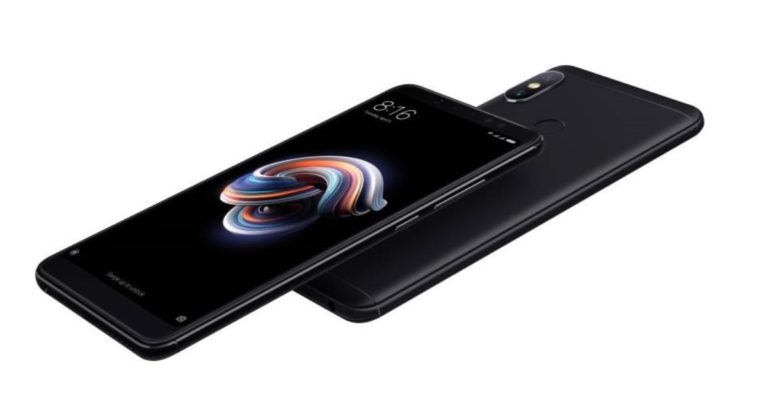
To recall, the Xiaomi Redmi Note 5 Pro comes with 5.99-inch LCD capacitive touchscreen display with a resolution of 1,080×2,160 pixels. The screen aspect ratio is 18:9 and the smartphone is powered by Qualcomm Snapdragon 636 SoC. The Xiaomi Redmi Note 5 Pro has 4GB and 6GB RAM variants, both of which carry an internal storage of 64GB. With the help of a microSD card slot, the smartphone can store up to 64GB of additional files.
In terms of camera, the Xiaomi Redmi Note 6 Pro comes with a dual rear camera setup, which comprises of a 12MP and a 5MP sensor. The front camera on the other hand, which is meant for taking selfies, comes with a 20MP sensor. Connectivity options include WiFi 802.11, Bluetooth 5.0, GPS, Infrared port and microUSB 2.0.
When it comes to sensors, the Xiaomi Redmi Note 5 Pro brings a fingerprint sensor, an accelerometer, gyro sensor, proximity sensor and compass. The device packs a non-removable battery of 4,000mAh and comes in black, gold and blue colour options. The measurement of the device is 158.6 x 75.4 x 8.1mm and it weighs 181 grams.
For the latest gadget and tech news, and gadget reviews, follow us on Twitter, Facebook and Instagram. For newest tech & gadget videos subscribe to our YouTube Channel.
After months of rumours and reports, South Korean technology giant Samsung has finally launched its flagship smartphones – Galaxy S10, Galaxy S10+ and Galaxy S10e. The devices pack very powerful specifications and Samsung has added some very impressive features like Infinity-O display and ultrasonic on-screen fingerprint scanner in order to make its tenth-anniversary edition stand out among the premium devices.
Just a day after being launched in San Francisco, Samsung Galaxy S10, Galaxy S10+ and Galaxy S10e smartphones have got listed on Amazon India’s website. The three smartphones are now available for pre-orders, and the e-commerce giant has also listed their pricing details in India.
To begin with, the base variant of vanilla Samsung Galaxy S10 – which comes with 8GB RAM and 128GB storage – has been listed at Rs 71,000. While the high-end variant – that has 8GB of RAM and 512GB of storage – can be bought that Rs 92,000. However, currently a discount can be availed on the two models and they can be bought for Rs 66,900 and Rs 84,900 respectively. Although the website does not mention this, the discount may only last until the pre-order period.
https://www.youtube.com/watch?v=ZCfgkIyD9g0
Coming to Samsung Galaxy S10+, which is the most premium of the lot, its base variant with 8GB RAM and 128GB storage is priced at Rs 79,000, but can be bought at Rs 73, 900. The 8GB RAM/512GB storage model of the smartphone is listed at Rs 92,000, but can be bought at Rs 84, 900 on Amazon India as of now. Speaking of the 12GB RAM and 1TB storage variant, it is listed at a price of Rs 1,29,000 on the shopping website but can be bought for Rs 1,17,900.
The most affordable of the three smartphones is the Samsung Galaxy S10e. Only the 6GB RAM and 128GB storage variant of the smartphone has been listed on Amazon India and it has been priced at Rs 59,000. However, currently, it can be bought at Rs 55,900 via the e-commerce website.
We should also mention that a cashback of up to Rs 6,000 is also available on purchases that will be made via HDFC Bank credit and debit cards. Those who will pre-order the smartphone will be able to buy the Galaxy Watch Active and Galaxy Buds at discounted prices of Rs 9,999 and Rs 2,999 respectively.
Last month, Google announced the dates of its developer conference Google I/O 2019. The search giant’s CEO posted on Twitter that Google I/O 2019 will be scheduled from May 7 and will go on till May 9.
The event will take place at the Shoreline Amphitheatre in Mountain View, California where the company has organized earlier I/O events. Google has finally made the tickets for Google I/O 2019 event live for those who are interested in attending the conference. The technology giant is accepting applications for tickets starting today to February 27, 5PM Pacific Time (06:30AM IST). After that, the company will choose the applicants on February 28.
People who want to get the tickets for the upcoming Google’s developer conference should know the following details:
They need to have a Gmail account.
They need to have a valid payment method.
They need to fill a ticket form.
Google will be choosing from the list of applicants who applied for the tickets.
The selected individuals will be charged for the type of ticket they selected during their registration.
The users can choose from two tickets – Academic tickets which costs $375 (approx. Rs 26,684) and General admission tickets which costs $1,150 (approx. Rs 81,828).
The academic ticket is only valid for a full-time student studying in high school, college, professor, faculty or staff member. General admission ticket, on the other hand, is valid for everyone else.
Google I/O is the event where the company unveils new technologies and talks about the new updates of its old apps and services. In Google I/O 2019, the company will be unveiling the next generation Android OS platform – Android Q. There is not much known about what the newest iteration of Android will bring aside from few reports which talks about a system-wide dark mode.
There is little chance that the company will launch Google Pixel 4 as of yet, as the company unveils its hardware in October. But there are reports that two new budget-oriented mid-range smartphones named Pixel 3 Lite and Pixel 3 XL Lite might be launched at the upcoming Google I/O. These phones will be exactly what their names suggests – a ‘liter’ version of the 2018 flagships smartphones.
There is also news floating around online that Google has been working on a new device called ‘Google Coral’ which might be a tablet of sorts. It has been seen at a few benchmark websites, and reports suggest that the device is powered by Snapdragon 855 SoC and it will run Android Q. With only few months to go, we might get more news about what the technology giant will be unveiling and what it has planned for the users in 2019.
For the latest gadget and tech news, and gadget reviews, follow us on Twitter, Facebook and Instagram. For newest tech & gadget videos subscribe to our YouTube Channel.
HMD Global has been on a updating spree of Android Pie for scores of Nokia smartphones. Though Nokia 8 hasn’t been part of this line-up, it received the Android 8.1 Oreo yesterday. Now, the Nokia 2.1 has received the Android Pie update and it is the Go Edition. The Nokia 2.1 was launched last year with Android 8.1 Oreo (Go Edition). Just like many other Nokia phones, this one is part of Google’s Android One programme and will get one more big update after this to Android Q.
The Smartphone sports a 5.5-inch LCD capacitive touchscreen with a resolution of 720×1,280 pixels and an aspect ratio of 16:9. It is powered by Qualcomm Snapdragon 425 processor and paired with 1GB RAM.
The 1GB RAM is coupled with an internal storage of 8GB and there is a microSD card slot, which helps the Nokia 2.1 to hold up to 128GB of data. On the rear, there is an 8MP camera sensor and at the front, there is a 5MP selfie camera sensor. Connectivity options of the device includes WiFi 802.11, Bluetooth 4.2, GPS and microUSB 2.0. The smartphone is powered by a non-removable battery of 4,000mAh.
HMD Global had announced that the Nokia 3.1 Plus was supposed to receive Android Pie in January this year too, however, it missed the mark. No information is yet available on when this will happen.
To recall, the Nokia 3.1 Plus sports a 6-inch LCD capacitive touchscreen with a resolution of 720×1,440 pixels and an aspect ratio of 18:9. It is powered by Mediatek Helio P22 processor and paired with 3GB and 2GB RAM. This is coupled with an internal storage of 16GB.
On the other hand, the 3GB RAM version will bring an internal storage of 32GB. There is a microSD card slot available that can store up to 400GB of additional data. Dual rear camera setup includes a 13MP and a 5MP sensor. The front camera on the other hand, which is meant for taking selfies comes with an 8MP sensor.
Connectivity options of the smartphone includes WiFi 802.11, Bluetooth 4.1, GPS, NFC and microUSB On-The-Go. The device comes with a non-removable battery of 3,500mAh.
For the latest gadget and tech news, and gadget reviews, follow us on Twitter, Facebook and Instagram. For newest tech & gadget videos subscribe to our YouTube Channel.
Having sub-brands seems to have become the latest trend in the technology industry. First, Huawei launched its Honor sub-brand, followed by Realme from Oppo, and POCO from Xiaomi. Following suit, Chinese smartphone maker Vivo also introduced its sub-brand named iQoo a few days back. And right after the company announced iQoo, reports about the sub-brand’s first smartphone, which will launch on March 1 in China, also started surfacing online.
On Wednesday, the company teased information about the upcoming smartphone launch on social media. It was not the first time that the company teased information about the upcoming smartphone. Earlier Vivo posted a teaser video of iQoo’s upcoming smartphone, which revealed some key features of the handset like Qualcomm Snapdragon 855 SoC. However, a number of specifications still remain undisclosed and there is no word about the pricing of the smartphone.
Vivo iQoo posted on Weibo, a Chinese social platform that it will be launching its new smartphone on March 1 at an event in Shenzhen, China. The company has also asked the fans to register for the event while some fans will be invited by the company itself to go and watch the live launch of the smartphone at the event. The teaser of the phone carries a tagline which reads “Born powerful and monster insider” which could mean the presence of Snapdragon’s flagship CPU onboard.
In an early teaser, the company revealed that the smartphone will come with 12GB of RAM, 256GB of internal storage and 4,000mAh battery. The battery will come support 44W fast charging. The upcoming iQoo smartphone will also have USB Type-C port instead of the regular USB port. Other known features of the upcoming smartphone of Vivo’s iQoo are an in-display fingerprint scanner and a Super HDR camera, which the company introduced in 2018.
Image Courtesy: Weibo iQoo
The smartphone was teased in China during a sports broadcast where the company showed a brief glimpse of the upcoming smartphone which sported a triple rear camera setup. But further details of the camera – like its resolution and special capabilities – are not known as of now.
Vivo hasn’t revealed yet if the upcoming iQoo smartphone will be launched exclusively for the Chinese market or it will be released in international markets as well. It is still two weeks before the launch of the smartphone so we may get to hear more about the upcoming device before it is officially released by the company.
For the latest gadget and tech news, and gadget reviews, follow us on Twitter, Facebook and Instagram. For newest tech & gadget videos subscribe to our YouTube Channel.
Realme is all set to launch its next flagship device – Realme 3 smartphone – in India. The company will be hosting the Realme 3 launch event in the country on March 4 and it will begin at 12:30 pm IST. This information has been confirmed by Realme, as it comes from the invite that they have sent to tech press in the country indicating that there is a launch scheduled in New Delhi.
Realme has also been teasing the upcoming smartphone via its social media channels. Realme 3 has been teased to come with a dual rear camera setup and is likely to be powered by the MediaTek Helio P70 processor.
Realme also posted an image on its official Twitter account which highlights that the launch will begin at 12.30 pm IST on March 4. As we mentioned earlier, besides posting the invite on its social media, Realme also sent it out to media confirming that the launch event will be held in New Delhi on the said date.
As of now, Realme has not given too much information about its upcoming smartphone. However, we know from the teaser that Realme 3 will come with a dual rear camera setup. It is also being reported that the device will come with a diamond cut case and will house a rear-mounted fingerprint scanner.
Furthermore, it has also been reported earlier that Realme 3 smartphone will be available in two processor variants. While the variant that will be launched in India will be powered by MediaTek Helio P70 SoC, the model that will be launched globally will come with Helio P60 chipset. The smartphone is also rumoured to come with an aspect ratio of 16:9 and will have support for Bluetooth v4.2.
We should mention that Realme 3 will be the successor of the Realme 2 smartphone that was launched in India in August last year. Realme CEO Madhav Sheth also revealed last month that the smartphone will be launched during the first quarter of 2019. He further said that the company has been working on a smartphone with a 48MP primary camera, however, as of now, it cannot be said if the sensor would be present in the Realme 3 handset.
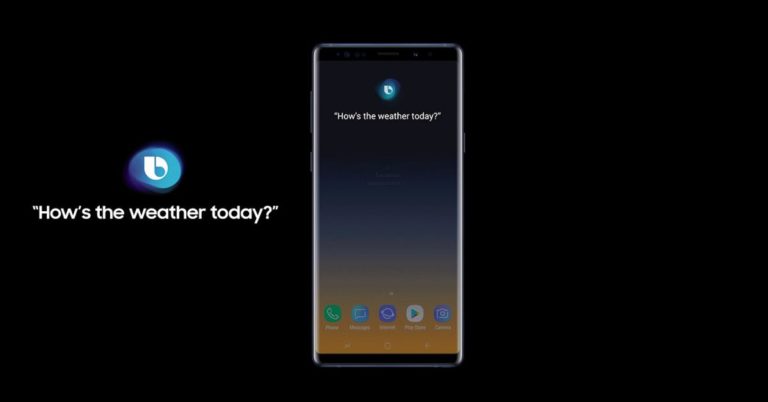
Samsung had launched its virtual assistant Bixby to take on the likes of Google Assistant and Appel’s Siri. It was first introduced in Samsung Galaxy S8 where the company had provided a dedicated button for Bixby. However, Bixby did not manage to impress the user or the critics. It was even said that the dedicated Bixby button was useless.
Another thing that users didn’t like was the fact that they couldn’t remap the Bixby button on their Samsung device for some other ‘useful’ function. But with the introduction of Samsung Galaxy S10, the South Korean technology giant has finally given the option to remap the Bixby button to the function of users’ choice. And now, Samsung is giving the same option to the users of the old Galaxy smartphones so that they can remap the Bixby button to some other function of their liking.
In the upcoming Android update from Samsung, it is giving users the freedom to remap the Bixby button. With the update, users can remap the button to open any app or enable/disable any quick commands. This feature will be available to smartphones that have received the Android Pie update.
Samsung has confirmed that all the older Galaxy devices with a dedicated Bixby button will be getting the feature. This includes Samsung Galaxy S8, Samsung Galaxy S8+, Samsung Galaxy Note 8, Samsung Galaxy S9, Samsung Galaxy S9+ and Samsung Galaxy Note 9.
It should be noted that all these smartphones have already received the Android Pie update, but it is limited to few countries only. Till now Samsung hasn’t given the exact date when the new update will arrive but it has confirmed of its arrival.
The company said, “Bixby Key Customisation is compatible with the Galaxy S10, and will be available via a software update on previously released Android Pie-based One UI software. Bixby-enabled flagship smartphones running Android Pie OS.”
Samsung explained that now the users can customize the button to launch Bixby with a single or double press of the button. They can also remap the option to launch an app or quick command. Bixby has also been revamped in the new update, new features including Bixby Voice, Bixby Routines, Bixby Vision and new language support has also been added to Samsung’s assistant.
Chinese smartphone brand Oppo is all set to launch its F11 Pro smartphone in a few days’ time. And just before the launch of the device, its predecessor – Oppo F9 Pro has received a price cut. While earlier, Oppo F9 Pro costed Rs 21,990, it is now available at a discount of Rs 2,000. Going forward, interested customers will be able to pick up the Oppo F9 Pro at Rs 19,990.
The new price of Oppo F9 Pro has been established in all online and offline stores across the country. While the base variant of the Oppo F9 Pro can now be bought at Rs 19,990, the high-end variant with 6GB RAM and 128GB storage is available at Rs 23,990.
Oppo F9 Pro specifications
To recall, the Oppo F9 Pro sports a 6.3-inch display that comes with a 1,080×2,340-pixel resolution and has an aspect ratio of 19.5:9. The device runs on Android Oreo skinned with ColorOS 5.2 and is powered by Mediatek Helio processor and can store up to 256GB storage via a microSD card.
Oppo F9 Pro sports a dual rear camera setup comprising of 2MP and 16MP sensors, and a front camera that has a 25MP sensor. Connectivity options include Wi-Fi, Bluetooth 4.2, GPS, FM Radio and microUSB 2.0. The Oppo F9 Pro houses a 3,500mAh battery.
As mentioned, the price cut of the Oppo F9 Pro happened because the Oppo F11 Pro is about to launch on March 5. Reports have suggested that Oppo F11 Pro will sport a 6.5-inch LCD capacitive touchscreen display with a screen resolution of 1,080×2,340 pixels and an aspect ratio of 19.5:9.
The device is said to come with a 48MP primary camera and a 5MP secondary camera on it back panel. It will house a pop-up selfie camera, however, the resolution of that sensor has not been disclosed yet.
Speaking about the upcoming smartphone, Oppo said in a statement, “The Super Night Mode of the Oppo F11 Pro functions with Oppo’s exclusive AI Ultra-Clear Engine which includes the AI Engine, Ultra-clear Engine, and Color Engine. The AI Engine and Ultra-clear Engine delivers the perfect Super Night Mode which intelligently recognises scenes and optimises the settings. It also helps in optimisation for image-stabilisation during long exposure, low-light performance, and skin brightening.”
For the latest gadget and tech news, and gadget reviews, follow us on Twitter, Facebook and Instagram. For newest tech & gadget videos subscribe to our YouTube Channel.
Cupertino-based technology giant Apple’s holiday quarter results have revealed that iPhone revenue dropped by 15% as compared to last year. However, as Apple now has a new reporting policy, an exact figure has not been disclosed.
According to Gartner, the number of units did go down, however, at a lower percentage of 11.8%. But we should mention that since the first quarter of 2016, this has been the worst ever quarterly decline for Apple.
The report by Gartner also says that iPhone unit sales reached 64.5 million during the quarter, as compared to 73.2 million in Q4 2017. If we take into account the entire year of 2018, iPhone sales have reportedly been down 2.7%, which means that just over 209 million units have been sold.
Samsung and Xiaomi also saw reductions in sales if we compare Q4 2018 to Q4 2017, however, Apple’s decline was the worst. The rest of the two smartphone makers in the top-five – Huawei and Oppo – are still enjoying a year-on-year growth. So, Apple’s decline has been the worst even if we consider the top five smartphone companies. However, in spite of this, Apple has managed to maintain its position on the second place, but it did see its position weaken from 17.9% share in Q4 2017 to 15.8% in the fourth quarter of 2018.
Overall, the entire smartphone market did see a growth in 2018 as compared to 2017, however, it was only marginal at 0.1%. Furthermore, the total units across all vendors reached 408.4 million in Q4 2018, which again is slightly up from 40.8 million in Q4 2017.
With the exception of North America and some markets in the Asia-Pacific region, Apple largely saw a weak iPhone demand across the globe. The biggest declines came from Greater China, as Apple’s market share over there dropped from 14.6% to 8.8%.
According to Gartner senior research director Anshul Gupta, “Apple has to deal not only with buyers delaying upgrades as they wait for more innovative smartphones, but it also continues to face compelling high-price and mid-price smartphone alternatives from Chinese vendors. Both these challenges limit Apple’s unit sales growth prospects.”
While Apple secured the second position with 209 million units, the top spot was taken by Samsung. Chinese smartphone brand Huawei saw an increase of 52 million units in sales between 2017 and 2018.
After months of teases and leaks, the flagship smartphones of Samsung have finally been launched at the company’s Unpacked event in San Francisco yesterday. After their release, the internet was flooded with the news of the newly-launched Samsung smartphones and wearables. The prices of the devices too were revealed but that was for the American market. But now, the Indian pricing details of the Samsung Galaxy S10 series have finally been leaked.
Speaking of Samsung Galaxy S10+, which is the most premium of the three smartphones that have been launched, its base model will reportedly be priced at Rs 73,900. Its other two variants – one with 512GB storage and other with 1TB storage – are said to cost Rs 91,900 and Rs 1,17,900 respectively.
Similarly, the Samsung Galaxy S10 will have a starting price of Rs 66,900 for the base model while the 512GB storage variant will reportedly cost Rs 84,900. Lastly, Samsung Galaxy S10e which is the most affordable of the lot will be priced at Rs 55,900 for the 128GB storage variant.
Customers who are interested in buying the devices can pre-book them till March 5 on Samsung’s official website, Amazon, Flipkart, Paytm, Tata CLiQ and few retail outlets. The pre-booked customers will get the devices from March 6. But the actual sale of the Galaxy S10 will start from March 8 on all the above-mentioned platforms.
Customers who are opting to pre-book the devices will also be eligible for additional offers. The customers who pre-book will get one out of two Samsung’s products at a heavy discount. So, they will either get the new Galaxy Buds for Rs 2,999 or the new Galaxy Watch for Rs 9,999. We should mention that the actual price of the Galaxy Buds is Rs 9,990 while the Galaxy Watch costs Rs 29,990. These customers will also be eligible for an upgrade bonus up to Rs 15,000 and HDFC cashback up to Rs 6,000. There is also an EMI option for the purchase of the devices which ranges from 3 to 24 months.
Talking about the specifications of the smartphones, Samsung Galaxy S10e comes with a 5.8-inch Full HD+ Dynamic AMOLED display. In India, the smartphone will be powered by 9 and will house a 3,100mAh battery. It will come in a 6GB RAM + 128GB storage variant and an 8GB RAM + 256GB storage variant with support for microSD cards. The device has dual rear camera setup with 12MP + 16MP sensors while the front camera has a 10MP sensor.
Samsung Galaxy S10 comes with a bigger 6.1-inch Quad HD+ Dynamic AMOLED display with 550 ppi pixel density. It too will be powered by Exynos 9820 SoC and will be available in 8GB RAM version along with 128GB or 256GB of storage options. Unlike the S10e, the Galaxy S10 has a triple camera setup comprising of 12MP + 12MP + 16MP sensors. The device has a 3,400mAh battery with fast charging 2.0 and Wireless Power Share feature. It runs on Android 9.0 Pie skinned with OneUI.
The most premium of the lot is Samsung Galaxy S10+ and it comes with a 6.4-inch Quad HD+ Dynamic AMOLED display. It runs on Exynos 9820 processor (for Indian market) and comes with 8GB of RAM and 128GB or 512GB of storage. There is also a variant with 12GB of RAM and 1TB of storage, which is the highest in any of Galaxy series. It has a 4,100mAh battery and it too comes with Fast charging 2.0 and Wireless Power Share feature. Like the Galaxy S10, it too will have a triple rear camera setup with 12MP + 12MP + 16MP sensors along with a 10MP front camera.
The report was first seen on indianexpress.com, where Jeff Fieldhack of Counter Point research told that the roughly $800 price point of the S10e is “highly unlikely this moves the dial in India” though all of the new S10 LTE family devices “look and feel very premium”.
Popular messaging app WhatsApp had introduced the biometric authentication feature for its iOS app a few weeks back. However, according to reports, the feature has already been tampered with.
A bug was discovered recently that reportedly allowed anyone to bypass Face and Touch ID authentication, making the user’s account vulnerable to third parties. A Reddit user, de X ter, found that the security lock in the instant messaging app was being evaded with the use of a bug. The Reddit user gave a detailed explanation on how this has been happening. He said, that the bug can be triggered if lock activation time in the app’s settings is kept in any duration except ‘Immediately’. We should mention that options other than ‘Immediately’ include 1 minute, 15 minutes, and 1 hour.
With the use of WhatsApp Share Extension in any apps, the messaging platform would not ask you for your Face ID and Touch ID authentication, even when the time limit which you have set is crossed, the Reddit user said. Consequently, when you open WhatsApp, the bug is activated and you can bypass the security authentication. In simpler words, the app will open without Face ID or Touch ID authentication. So, anyone with physical access to your iPhone will be able to access you messages because they wouldn’t be asked to submit biometric authentication.
However, you can tackle this issue with the method we are going to talk about now. Just choose the authentication kick-in time to ‘Immediately’. If you do this, then accessing your WhatsApp account from share sheet will prevent Face ID and Touch ID from being bypassed by anyone. Even though the bug has been verified, WhatsApp has not confirmed its existence. Unless the Facebook-owned messaging app does not find a way to fix this problem, the method that we have just jotted down is the only way to tackle this bug.
We have no clue as to when WhatsApp will fix this bug, but we hope that it acknowledges it as soon as possible. It won’t be long enough before users start detesting the Face ID and Touch ID unless the Facebook-owned messaging app does something immediately about it.
For the latest gadget and tech news, and gadget reviews, follow us on Twitter, Facebook and Instagram. For newest tech & gadget videos subscribe to our YouTube Channel.
Yesterday, South Korean technology giant Samsung finally took wraps off its much-talked-about foldable smartphone – Galaxy Fold. Other technology companies like Huawei, Xiaomi, Oppo and Lenovo are all working on their own foldable phones. Huawei, in fact, is all set to unveil it foldable 5G smartphone at the upcoming MWC 2019.
However, if there is one technology giant which hasn’t as yet made an official announcement about its foldable phone, its Apple. However, that doesn’t mean that reports or rumours have not circulated online about the upcoming foldable iPhone.
And last week, a new patent from Apple was published in the USPTO which showed an iPhone with a flexible display. Unlike devices from Samsung and Huawei, the device in the patent wasn’t shown to be a tablet that can be folded into a smartphone.
Instead, the patent showed a clamshell smartphone design, like the 2019 Moto Razr. For those unaware, some renders of the upcoming Moto Razr’s design showed a normal sized smartphone that can be folded into a clamshell phone.
Now, LetsGoDigital has published some renders of the upcoming foldable iPhone that are based on the patent filed by Apple. And just like the patent suggested, the foldable iPhone cannot be seen tablet sized-device that can be folded into a smartphone. Instead, in the renders, it can be seen that it is a normal sized smartphone can be folded in the middle. So, the foldable iPhone will become small enough to fit in the user’s palm once folded.
Image courtesy: LetsGoDigital
An interesting aspect of the device that has been highlighted is that the foldable iPhone would we able to bend inwards as well as outwards. So, you can fold it inwards when you are not using it, and outwards in a tent mode when you want to show some content to a friend. This is actually what sets Apple’s foldable iPhone apart from other foldable devices that have got a glimpse of via photos or renders so far.
Image courtesy: LetsGoDigital
We should mention, however, that Apple does not intend to launch its foldable iPhone this year. Previous reports have suggested that the foldable phone by Apple would only get unveiled in 2020.
Google has finally rolled out its update of the Google Maps app for the iOS platform. With this new update the iOS users can search and follow their favourite places from the Google Maps itself. This feature was already rolled out for the Android users five months earlier.
The update has now made it easier for the users to search for a place, be it a shopping mall, a bakery or a restaurant. Once the place is searched for on the map, the users can tap the ‘Follow’ button. The ‘Follow’ feature of Google Maps works just like Twitter’s. When they click on Follow, they will start receiving news about upcoming events and updates from the places the user has decided to follow.
The people, places and business would also be able to see their followers in the Google ‘My Business’ app. They can even post information regarding the business they want their followers to know.
Andrew Cooper, Product Manager of Google Maps wrote in a blog post on Wednesday, “Starting this week, you can stay up to date on your favourite places right from the Google Maps app on iOS. Simply search for a place—whether it’s a new restaurant that just opened up in your neighbourhood or that must-try bakery across town – and tap the Follow button. You’ll then be able to see important updates from these places in your ‘For You’ tab so you can quickly learn about upcoming events, offers and more.”
“And now, places and businesses all over the world can see their followers in the Google ‘My Business’ app, and actively post helpful information for their followers to see. The ‘Follow’ button starts rolling out on iOS today,” Cooper added.
For the android devices the updated Google Maps with this feature was rolled out back in October of 2018.
“With more than 150 million places on Google Maps and millions of people looking for places to go, we made two updates so it’s even easier for you to keep up with the places you care about and find out about places coming soon,” Google had said back in October.
For the latest gadget and tech news, and gadget reviews, follow us on Twitter, Facebook and Instagram. For newest tech & gadget videos subscribe to our YouTube Channel.
The Samsung Galaxy A7 (2018) is the next smartphone after the Galaxy Note 9, Galaxy S9 and the Galaxy S9+ to receive the Android Pie UI update. Other Samsung smartphones in the meantime have also been updated to this version of OS and the latest to get it is the Samsung Galaxy A7 (2018). For now, the roll out is part of the beta programme, so the ones who are enrolled in the beta testing programme can experience this update before it gets officially pushed out. This new update will not just bring the Android Pie, but also bring a different UI. The beta update that has been activated currently is 1.3GB in size.
If you want to be a part of the beta programme, enroll yourself to it. The Samsung Galaxy A7 (2018) sports a 6-inch 1,080×2,220 display with an aspect ratio of 18.5:9. The device comes with a 4GB RAM variant, which brings 64GB and 128GB onboard storage. The 6GB RAM, on the other hand, brings an onboard storage of 128GB only. With the help of a microSD card, the Samsung Galaxy A7 (2018) can store up 512GB. There is a triple rear camera setup that includes a 5MP, an 8MP and a 24MP sensor. The front camera, on the other hand, comprises of a 24MP sensor.
Connectivity options of the smartphone includes WiFi 802.11, Bluetooth 5.0, GPS, NFC and microUSB 2.0. The Samsung Galaxy A7 (2018) houses a non-removable battery of 3,300mAh. To recall, the Samsung Galaxy Note 9 was the first smartphone to receive the Android Pie based UI One update. The smartphone sports a 6.4-inch 1,440×2,960 display with an aspect ratio of 18.5:9. It is powered by Qualcomm Snapdragon 845 SoC and is paired with 6GB and 8GB RAM. While the 6GB RAM brings 128GB internal storage, the 8GB RAM fetches 512GB internal storage.
The Samsung Galaxy Note 9 can hold up to 512GB of additional files via a microSD card. The dual main camera comprises of two 12MP sensors and the selfie camera on the front comprises of an 8MP sensor. Connectivity options include WiFi 802.11, Bluetooth 5.0, GPS, NFC and USB 3.1.
For the latest gadget and tech news, and gadget reviews, follow us on Twitter, Facebook and Instagram. For newest tech & gadget videos subscribe to our YouTube Channel.
Under the hype of Samsung’s Galaxy S10 and Galaxy Fold the older phones from the Galaxy series have not been left behind. Galaxy S8 and its bigger variant Galaxy S8+, which were the flagship smartphones of Samsung in 2017 are getting updated. Like most of the other top-end smartphones of the company, Samsung is rolling out stable Android 9.0 Pie update for Samsung Galaxy S8 and Galaxy S8+.
The new android update is currently live only in few countries namely – Germany, Netherlands and Belgium, but it is expected to reach soon to other countries as well. Last week the company had rolled out the latest Android Pie update for their Galaxy S9, Galaxy S9+ and Galaxy Note 9 for few countries.
The new update brings February security patch along with Samsung’s One UI to the smartphones. According to reddit users reports, the update is live over-the-air (OTA) for the Samsung Galaxy S8 and Galaxy S8+. The update size of Galaxy S8 is 1,610MB but the update size of Galaxy S8+ is currently unknown. When the new Android Pie update begins rolling out to all the other countries the users will receive a notification of the update. They can click on the notification to download the package and update their smartphones to the latest software.
However, the users can also manually update their devices. For that the users need to go to Settings, then Software update, then Download updates manually. Once clicked, the update will start downloading if it is available for the users’ country, if not, they need to wait for it.
After the update the software built number changes to G950FXXU4DSBA in Samsung Galaxy S8 and G955FXXU4DSBA in Galaxy S8+. Some other changes the new update brings are, improved Bixby, changes in Phone, Contacts, Gallery, Camera, My Files and Samsung Health Apps along with revamped Settings. It also brings One UI to the devices along with improvements to notifications and an updated keyboard. The Always-On Display of the devices has been tweaked too.
S8 & S8+
Launched in March 2017, the phones cost above Rs 50,000 but now their prices have dropped down to Rs 34,900 for Samsung Galaxy S8 and Rs 41,789 for Galaxy S8+. When launched they came with Android 7.0 Nougat, but received regular updates and currently run on Android 8.0 Oreo.
Chinese smartphone brand OnePlus has announced that its upcoming 5G smartphone, that is all set to make an appearance at the MWC 2019, will go on sale in Finland in the beginning of the second quarter of 2019. The company will be partnering will Elisa, which is Finland’s top mobile service provider to launch its 5G smartphone.
OnePlus has also said that Elisa will be one among the first mobile operators in the world to launch a commercial 5G network. Furthermore, the press statement also highlighted that OnePlus and Elisa have worked together for years and the latter is actually the first network operator that the Chinese smartphone brand has partnered with.
It has also been said that smartphones by OnePlus have been Elisa’s best-selling devices for the last 26 months.
We should mention that OnePlus first revealed that it will be launching a 5G device at MWC Shanghai in June 2018 and following this, it spoke about its strategy at Qualcomm 4G/5G summit that was held in October last year. Back then, the company only said that it will be launching its 5G smartphone in the first half of 2019.
After that at Qualcomm’s Snapdragon Tech Summit, that was held in Hawaii in December last year, OnePlus CEO Pete Lau announced that the company will be using the American chipmaker’s latest Snapdragon 855 processor in its 5G smartphone. In the months that followed, it was also revealed that OnePlus 5G smartphone will not be a part of the company’s regular flagship range.
This is because the cost of the 5G smartphone by the company will be $200-300 higher than the price of regular OnePlus devices and the company wants to stick to its strategy of offering premium ‘flagship’ features at an affordable price. So OnePlus decided to launch the devices in a separate range altogether.
The most recent announcement by the company has been that its 5G smartphone will be showcased at the upcoming Mobile World Congress 2019, that is scheduled to begin on February 25 and will go on till February 28. We should also mention that Qualcomm will also be showcasing its 5G modems and cellular equipment at the MWC 2019.
South Korean technology giant Samsung launched its latest flagship lineup comprising of Galaxy S10, Galaxy S10+ and Galaxy S10E smartphones and unveiled its Galaxy Fold device. The company also launched its new smartwatches and a pair of truly wireless earbuds. However, one much-awaited gadget was missing from the event.
We are talking about Samsung’s rival to Apple’s HomePod – Galaxy Home smart speaker. To recall, the device was launched in August along with Samsung Galaxy Note 9 smartphone and although it didn’t make an appearance at the Unpacked event, the company did reveal its availability details.
Samsung‘s head of mobile business, DJ Koh told technology website CNET that the company will be launching the much-anticipated Galaxy Home speaker in April this year.
Samsung Galaxy Home also made an appearance at the company’s developer conference in November last year. However, the technology giant refused to comment on the launch timeline or availability of the device back then.
With its Galaxy Home speaker, Samsung eyes to take on Apple HomePod and claims that it will provide a better sound quality. The South Korean technology company has worked with its subsidiary Harman in order to create speakers that offer an enhanced sound quality.
It is worth noticing that Samsung Galaxy Home speaker is powered by the company’s virtual assistant Bixby so this will enable users to control the speaker via voice commands. However, at Samsung Galaxy Note 9‘s launch event, the demo of Galaxy Home speaker was not exactly a success as the company’s executives faced issues when they tried to get Bixby to work. Samsung has said that its Galaxy Home speaker would act as a hub for its SmartThings platform.
The speaker comes with eight microphones that enable it to listen to the user regardless of where they are speaking. The company has also claimed that its Galaxy Home speaker can ‘steer’ the sound in the direction from where the user spoke.
We should point out that last year, there were speculations about Samsung working on a smaller variant of the Galaxy Home speaker. We aren’t ruling out that possibility yet as the company may launch two variants of the speaker instead of one in April.
Currently, the smart speaker segment is dominated by Amazon and Google, at least as far as shipments are considered. A new variant of Apple HomePod speaker is also expected to be unveiled this year.
In case you are new to Mac and you have just bought it, you might be completely oblivious to how to set up iMessages on your device. iMessages helps you to communicate with your friends, family and co-workers in a variety of platforms. In this article, we are going to teach you three things. First, how to set up iMessages on Mac, how to set up iMessages in iCloud for macOS and how to set up messages in iCloud for iOS.
First, we will guide you through the steps on how to set up iMessages on Mac. Here are the steps for your assistance:
Launch Messages on your device and login with your Apple ID and password.
Click on Messages in the Menu bar and then press on Preferences.
Select Accounts tab.
Select the phone number and email address which you want to contact.
Then choose with whom you want to start a dialogue with.
Next we are we’ll guide you through the steps on how to set up iMessages in iCloud for macOS. Here you go:
Open Messages and then click on Messages.
Then click on Preferences> Accounts> IMessage account.
Select the checkbox which adjacent to the “Enable Messages on iCloud”.
Click on Sync Now which will let you sync immediately.
Make sure that you turn it on an iPhone or iPad with iOS 11 so that it runs properly.
Lastly, we tell you how to set up iMessages in iCloud for iOS 11.4. Here are the steps for your assistance:
Open Settings.
Tap on Apple ID banner> iCloud.
Toggle the switch next to Messages so that it is ‘On’.






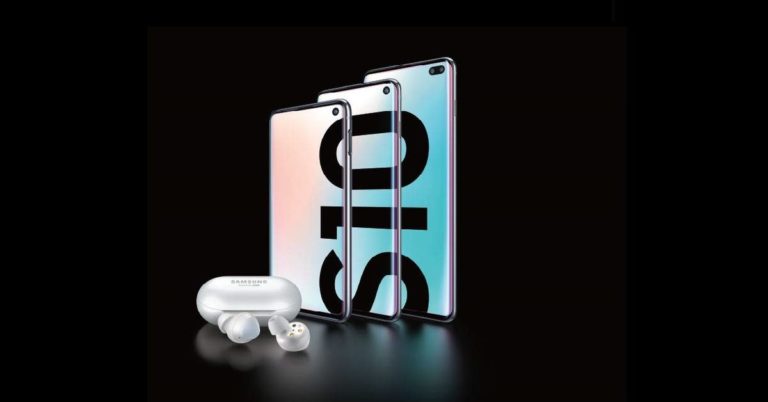
 We should also mention that a cashback of up to Rs 6,000 is also available on purchases that will be made via HDFC Bank credit and debit cards. Those who will pre-order the smartphone will be able to buy the Galaxy Watch Active and Galaxy Buds at discounted prices of Rs 9,999 and Rs 2,999 respectively.
 We should also mention that a cashback of up to Rs 6,000 is also available on purchases that will be made via HDFC Bank credit and debit cards. Those who will pre-order the smartphone will be able to buy the Galaxy Watch Active and Galaxy Buds at discounted prices of Rs 9,999 and Rs 2,999 respectively.