Compare: Realme C3 Vs Realme C2 Vs Redmi 8A

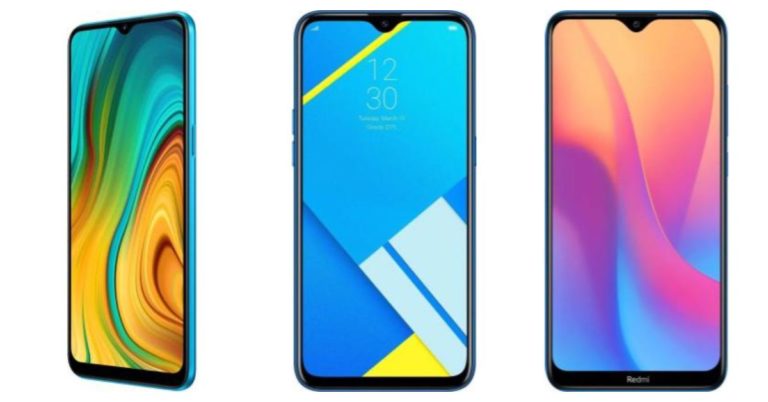
These days every smartphone company’s main focus is to lure customers looking for a phone that comes with all the latest features and is also light on their pockets. Keeping this in mind the Chinese smartphone manufacturer Realme today launched Realme C3 under the budget segment. The device is the successor of Realme C2 that was launched by the company last year in 2019. The smartphone competes with Redmi 8A and Realme C2 in this segment. So before buying a new phone, we suggest you go through our comparison between the three smartphones.

Display

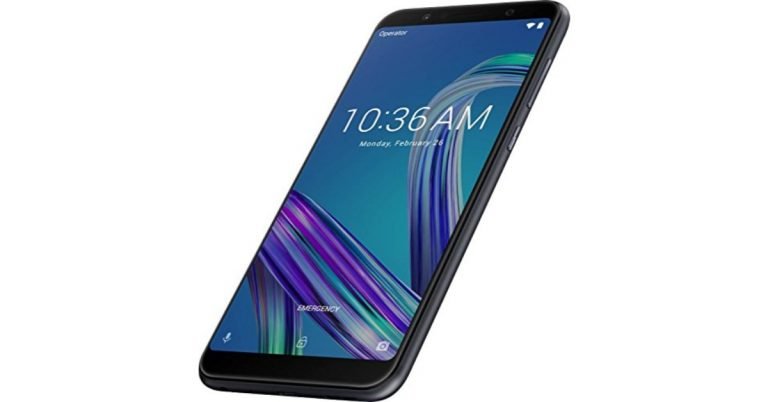
Realme C3: 6.5-inch mini drop full-screen display and a waterdrop notch

Realme C2: 6.1-inch HD+ waterdrop notched display with Corning Gorilla Glass 3 Protection

Redmi 8A: 6.22-inch HD+ display with 19:9 aspect ratio along with Corning Gorilla Glass 5 protection

Processor

Realme C3: MediaTek Helio G70 SoC processor

Realme C2: MediaTek Helio P22 processor

Redmi 8A: Qualcomm Snapdragon 439 processor

Rear camera(s)

Realme C3:12-megapixel main sensor with f/1.8 aperture and a 2-megapixel secondary camera with f/2.4 aperture

Realme C2: 13MP + 2MP dual rear camera setup

Redmi 8A:12-megapixel Sony IMX363 sensor with an aperture of f/1.8

Selfie camera

Realme C3: 5-megapixel selfie camera

Realme C2: 5-megapixel selfie camera

Redmi 8A: 8-megapixel selfie camera

RAM and storage

Realme C3: 3GB RAM with 32GB internal storage and 4GB RAM with 64GB internal storage

Realme C2: 2GB RAM/16GB storage and 3GB RAM/32GB storage

Redmi 8A: 2GB of RAM with 32GB of storage option and 3GB of RAM with 32GB of internal storage

Battery

Realme C3: 5,000mAh battery

Realme C2: 4,000mAh battery

Redmi 8A: 5,000mAh battery

Operating system

Realme C3: Realme UI that is based on Android 10 and ColorOS 7

Realme C2: Android 9 Pie skinned with ColorOS 6.0

Redmi 8A: Android 9 Pie along with MIUI 10 skinned on top

Price

Realme C3: Rs 6,999

Realme C2: Rs 5,999

Redmi 8A:Rs 6,499

Our Take

Going through the specs of all the three devices Realme C3 takes on both the devices in terms of specification. The newly launched Realme phone comes with the latest MediaTek Helio G70 SoC processor. Also, it delivers a longer battery life as well, thanks to the 5,000mAh battery. Coming to the most important part, the pricing, Redmi 8A and Realme C2 come at cheaper pricing, nonetheless if you want a phone with all the latest features and can spend Rs 500 more then go for Realme C3.

For the latest gadget and tech news, and gadget reviews, follow us on TwitterFacebook and Instagram. For newest tech & gadget videos subscribe to our YouTube Channel. You can also stay up to date using the Gadget Bridge Android App.

Realme C3 with MediaTek Helio G70 SoC launched in India at Rs 6,999

Chinese smartphone manufacturers today launched its budget smartphone in India. The company introduced Realme C3 in the country that comes with a starting price of Rs 6,999. The smartphone is the success of Realme C2 which was launched in the Indian market last year. The key highlights of the device include MediaTek Helio G70 SoC processor, a 5000mAh battery and a 6.5-inch display along with a waterdrop notch.

Realme C3 specifications and features

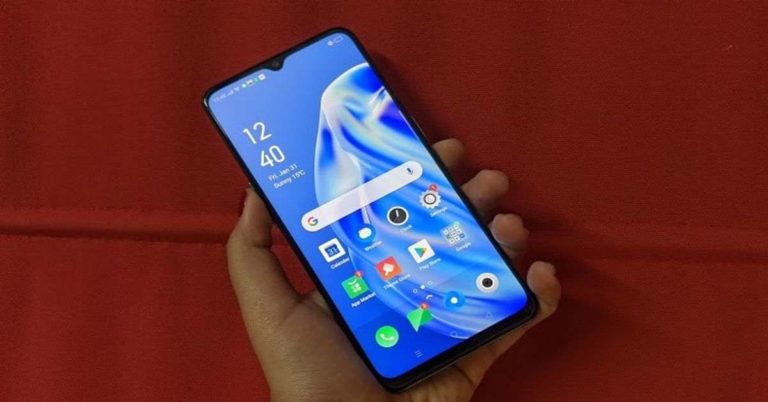
Realme C3 runs on the latest Realme UI that is based on Android 10 and ColorOS 7. The device features a  6.5-inch mini drop full-screen display and a waterdrop notch. Under the hood, there is the world’s first MediaTek Helio G70 SoC processor coupled with 3GB RAM with 32GB internal storage and 4GB RAM with 64GB internal storage. It is provided with a micoSD sim slot to expand the memory up to 256GB. 

Moving ahead Realme C3 comes with a dual camera set up consisting of a  12-megapixel main sensor with f/1.8 aperture and a 2-megapixel secondary camera with f/2.4 aperture. The camera set up supports HDR mode, Nightscape, Chroma Boost, Slow motion, PDAF, Portrait mode among others. On the front, there is a 5-megapixel selfie camera supported by camera modes such as HDR, AI Beautification, panoramic selfie and time-lapse.

Realme C3

In addition to this, the newly launched Realme smartphone houses a 5,000mAh battery with a reverse charging facility, a 30-day standby 43.9 hours of talk time, 10.6 hours of PUBG gaming and 20.8 hours of video playback. For the connectivity, there is  2.4GHz Wi-Fi, USB OTG, Micro USB port, VoLTE, Bluetooth 5 among others. The sensors on the phone include a magnetic induction sensor, light sensor and accelerometer proximity sensor, gyro-meter.  

Realme C3 Pricing and availability

Realme C3 will be available in two RAM and storage variants of 3GB RAM with 32GB internal storage and 4GB RAM with 64GB internal storage. The former comes with a price tag of Rs  6,999 whereas the latter can be picked at Rs 7,999. The device comes in two colour options of Blazing Red and Frozen Blue colour. It will be purchased via the e-commerce platform Flipkart as well as realme.com from February 14. The sale will begin at 12 noon onwards.

The launch offers include Rs 1000 off on the exchange of old mobile phones along with Jio benefits worth Rs 7,550 on the purchase of Realme C3. The launch offers will be available via both platforms.

For the latest gadget and tech news, and gadget reviews, follow us on TwitterFacebook and Instagram. For newest tech & gadget videos subscribe to our YouTube Channel. You can also stay up to date using the Gadget Bridge Android App.

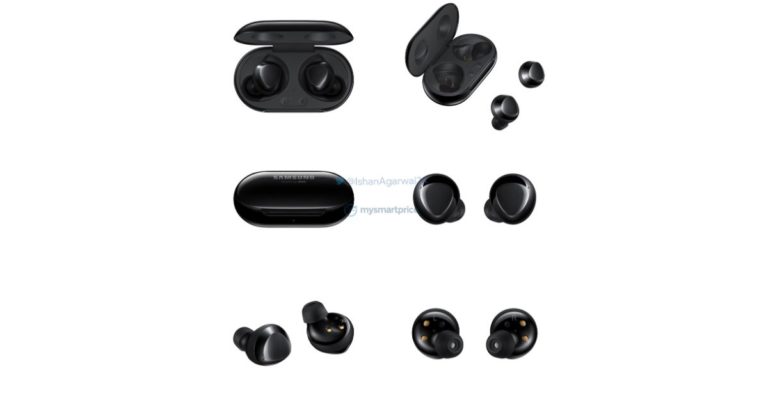
Samsung Galaxy Buds+ specifications leaked online

Next Week the South Korean smartphone manufacturer is going to host Samsung’s Unpacked event on February 11. This year the company is going to introduce two new mobile phones globally, the Galaxy S20 series and Galaxy Z Flip. Besides this Samsung will also release Galaxy Buds+. Till now we already came across many rumours and leaks related to the upcoming Samsung smartphones. In a new development, a full specification sheet of Galaxy Earbuds successor has now been leaked on the web via an official App Store listing.

A famous tipster named Evan Blass has shared a  full specification sheet of Galaxy Buds+ via its Twitter account that is known as @evaleaks. The spec sheets reveal key details of the upcoming device which has been compared with Galaxy Buds. As per the listing Buds+ will be carrying a price tag of $149 that translates to Rs 10,610.

a  full specification sheet of Galaxy Buds+
Image Courtesy: mspoweruser.com

The device packs 85mAh battery and the case has 270mAh battery which is an upgrade over its predecessor that comes with 58mAh battery while the case houses  252mAh battery. This means the upcoming device will be delivering a longer battery life. As per the listing, the Galaxy Buds+ will deliver 11 hours of playtime and 7,5 hours of talk time. With the case, the playback time increases to 22 hours and talk time to 15 hours. 

Previously Galaxy Buds provided 100 minutes of playtime on 15 minutes of charging wheres now on 3 minutes of charging will provide 60 minutes of playtime. The new device also supports wireless charging.

With Bluetooth 5 connectivity Galaxy Buds+ offers multi-device connection, whereas its predecessor provided a single device connection. This time the company has provided two-way dynamic speakers having a woofer and a tweeter.

Moreover, the device can be connected to both Android and iOS devices. Also, it is said to come in 4 colour options Black, White, Blue and Red.

For the latest gadget and tech news, and gadget reviews, follow us on TwitterFacebook and Instagram. For newest tech & gadget videos subscribe to our YouTube Channel. You can also stay up to date using the Gadget Bridge Android App.
Amazon Echo Show 8 with 8-inch HD-resolution touch display launched in India

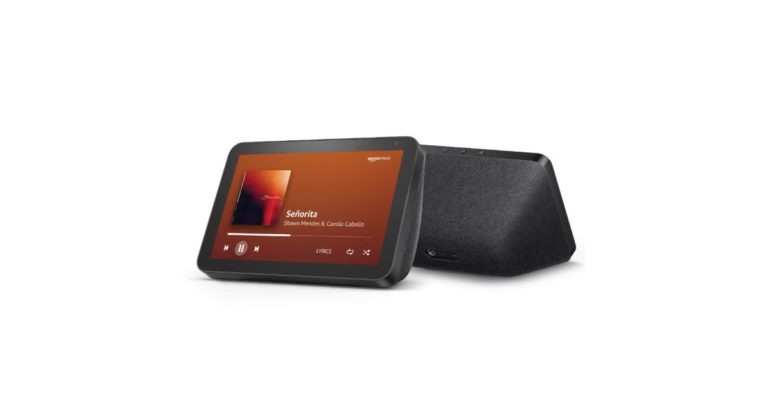
In the past Amazon has launched four Echo devices namely Amazon Echo, Echo Dot with Clock, Echo Studio and Echo Show 5. The e-commerce platform has now launched its new Echo device in India. The company has rolled out Amazon Echo Show 8 in the country. The device comes with an 8-inch HD screen along with a built-in camera. The Echo Show can be picked at Rs 12,999 from February 26 onwards. Read on to know more about the newly launched device. 

Amazon Echo Show 8 pricing and availability

Amazon Echo Show 8 has been launched in the Indian market at Rs 12,999 but the introductory price has been set at Rs 8,999. The device has also been put on pre-orders and will start shipping from February 26. Echo Show will be available in two colour variants Black and White.

Amazon Echo Show 8 specifications and features

To recall Amazon launched Echo Show 8 globally last year in the month of September along with other devices such as Echo Buds and Echo Frames.  The Echo Show 8 is a smart speaker with a display. The Echo device features an 8-inch HD-resolution touch screen with 1280×800 pixels of resolution along with 2-inch neodymium speakers and a passive bass radiator. On the front, there is an inbuilt camera of 1 megapixel that can be used for video calling via Skype or the Alexa application. In terms of privacy, the camera also comes with a mechanical shutter to block it when not in use.

Echo Show 8

The smart speaker with a display has support for applications like Amazon Prime Music, Apple Music, JioSaavn, Gaana and Hungama Music and many more. The device can be used to control other smart home devices with a touch or voice command. It comes pre-installed with Alexa Skill for controlling the device. The voice-enabled display can be connected to Wifi in order to access the Alexa voice assistant service.

For the latest gadget and tech news, and gadget reviews, follow us on TwitterFacebook and Instagram. For newest tech & gadget videos subscribe to our YouTube Channel. You can also stay up to date using the Gadget Bridge Android App.

Realme C3 all set to launch in India today: Everything you need to know about it

The Chinese smartphone maker Realme is all set to launch another smartphone in India. Today the company is going to launch Realme C3 in the Indian market which is another new addition to the company’s C series smartphones. According to some reports, the smartphone is going to fall under the budget segment.  The latest entry is going to come pre-installed with Realme UI along with MediaTek Helio G70 chipset. Read on to know more about the Smartphone’s specifications and expected pricing.

Realme C3 expected pricing and how to watch the live streaming

Realme C3 is going to launch today in India. The company will be hosting a press event in New Delhi to launch its upcoming smartphone in the country from 12:30 noon onwards. The launch event will also be live-streamed on all the Realme’s social media channels including YouTube.

In the past, we saw that the company launched Realme C3’s predecessor Realme C2 in two variants 2GB RAM at Rs 5,999 and the 3GB RAM variant at Rs 7,999. So it is expected that Realme C3 pricing is going to fall under this price range. Also, Flipkart will be its official online partner as e-commerce is teasing the smartphone for some time now.

Realme C3 expected specifications and features

Now we already know that Realme C3 is being teased on e-commerce platform Flipkart as well as the company’s official website Realme.com. According to them, the smartphone is going to be offered in two RAM and storage variants that are 3GB RAM with 32Gb of storage and 4GB RAM with 64GB of storage options. It will be featuring a 6.5-inch display with Corning Gorilla Glass protection,  89.8 percent screen-to-body ratio along with a waterdrop notch at the center.

 The device packs a battery with a capacity of 5000mAh that is touted to offer almost two days of call time, 10.6 hours of PUBG gaming and 20.8 hours of YouTube streaming. It will run on Realme UI  which is likely to be based on Android 10 out of the box. According to the teaser Realme C3 will be powered by MediaTek Helio G70 chipset paired with up to 4GB of RAM and up to 64GB of internal storage option.

Moving ahead, Realme C3 is going to include a dual rear camera set up that employs a 12-megapixel primary camera and a 2-megapixel depth sensor. The set up is supported by Chroma Boost, Slow-motion Video and HDR Mode. However, the company has not shared information about the front camera but it will be supporting panorama selfies.

For the latest gadget and tech news, and gadget reviews, follow us on TwitterFacebook and Instagram. For newest tech & gadget videos subscribe to our YouTube Channel. You can also stay up to date using the Gadget Bridge Android App.

Due to a technical issue, some of the Google Photos app user’s videos were exported to strangers

Google sent out an apology email to its user for sending the user’s private videos to strangers. This happened to some of the users who have used Google Takeout between November 21 and November 25. 

In order to back up their photos and videos which have been stored on the phone million of users around the world use Google Photos. It is an app where you get free unlimited photo and video storage on Android, iOS, and web. The users get another option of Google Takeout where they get an option to download a copy of their private data. Now the company is apologising to some users telling them that their private videos have been accidentally exported to strangers archives due to a glitch last November. 

“ Unfortunately, during this time, some videos in Google Photos were incorrectly exported to unrelated user’s archives. One or more videos in your Google photos account was affected by this issue.”

The company sent out an email to the affected users in order to notify them about the technical issue.

According to 9to5Google, “In requesting a backup, some of your videos — but not pictures — might be visible to random users that were also downloading their data through Google Takeout. The company did not specify what media was affected beyond to “one or more videos in your Google Photos account was affected by this issue.”

During those five days, Google Photos archive which the users have downloaded would either be incomplete or be missing out some of the videos whereas it might be visible to strangers. The search giant has asked some of the users to perform another export of their content and delete their previous export at the moment.

According to the company less than 0.01% of people who requested a Google Download your data export between November 21 and November 25. However, it is still unclear how many users are in fact affected.

One of the affected users has shared the warning email that he has received via Twitter.

For the latest gadget and tech news, and gadget reviews, follow us on TwitterFacebook and Instagram. For newest tech & gadget videos subscribe to our YouTube Channel. You can also stay up to date using the Gadget Bridge Android App.
Compare: Poco X2 VS Realme X2

Xiaomi’s spin-off Poco introduced its second smartphone in India. The company launched Poco X2 in the Indian market on Tuesday. The smartphone is the rebranded version of Redmi K30 4G which was introduced by the company in its home market China last year. The gaming-centric smartphone key highlights include a 4,500mAh battery with 27W fast charging support, quad cameras and Qualcomm Snapdragon 730G chipset. The smartphone well competes with Realme X2 in terms of specifications and pricing. Here is our comparison between the two.

Display

Poco X2:6.67-inch full-HD+ RealityFlow 120Hz Display 

Realme X2:6.4-inch full-HD+ sAMOLED display

Processor

Poco X2: Qualcomm Snapdragon 730G

Realme X2: Qualcomm Snapdragon 730G

Rear camera(s)

Poco X2: Quad camera with 64MP+8MP+2MP+2MP

Realme X2: Quad camera set up includes 64MP+8MP+2MP+2MP

Selfie camera

Poco X2: Dual selfie camera setup with 20MP+2MP

Realme X2:32-megapixels

RAM and storage

Poco X2: 6GB RAM + 64GB storage, 6GB RAM + 128GB storage and 8GB RAM + 256GB storage 

Realme X2:4GB RAM with 64GB storage, 6GB RAM with 128GB storage and 8GB RAM with 128GB storage

Battery

Poco X2: 4,500mAh battery 

Realme X2:4,000mAh battery

Operating system

Poco X2:  Android 10 with MIUI 11

Realme X2: Android 9 Pie-based ColorOS 6.1

Price

Poco X2: Rs 15,999 

Realme X2: Rs 16,999 upwards

Our Take

Last year we saw lots of gaming smartphones launched in the country. This year Xiaomi’s spin-off Poco has come up with Poco X2 in India. The smartphone comes with RealityFlow 120Hz Display whereas Realme X2 offers a Full HD+ AMOLED display. Both the phones have similar camera specifications but Poco has a dual front camera. The newly launched Poco phone packs a 4500mAh battery that delivers a longer battery life whereas the Realme phone has 4000mAh battery. When it comes to pricing Poco X2 pricing is much lower than Realme X2. S if you are looking for a good gaming phone with cheaper pricing then we would suggest you go for Poco X2.

For the latest gadget and tech news, and gadget reviews, follow us on TwitterFacebook and Instagram. For newest tech & gadget videos subscribe to our YouTube Channel. You can also stay up to date using the Gadget Bridge Android App.

Samsung official online shop accidentally shared the images of Galaxy S20

On February 11 the South Korean smartphone brand Samsung will be hosting Galaxy Unpacked event where it will be launching Samsung Galaxy S20. Now ahead of the launch the company accidentally revealed the images of the said phone on its own website.

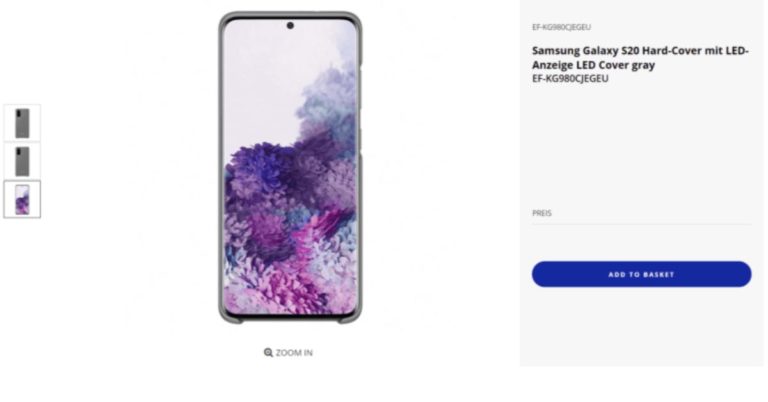
First spotted by WinFuture Samsung mistakenly uploaded the pictures of Galaxy S20 on an official Samsung online shop of a European country. According to the publisher, the company shared the pictures for a short time period in one of the LED covers available in the accessories range. The images were then removed as they were part of a product page for the LED covers. These images are now open to discussion at the moment because until now the Samsung has not officially launched Galaxy S20 and its other variants in the global market. These will get officially released on February 11 at Galaxy Unpacked event.

 The Product page displayed the images of the Samsung Galaxy S20 hard cover with an LED display. The distinctiveness of the LED case is that it is capped with a string of small LEDs on the rear. It can also show a countdown while clicking pictures.

Samsung Galaxy S20 LED covers
Image Courtesy: WinFuture

As per a report by another online publisher, the Samsung Galaxy S20 is going to be offered in three variants that will also include an Ultra model. These variants are stated to come up with 120Hz displays along with 5G connectivity as revealed by a tipster named  Ice Universe on Twitter. 

It is stated to be up for pre-order from February 14 after its official launch in San Francisco. As per reports, the upcoming smartphone will go on sale for the first time globally on March 6th. Initially, it will be available through three major carriers in South Korea SK Telecom, KT, and LG U+. These three carriers will start taking pre-order from February 14 to February 28. 

Besides this the pricing of Samsung Galaxy S20 has also been leaked on the web, The Samsung Galaxy S20 is expected to carry a price tag of  KRW 1.25 million that translated to Rs 74,900. Whereas the S20 is will be priced at KRW 1.35 million that translates to Rs Rs. 96,100. Another report has also revealed that Samsung’s foldable device that Galaxy Z Flip might be priced at KRW 1.6 million that translates to Rs 96,100 as per Indian currency.

For the latest gadget and tech news, and gadget reviews, follow us on TwitterFacebook and Instagram. For newest tech & gadget videos subscribe to our YouTube Channel. You can also stay up to date using the Gadget Bridge Android App.
Nubia Red Magic 5G to have 144Hz display refresh rate and 80W fast-charging technology

Last year we came across many new additions in the category of gaming-centric smartphones in India such as Asus ROG Phone 2 and Black Shark 2 and Nubia Red Magic 3S. Earlier in 2019 Nubia released its Red Magic 3 smartphone in the country and after a few months, it launched Nubia Red Magic 3S which is also an upgrade to the device. Like last year this year also the company is preparing to launch another variant that is Red Magic 5G. Even before its official launch some details related to the smartphone are being teased by the company. Now the company’s president has confirmed that the gaming smartphone is going to come with a 144Hz display refresh rate along with 80W fast-charging technology.

Nubia’s president Ni Fei has revealed few details via a Weibo post. As per the post, Nubia Red Magic 5G will be supporting battery with a larger capacity and super fast charging. He further explained that they found a problem with fast charging. The constant current fast charging causes heat generation to rise rapidly and the battery protection and temperature rise monitoring mechanism will significantly reduce the charging duration of high power charging. So to this problem the research and development team combined the phone with an air-cooled turbo fast charge solution. The built-in fan along with liquid cooling technology will automatically start to accelerate the battery and the entire machine this will ensure high power fast charging is more durable so that more power can be charged in a shorter period of time.

Red Magic 5G
Image Courtesy: Weibo


In its other post, Ni Fei revealed that Red Magic 5G could come up with 6GB LPDDR5 RAM. In addition to this, he also shared a camera sample that clearly revealed that the upcoming phone by Nubia is going to have good camera capabilities. It is stated to come with a triple camera along with a 64-megapixel Sony IMX686 sensor. 

For the latest gadget and tech news, and gadget reviews, follow us on TwitterFacebook and Instagram. For newest tech & gadget videos subscribe to our YouTube Channel. You can also stay up to date using the Gadget Bridge Android App.
The real Realme killer is here: Poco X2 launched at a very aggressive price in India

Realme had taken a lot of jabs at Xiaomi in the past and there were some heated words exchanged between the two companies on Twitter recently. It was nowhere close to friendly banter. Hard punches flew all over the place, but thankfully no one got hurt really bad. Today, Poco X2 was launched in India to take on the likes of Vivo V-series, but more importantly, Realme X2.

Technical specifications

Poco X2 is the second offering by the company after a long gap. They launched Poco F1 two years ago and now that Poco is a stand-alone company they will be taking the fight with the mid-segment players. Tech specs-wise the Poco X2 features in three storage and RAM variants. These are: 6GB RAM/64GB storage, 6GB RAM/128GB storage and 8GB RAM/256GB storage. These are built on the Qualcomm Snapdragon 730G chipset, which is the same as the one found on Realme X2.

So, yes this is hardcore competition from the get-go. But, what Poco X2 does better is with top-of-the-line liquid cooling, better tech specs and super aggressive pricing that it comes with. Moving forward, Poco X2 comes with a quad-camera setup at the back. This includes the 64MP Sony IMX 686 sensor as the primary camera, 8MP wide-angle sensor, 2MP depth sensor and another 2MP sensor for macro shots. Slow-motion video captures up 960FPS as well as support for RAW shooting is also there. They have also added a Vlog mode in the mix to get that extra edge.

The front camera is powered by two sensors. The first one is a 20MP wide-angle lens and the next is a 2MP sensor for depth. A punch hold camera cutout is there on the smartphone, which houses these two sensors.

The battery in the Poco X2 is powered by rechargeable 4,500 mAh cell that comes with 27W fast charger in the box. Moving towards the screen, the Poco X2 comes with a 6.7-inch FHD+ display that has an aspect ratio of 20:9. This is one of the main attractions of the smartphone. As this comes with 120Hz refresh rate that has been seen in phones like Asus ROG Phone 2 and is first time available in the lower spectrum of smartphones at this price.

Over that, the Poco X2 comes with Corning Gorilla 5 on both front and back. Again giving it the upper has as much of its competition is still giving plastic back. Also, a 3.5mm audio port, as well as USB Type-C charging, gets a place on the external shell. This smartphone is available in 3 colours, Atlantis Blue, Matrix Purple and Pheonix Red and is coated with P2i splash-proof tech. Wi-Fi, NFC and GPS make up for other connectivity options. Android 10 is the OS that comes on the Poco X2.

Poco X2 India price, availability and launch offers

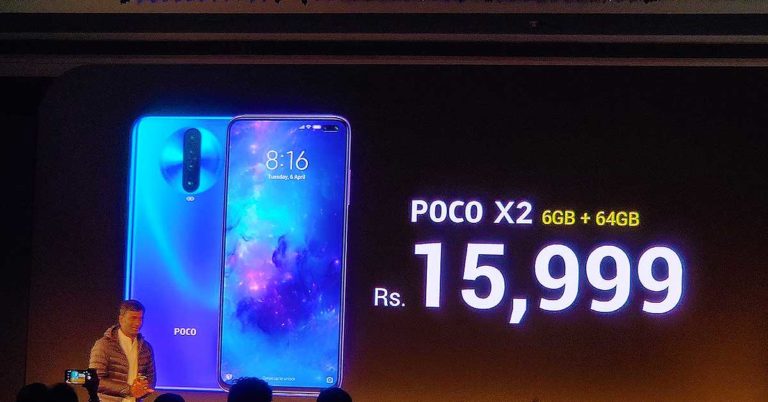
As we said Poco X2 is available in three versions. The 6GB RAM/64GB storage is available at Rs 15,999, the 6GB RAM/128GB storage can be picked up at Rs 16,999 and 8GB RAM/256GB storage version can be purchased at Rs 19,999. Users can avail an additional Rs 1,000 discount with ICICI bank debit or credit cards. This effectively brings down the prices to Rs 14,999, 15,999 and 18,999 respectively. Flipkart is where the smartphone will start selling at 12 noon on the 11th of February.

Not bad for comeback brand and on paper + pricing this very well is the real Realme killer. However, do wait for our full review in the coming days to know more about the device.

For the latest gadget and tech news, and gadget reviews, follow us on TwitterFacebook and Instagram. For newest tech & gadget videos subscribe to our YouTube Channel. You can also stay up to date using the Gadget Bridge Android App.

Over 38,000 Adobe flash games can now be played for free

When web developers and website creators are moving away from Adobe Flash there are few who are trying to keep the history alive, by at least keeping all the cool flash games at one place. Yes, in 2017 Adobe announced that by 2020 they will completely stop support for Adobe Flash and it will be no longer in use. As Google and other search engines quickly moved away from the bandwidth-heavy platform Flash became outdated. As it is not at all mobile-friendly since it consumes a lot of data.

However, now a set of people (basically programmers) at BlueMaxima have created an archive of over 38,000 games, which we all have grown up playing. These are all Adobe flash-based games and are now free to play. This can be done with the use of a Flashpoint launcher that has the archive of all these games at one spot. Some would say the graphics are outdated and also when compared to the latest mobile and PC games, they are nowhere close.

Well, yes that is true, however, this is a piece of history that some programmers want to preserve and one can always go to them, and play Adobe Flash games. These games have many famous names, which also came to the mobile platform in various forms like Bejeweled. Many current mobile games on Android and iOS are inspired by games that first existed on Adobe Flash. These include Subway Surfer, Sonic, Angry Birds etc.

One can play all these games using the Flashpoint launcher on their PC or laptops. Users would need to install the launcher and then download the game they want to play from the library. However, these are not small games to download, if you want the entire library, you would need to download over 290GB of it. Now that is a big archive.

For the latest gadget and tech news, and gadget reviews, follow us on TwitterFacebook and Instagram. For newest tech & gadget videos subscribe to our YouTube Channel. You can also stay up to date using the Gadget Bridge Android App.

Airtel digital TV snag pops up problem resolution code and alters subscriber details

Airtel woes just don’t seem to come down. First, they have to pay the AGR dues and penalties, which they have not paid since a very long time after a judgement against them and other cellular operators. And now their digital TV service has hit a major roadblock. On Monday a number of users of Airtel digital TV reported on the social media platforms that they are suddenly seeing a random message on their TV screens. The message had a problem resolution code, which they have never submitted.

Yes, none of the users had put forward a complaint to Airtel digital TV and these messages are popping up every 10-15 seconds on the TV screens. Also, some users have said that their details and mobile numbers have been changed on the DTH (direct to home) service. In certain cases, the subscriber IDs of the users and the set-top box seems to be altered too.

Many users took to Twitter to report the fiasco. This started to happen at night on Monday 3rd Feb 2020. This was not just in one city, but users from multiple cities where they are using Airtel digital TV have reported the issue. The messages appear arbitrarily on screen and one is not able to watch any program properly. Even after changing channels the same message comes on repeat. Industry experts told Gadget Bridge this could be an Airtel digital TV snag or an issue of a hack. Where hackers are using problem resolution codes to spy on or steam subscribers ID or just manipulating their details.

Few users also reported that the Airtel digital TV customer care service is also not responding to the issue at night. Airtel has not given any official press statement on the issue, however, they also took to Twitter and said that the problem seems to be there and is “Technical Glitch”. No timeline has been given by the company as to when the problem will be solved.

For the latest gadget and tech news, and gadget reviews, follow us on TwitterFacebook and Instagram. For newest tech & gadget videos subscribe to our YouTube Channel. You can also stay up to date using the Gadget Bridge Android App.

6 little-known steps of avoiding online shopping scams

We all love to shop online, be it for the discounts of the ease of being able to do it from comfort of our drawing rooms. However, it is very necessary to be wary of online shopping scams on e-commerce websites as it is very easy for hackers to target shoppers. Here, we are listing down some scams that you should keep an eye open for online in order to protect your credit card information. Take a look:

Beware of phishing emails

  1. If the email promising you a heavy discount on that premium handbag seems too good to be true, it probably is. There are times, when people receive mails of lucrative offers that direct them to a page that requires them to enter payment information. However, if you happen to receive such an email, make sure that it is not from a fraudulent website before you enter any information. Very often, these websites look like the official website of the brand they are posing as. So, the next time you get an email to update your payment information, make sure you contact the concerned company’s customer support helpline to confirm whether it’s really been sent by them.
  2. There are some other ways of knowing that the email that you have received may be an attempt of phishing. The first thing that you should do is look carefully at the sender’s address. It may look exactly the same as the email address of the online shopping website, but it will contain an extra character. If not that, there may be a case of incorrect spelling in the email address.
  3. Pay attention to the way you have been addressed in the email. If the email does not use your name and instead has something more generic like ‘Dear Customer’, then you really need to check who has sent it as it may not be from a trusted source.

Credit card information can now be stolen online

  1. Earlier, our credit card or debit card information could be stolen when we swiped them. Now, this information can also be stolen digitally. But then, there are a few things that can be done to secure this information. Firstly, check whether the website has been compromised. While there isn’t a specific way of finding this out, but something about the website where you are entering your credit card information may seem out of place if it has been tampered with. Another very important step to follow is not to save your credit or debit card details on websites or payment wallets or any other apps.
  2. Besides this, you also need to ensure that you are notified about all the purchases that have been made using your credit card. Another thing that you can do is turn off all international purchases on your credit and debit cards.
  3. Another small step that you can follow is never to use your credit card on a public Wi-Fi network. You can either use your mobile data or a trusted Wi-Fi connection while making payments. Remember that public Wi-Fi networks can be compromised.

Are you a regular online shopper? There are other basic tips you should know in order to stay safe online. Check them out here.

For the latest gadget and tech news, and gadget reviews, follow us on TwitterFacebook and Instagram. For newest tech & gadget videos subscribe to our YouTube Channel. You can also stay up to date using the Gadget Bridge Android App.
Poco X2 smartphone to roll out tomorrow: Here’s what you should know

0

After Poco F1 smartphone, the handset maker is all set to launch its second smartphone, Poco X2 in India on February 4, 2020 at 12 noon. Now, Poco has come out with a new teaser video of the smartphone to showcase its fans what is the X2 device all about. It appears that the design of Poco X2 smartphone appears similar to Redmi K30 handset.

Poco X2 smartphone will be sold exclusively through Flipkart. The smartphone maker has showcased an elaborated teaser claiming that the X2 has a higher refresh rate of 120Hz to provide smooth experience. In addition to this, Poco X2 could also house a 27W charging capacity for fast charging.

As far as specification is concerned, Poco X2 smartphone could pack a 6.67-inch display that comes with 20:9 aspect ratio supported by Corning Gorilla Glass 5. If reports are to be believed, the successor of Poco F1 is expected to be powered by Qualcomm Snapdragon 730G chipset along with 8GB RAM and 256GB of in-built memory. Powered by Android 10 OS, Poco X2 smartphone is likely to come with a 3.5mm headphone jack and USB Type-C port.

Moving on the price of Poco X2 smartphone, it appears that the device will be under sub-Rs 30,000 price category. It is believed, Poco X2 will come as a gaming smartphone along with an amazing audio experience.

Earlier this year, Xiaomi had announced that its sub-brand Poco will now act as an independent brand. If you remember, Poco was introduced as Xiaomi’s sub-brand in the year 2018. The company launched its first smartphone Poco F1 that has been a successful device till date.

Addressing the announcement, Manu Jain, Xiaomi Vice President and Xiaomi India Managing Director, said, “What started as a sub-brand in Poco, has grown into its own identity in a short span of time. Poco F1 is an extremely popular phone across user groups, and remains a top contender in its category even in 2020. We feel the time is right to let Poco operate on its own now, which is why we’re excited to announce that Poco will spin off as an independent brand. Join me in wishing the Poco team the best!”

For the latest gadget and tech news, and gadget reviews, follow us on TwitterFacebook and Instagram. For newest tech & gadget videos subscribe to our YouTube Channel. You can also stay up to date using the Gadget Bridge Android App.

Apple iPhone 9 successor may house a fingerprint scanner

0

As Apple is prepping up to lift curtains off its pre-skipped device Apple iPhone 9 next month, Giz China has reported that Chinese Apple analyst Guo Mingxuan of Tianfeng Securities has hinted that its successor ‘Apple iPhone 10’ will be equipped with a fingerprint scanner on the side once its launched in first half of 2021.

The news come in line with what Apple analyst Ming Chi Kuo had predicted earlier. Kuo had revealed the successor of Apple iPhone 9, which is also believed to be called Apple iPhone SE 2 Plus, will house a full-screen design but no Face ID. This means that the device is likely to be small. He futher added that Touch ID come along with the power button. Besides, the iPhone 9 successor will come equipped with an LCD display. He further added that the next-generation budget iPhone will carry a 5.5-inch or 6.1-inch display.

“Apple will launch the iPhone SE2 Plus in 1H21. We predict that the display size will be 5.5 or 6.1-inch. This model will adopt a full-screen design. The notch area will be smaller because of no Face ID support. The Touch ID will be integrated with the power button, which is located on the side,” According to an excerpt from Kuo’s research note with TF International Securities that was reported by MacRumors.

On the other hand, the soon-to-be launched iPhone 9 is expected to house a 4.7-inch display along with features somewhat similar to Apple iPhone 8. However, it is likely that Apple iPhone 9 come free of the Face ID in place of the fingerprint scanner that will be placed right inside the smartphone’s home button. As far as display is concerned, it will carry a 4.7-inch display alongwith fingerprint sensor placed on the sides so that users can enjoy a wider screen space.

If we believe the leak report about the iPhone 9, it has been hinted that the device is likely to be powered by Apple’s A13 Bionic chipset along with 3GB of RAM and 64GB or 128GB storage space which is still not be revealed.

Earlier, Apple had posted highest quarterly revenue ever for the first quarter of fiscal 2020 that ended on December 28 last year. Apple registered quarterly revenue of $91.8 billion, which is a 9 per cent hike as compared to the same quarter of fiscal 2019. On the other hand, international sales accounted for 61 per cent of the quarter’s revenue.

For the latest gadget and tech news, and gadget reviews, follow us on TwitterFacebook and Instagram. For newest tech & gadget videos subscribe to our YouTube Channel. You can also stay up to date using the Gadget Bridge Android App.

Samsung Galaxy Z Flip hands-on view leaked online

0

Samsung ‘Galaxy Unpacked’ event, which is slated to take place in San Francisco on February 11, is expected to be the launch pad for the tech giant’s next folding smartphone. As the time is inching closer, one after another leak is surfacing online. And now popular leakster Ben Geskin has come out with a 19 seconds claiming to give out first hands-on view of allegedly Samsung Galaxy Z Flip.

However, the leaked video doesn’t give out much information regarding the specifications of Samsung Galaxy Z Flip but it showcases folding mechanism of the smartphone and looks quite easy to carry.

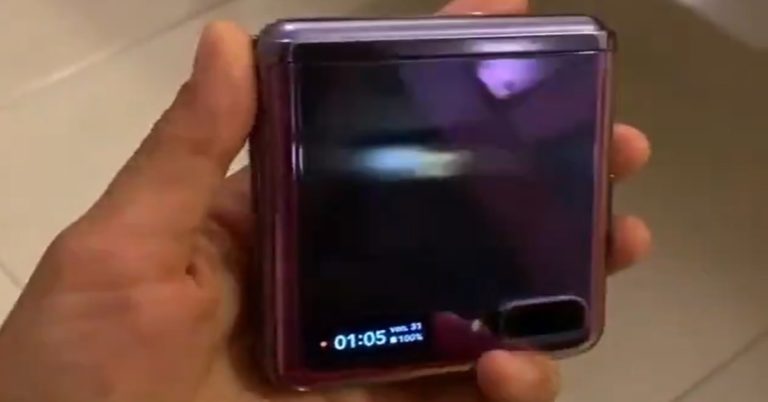
Coming on the design aspect, it appears to be similar to the recently launched Samsung Galaxy Fold but is quite compact. Once the device is folded, we could see that the Galaxy Z Flip carries a dual-camera set on the right side. On the other hand, right side showcases a small screen displaying digital clock as well as battery status.

The unfolded version of Samsung Galaxy Z Flip reveals that the device comes with a 6.7-inch Full HD+ AMOLED display which is huge as compared to Motorola Razr. It means it will not be very easily to fold the device single handedly.

Earlier report by serial tipster by Roland Quandt had revealed that Samsung Galaxy Z Flip is powered by a Qualcomm Snapdragon 855+ processor. The smartphone is likely to house an 8GB RAM along with a storage capacity of 256GB. Moreover, it is believed that this much-anticipated device will carry a 3,300mAh battery.

Another report by XDA Developers hinted that Samsung Galaxy Z Flip, which is also believed to be called Samsung Galaxy Fold 2, will likely come with Super-Fast charging. The showcases a string of code with a file titled ‘bloom_front_charging_effect_superfast’. If we believe the reports, Bloom is the internal code-name for Samsung Galaxy Fold 2.

There have been news reports that Samsung Galaxy Z Flip may not come with 5G. With model number SM-F700U, the smart passed through the FCC. It has been report by droidlife that There is no 5G in the Galaxy Z Flip. However, it will come with major LTE band capabilities on AT&T, T-Mobile, Sprint, and Verizon.

Only time will reveal, what Samsung’s next folding will be called and what new it will offer the smartphone users on the specifications front. Till then, stay tuned.

Budget 2020: What the tech and gadget industry is saying

All eyes were on India’s Finance Minster last Saturday on Feb 1, 2020 as she presented the first budget of the new decade. We have seen mixed reactions from the industry this time. While much of it is planned to boost the manufacturing sector in India, some do feel otherwise. Here is what the Industry is saying about the budget 2020.

“It is heartening to see that the Government has time and again recognized the significance of electronics manufacturing in today’s economy. The Union Budget’s significant focus on local production of mobile phones, electronics and semiconductor packaging is going to propel the Make in India vision further. We are excited about the detailed scheme, which will follow soon.” said, Nipun Marya, Director – Brand Strategy, vivo India.

Dr Sangita Reddy, President, FICCI said, “Given the constraints that the Finance Minister was facing, this has been a comprehensive statement. The government has done a commendable job and the various measures announced will strengthen India, individuals and industry. By invoking the deviation clause in FRBM Act and relaxing the fiscal deficit to 3.8 per cent in the current year and targeting 3.5 per cent in the next year, the government has underscored its resolve to support the economy at a time when it needs a fiscal boost. This was FICCI’s key suggestion to the government and through this we expect more money will be left in the hands of the people that will spur consumption and industrial growth. Much of this money will go towards capital expenditure in infrastructure and agriculture sector – two areas that can have the maximum growth enhancing impact.”

Mr Leon Yu, Regional Head, India & South Asia, Asus, said, “At Asus, we believe that the Union Budget 2020 announcement has covered several pressing issues faced by the economy and is going to bring growth opportunities. All eyes would be on the manufacturing sector, with the FM proposing a scheme to encourage mobile phones, semiconductor packaging, and electronic equipment. The new scheme, Nirvik, is also going to offer respite for exporters, promising to settle refunds for electricity and VAT previously levied. Furthermore, the provision to bring digital connectivity to all public institutions at Gram Panchayat and allocation of INR 6,000Cr to bring fibre to home through BharatNet linking 100,000 Gram Panchayats in FY21 are also welcomed moves. With India’s rising aspirations reaching the rural locales, internet connectivity will pave the way for connected and smart consumerism. At Asus, we shall be pursuing ways to support the government in enriching India’s economy and traversing through rural India to ensure optimum growth and development. We also look forward to the policy on private players setting up data parks and shall be offering full support with our cutting-edge products and services.”

Prakash Mallya, VP, and MD – Sales and Marketing Group, Intel India, said, “The Union Budget highlights the role technology-enabled innovation can play in leapfrogging the nation. From integration in priority sectors like agriculture and healthcare to a continued focus on smart cities, the first budget of the new decade clearly outlines the significance of a digital-first India in realizing the country’s potential. I am especially encouraged by the efforts to use artificial intelligence (AI) and machine learning (ML) to improve disease detection and pre-emption as part of the PM Jan Arogya Yojana. Such applications of emerging technologies combined with the focus on increasing the penetration of fibre connectivity in the nation have the potential to fundamentally impact the lives of millions in the coming years. Provisions to invest in and nurture local talent and entrepreneurship will go a long way in organizing India’s workforce and equipping them with the skills and measures needed to continue to innovate for India and for the world. Policies and investments enabling data centres and quantum computing and applications will help India spur the development of new breakthroughs across sectors. With the government’s target of a $5 trillion economy by 2024, Intel believes that technologies like AI, Internet of Things (IoT), and ML will continue to play a pivotal part in this journey. We look forward to further strengthening our work with the local ecosystem and with the government in enabling technology innovation and skilling India’s workforce to power the next wave of India’s digital revolution”

Mr Rajesh Uttamchandani, Director, Syska said, “We welcome the steps taken by the Government in the Union Budget towards boosting electronic manufacturing in the country. The electronic industry has huge potential both in terms of manufacturing in India and job creation and will provide a major impetus for growth. This will further enhance the exports of networked products. Another important step taken is the further push provided by the Government for its smart cities mission. It aims to create 100 cities with state-of-the-art infrastructure that includes intelligent lighting, Wi-Fi access points, leading to enhancement of the quality of life of every citizen while building efficient living spaces for future generations. As a company, Syska  has been striving towards developing technology-driven, energy-efficient and affordable solutions that positively impact the lives of our customers. With India heading towards mass urbanization, we are aligned towards promoting sustainability, enhancing social development and creating new employment opportunities through rapid digital innovations.”

Mr Naveen Soni, Senior Vice President, Sales & Services, Toyota Kirloskar Motor, said, “The budget exhibits a fine balance between spending to drive growth and maintain fiscal prudence. Directionally, continued thrust towards world class infrastructure will drive growth and create employment besides improving the ease of living. Especially noteworthy is the attempt to enhance infrastructure funding by encouraging the use of equity and not to rely too much on debt. The attempt to address the trust deficit by institutionalisation of taxpayers’ charter’ would exude more business confidence and trust amongst tax payers and is a welcome step. Attempt towards simplification of individual taxation will drive better compliance, increase disposable income for consumption and generally augur well stimulating growth”.

“This is positive budget overall from the technology focus point of view. We are pleased that the Government is allocating Rs 8,000 crore for the National Mission on Quantum Computing and Technology. The government’s move on encouraging manufacturing of electronic equipment in India is also a big step as this would provide much needed impetus to technology and manufacturing sector, which has been developing capacities and generating employment opportunities. Also, more focus on technology such as Machine Learning, Robotics, AI will support the industry to grow and establish India as a robust ecosystem for technology and innovation,” – Chandrahas Panigrahi, CMO and Consumer Business Head, Acer India.

Mr. Vinu Cheriyan, CFO & Director Operations, Sennheiser India, said, “For 2020-2021 Union budget, the government has made some notable announcements that are aimed towards strengthening the industry and commerce sector. It also focuses on enhancing growth of youth with skill development. The allocation of Rs 27,300 crore for development of industry and commerce will help in the overall growth of the country. Government’s plans to announced a new scheme to encourage domestic manufacturing of mobile phones, electronics and semiconductor boards, to expand rural development using modern digital technologies to generate massive employment. Furthermore, allocating Rs 3,000 crore for the Skill India programme is also set to increase the skill based jobs in India. To further improve this and provide employment, 115 higher education institutions will also start apprenticeship from March 2021 which will benefit the youth of this country. This initiative will also help people in getting the appropriate jobs basis to their skillsets. Focus on AI, Internet-of-Things (IoT), quantum computing, a policy to build data centre parks across the country will help in channelizing the explosion of digital technology in the country. With government’s emphasis to increase digital penetration and consumption of mobile, will further strengthens India’s internet potential. This allows for immense growth possibilities for the entertainment industry, further giving a push to the audio accessories industry.

“If this budget had to be known for one thing, it would be the length and breadth of technology infusion across all aspects. Technology and data are changing the world and the latest Union Budget rightly makes these its mainstay. The focus on data, digital records, connectivity and data security across key citizen services underlines the government’s faith in technology to deliver better governance, a safer society and a more competitive economy. The proposals for building data centre parks and setting up the ambitious National Mission of Quantum Technology and Application are significant announcements to put the technology intent into practice.” said, Ritesh Gandotra, Director, Xerox Business Services.

Mr Mike Chen, MD, India, TCL said, “At TCL, we believe that the Finance Minister has announced an encouraging Union Budget 2020. Proposing the scheme to encourage the manufacturing of mobile phones, semiconductor packaging and electronic equipment is a welcomed move and we look forward to a complete policy and leveraging the same to kickstart the domestic manufacturing through our panel factory in Tirupati.  Furthermore, painting a futuristic picture in this year’s budget announcement, the FM also acknowledged advanced technologies like IoT, AI, and analytics changing the world. At TCL, we are forever committed to advancing our ‘AI x IoT’ ecosystem in India and will continue to invest in cutting-edge technologies to offer the best services to our customers in India.”

Mr Dipesh Kaura, General Manager, Kaspersky (South Asia), said “Government’s growing interest in the use of Advanced technologies such as Artificial intelligence, quantum computing, etc was definitely seen as the base of the IT budget 2020 and an interesting move for Digital India. In today’s budget we saw the government allocating funds to make data centres across India which will also support their upcoming Data Protection Act. However, we do hope that this budget will be majorly focused on protecting the stored data especially of sectors like BFSI and large enterprises that consist major quantity of critical data. As it was rightly said that Data is the new oil, it becomes increasingly important for a country like India to protect and secure their data moving forward and also invest in securing other vulnerabilities that may target India’s critical infrastructures, banking and finance institutions and government bodies  against the ever-evolving cyberthreat landscape.”

Mr Vipin Sondhi, MD & CEO, Ashok Leyland, said, “The budget 2020 overall covers a wide spectrum of areas such as health, skill, infrastructure, agriculture – as a boost to the economy. The allocation of Rs. 2.83 lakh crore for Agriculture, Irrigation and Rural Development will assist the rural economy and will be good for the CV industry in the long run. Further push to infrastructure of Rs.100 lakh crore over the next 5 years, including increased allocation of funds for roads and highways and the Proposal to develop five new smart cities in collaboration with states in PPP mode, will bring positive sentiments for the commercial vehicle sector by increasing demand. Overall economic activity and job creation will increase demand for goods and consumption and Increase freight movement on trucks. The provision of invoice financing by NBFCs will improve working capital financing for MSMEs and revive the current business cycle.”

Harshil Mathur, CEO and Co-founder, Razorpay said, “The budget 2020 does meet some of the expectations from the FinTech industry and startups. The introduction of some sort of a tax relief on ESOPs was one of the biggest asks from the startup industry – this deferment of tax payment by five years, to me, is one of the biggest welcome moves by the government in this budget. This is a good start and I hope we see more focus on this going forward. Secondly, the reduction on corporate tax to 22% is an encouraging step. This is the lowest in the world and will be encouraging for Indian businesses. Lastly, the changed income tax slabs and rates is not only a huge income tax relief for individuals but will also lead to an increase in disposable income, thereby giving a boost to consumer spending.”

Mr Sanjay Katkar, Joint Managing Director and Chief Technology Officer, Quick Heal Technologies Ltd., said, “For cyber forensics University – One major step announced by the FM involved the proposal for establishing a national forensic university and cyber forensic university. With cyber crimes increasing at a rapid rate, the need for cyber forensics has become more important than ever for a rapidly digitising country like India. The setting up of a cyber forensics university is a welcome move from the Government. This will definitely help in improving India’s expertise to solve complex cybercrimes.”

“We congratulate the government on presenting the Union Budget 2020 for the common man and it’s encouraging to see that the government has taken the lead to deliver on its promise of excellence in healthcare. The government’s “TB Harega, Desh Jeetega” initiative to eradicate tuberculosis by 2025 is a significant step towards building a healthy Society. India being the highest recorder of TB cases in the world makes it imperative for us to understand the high risk of catching the disease. The government’s vision aligns with our mission to raise consciousness and promote advanced diagnosis and treatment of tuberculosis among patients. Additionally, the government’s impetus on boosting the domestic manufacturing of electronics and medical devices in the country will reinforce the commitment towards raising awareness for early detection in India. Apart from this, the announcement to boost Artificial Intelligence is a great step to strengthen the usage of technology in the field of healthcare while intensifying the quality with accessibility and affordability. We believe that the government has put forward a progressive budget with a strong vision to take India’s social, economic and overall well-being to greater heights.” said Mr Haruto Iwata, Managing Director, Fujifilm India.

CP Gurnani, MD & CEO, Tech Mahindra, said, “With a thrust on talent, technology and entrepreneurship, Budget 2020-21 is a promising budget 2020 in support of making India’s $5 trillion economy dream come true. It is heartening to see initiatives that are aimed at enhancing digital penetration in the country by making Fibre to the home (FTTH) accessible to 100,000 Gram Panchayats via Bharat Net, which will go a long way in bridging the digital divide. Also, the decision to build data centre parks for the private sector is another step towards making India a data economy superpower. Furthermore, strategic initiatives aimed at leveraging new-age technologies like the Internet-of-Things, machine learning, robotics, bioinformatics, quantum computing and artificial intelligence across sectors will further help in laying the foundation of a robust, digital economy.

Mr Avneet Singh Marwah, Director and CEO of Super Plastronics Pvt. Ltd, a Kodak brand Licensee said, “This has been a historic budget 2020, I would rate it 8/10. This is common man’s budget. From education to infrastructure, govt has ensured promising new projects. This would encourage buying and would improve market sentiments. In terms of Electronics and TVs, we were expecting reduction in GST to 18% and extent the 0% duty on open cell panel.”

Rajiv Kapoor, Vice President, India & SAARC, Cambium Networks, said, “The Union Budget 2020 provides a major boost to the interests of broadband services enablers and aligned stakeholders as one of the major takeaways that evidently emerged was the fact of connectivity being at the core of all key pursuits planned by the government. Towards this, initiatives announced such as providing push to smart metering, setting up five new smart cities, establishing new data centres across the country and more importantly the allocation of Rs.6000 crore towards BharatNet to provide connectivity to 100,000 gram panchayats within this year itself, augers well for the telecom industry. “

KT Prasad, Country Sales Director, Zendesk India, said, “I believe the Union Budget 2020 will have a positive impact on helping further drive Indian businesses, given the current local and international market conditions. The startup sector will benefit greatly from the tax breaks, and the move to tax ESOPs on liquidation will encourage the retention of talent in the sector, poising it for continued growth on the global stage. We are happy to see the push for adopting AI and ML particularly in the healthcare sector, which will help boost access to services as well as quality of care for more people, and further infuse growth in the economy. It is also interesting to see that the government has invested Rs. 8000 crore to the National Mission on Quantum Technologies, which will ensure India remains a key global technology player. This move aligns and propels India into the future with an eye on data, communications, cybersecurity, and technology, and from Zendesk’s position as a global Saas company, this is particularly encouraging.”

Vartul Jain, SVP and Chief Financial Officer, GreyOrange, said, “It is heartening to see how this year’s Union Budget focuses on promoting India as an investment and innovation hub. Focus on entrepreneurship, skill development and supply chain economy as well as thrust on technology are important for the growth of the Government’s Digital India and Make in India programs.Measures such as an Investment Clearance Cell, early stage fund and multiple tax rebates and relaxations for startups–will help widen their scope and provide more opportunities. From a business perspective, Government continues to extend its support to MSMEs and bolster their growth by allowing for debt restricting, all of which will help boost the entrepreneur ecosystem.We also laud the Government’s focus on improving the supply chain economy. Measures such as geo-tag warehouses and establishment of efficient facilities at the block level will be key for ensuring zero wastage and optimizing resource allocation.We are now excited to witness how the industry makes the most of these initiatives for entrepreneurship and drive innovation to further the spirit of India Vision 2025.”

Mr Rajan S Mathews, DG, COAI, said, “We welcome the Government’s overarching positive theme for the Budget 2020 -21, that includes enabling an aspirational India, through major fundamental structural reforms targeted at fostering healthcare, education, skill development, ensuring economic development for all and further a caring, humane and compassionate society. The Hon’ble Finance Minister Smt. Nirmala Sitharaman, emphasised on country’s growth and Digital inclusion will hinge on advanced technologies such AI, Robotics, Machine Learning, analytics, among others, which essentially relies on telecom infrastructure. However, while the Union Budget laid major emphasis on boosting domestic manufacturing of network products, mobile phones, electronic equipment, semi-conductors and healthcare products and has allocated INR 27,300 crore for the development of industry and commerce by 2021, it is disappointing that there were no announcements made regarding the rationalisation of levies and taxes currently imposed on the severely distressed telecom sector and telecom infrastructure is not taken into consideration that is going to build out the country. The Budget proposed that the New India will be driven by innovations, AI and computing where data will be the new oil and other significant initiatives such as linking of 1 lakh gram panchayat to the Bharat Net program by this year and an allocation of INR 6,000 crore in this regard, none of our key recommendation appear to have been taken into consideration. A financially healthy and robust telecom sector is imperative to support all these future forward initiatives.  It is also disappointing to note that telecom was not given an infrastructure status even though a slew of crucial reforms has been announced on infrastructure. The telecom sector, which is the backbone of the country’s economy, did not receive significant support.”

Mr Anjani Kommisetti, Country Manager – India & SAARC, Raritan & Servertech (brands of Legrand), said, “The government’s initiative of setting up data centers will bring in an advantage, especially in tier two cities. With internet connectivity and digitalization in smaller parts of the nation, we are sure to see an economic growth. Today, data centers are only present in tier 1 cities of India and with operational costs, it is difficult for businesses in tier 2 cities to adopt even micro data centers. Once we see more data centers being set up in smaller cities, it will mean lower costs for businesses and they will move towards cloud or web-based applications. This will further improve the supply chain as businesses even at lowest levels will generate data that will eventually improvise their business.

For the latest gadget and tech news, and gadget reviews, follow us on TwitterFacebook and Instagram. For newest tech & gadget videos subscribe to our YouTube Channel. You can also stay up to date using the Gadget Bridge Android App.

Budget 2020: India promises Rs 8,000 crore investment in ‘Quantum Computing’

0

As quantum technologies have a huge disruptive potential and is rapidly developing across the globe, the Modi government while presenting Union Budget 2020 has announced a National Mission on Quantum Technologies & Applications (NM-QTA) with a proposed budget of Rs 8,000 Crore for a period of five years. The move will implemented by the Department of Science & Technology (DST).

In the Union Budget 2020 speech, Finance Minister Nirmala Sitharaman said: “The new economy is based on innovations that disrupt established business models. Artificial intelligence, Internet-of-Things (IoT), 3D printing, drones, DNA data storage, quantum computing, etc., are re-writing the world economic order.”

Asserting that quantum technology is paving up new ways in the fields of computing, communications and cyber security, it is likely that the next generation transformative technologies will receive a push under NM-QTA mission. For instance: Quantum computers and computing, quantum communication, quantum key distribution, encryption, crypt analysis, quantum devices, quantum sensing, quantum materials, quantum clock, etc.

The areas of focus for the National Mission on Quantum Technologies & Applications will be in fundamental science, translation, technology development, human and infrastructural resource generation, innovation and start-ups to address issues concerning national priorities.

With the belief that the range of quantum technologies is likely to change the paradigm of computation, communication and encryption, the countries who achieve an edge in this emerging field are expected to have a multi-fold economic growth.

In order to secure communications, financial transactions, remain competitive, drive societal progress, generate employment as well as to foster economic growth, it is imperative for the government and industries to be prepared to develop these emerging and disruptive technologies.

Once the NM-QTA mission gets implemented, it will further help prepare next generation skilled manpower, boost translational research and also encourage entrepreneurship and start-up ecosystem development. This will further stimulate economic growth and create more jobs, which will feed back into a growing quantum-based economy.

Indian physicists and engineers are working hard to delve deep into the quantum world that holds the secrets for developing exciting technologies for computing, communication, cryptography and many more. While announcing the budget, the government announced that its financial and organizational support will also ensure that both public and private sectors receive the benefit.

For the latest gadget and tech news, and gadget reviews, follow us on TwitterFacebook and Instagram. For newest tech & gadget videos subscribe to our YouTube Channel. You can also stay up to date using the Gadget Bridge Android App.
IBM steps up for ‘Cloud War’, names Arvind Krishna as next CEO

0

With an aim to compete with Microsoft, Amazon and Google, IBM has announced the name of its next CEO to lead the company and its clients into the cloud and cognitive era. Arvind Krishna, who is currently serving as IMB senior vice-president for Cloud and Cognitive Software, will take over as the tech giant’s next CEO by replacing Virginia Rometty starting April 6, 2020.

Asserting that Arvind is the right CEO for the next era at IBM, Rometty said: “He is a brilliant technologist who has played a significant role in developing our key technologies such as artificial intelligence, cloud, quantum computing and blockchain. He is also a superb operational leader, able to win today while building the business of tomorrow.”

It was Arvind Krishna who played a leading role in IBM’s acquisition of Red Hat. He has an undergraduate degree from the Indian Institute of Technology, Kanpur (IIT-K) and holds a Ph.D. from the University of Illinois at Urbana-Champaign.

Expressing excitement to be elected as the next CEO of IBM, Krishna said, “I am looking forward to working with IBMers, Red Hatters and clients around the world at this unique time of fast-paced change in the IT industry.”

The soon-to-be CEO claimed that IBM has great opportunities ahead to help its clients advance the transformation of their business while also remaining the global leader in the trusted stewardship of technology.

Beside Arvind, James Whitehurst-IBM senior vice-president and CEO of Red Hat-will be the new president of IBM with effect from April 6, 2020. Interestingly, the 52-year-old has been an avid advocate for open software as a catalyst for business innovation. Whitehurst has earned a bachelor’s degree in Computer Science and Economics from Rice University, and holds an MBA from Harvard Business School.

“I look forward to working with Arvind, and with IBMers and Red Hatters alike, to continue to bring together the best of our companies and cultures,” said Whitehurst.

Virginia Rometty, who will continue as Executive Chairman of the Board and serve through the end of the year, said, “In Arvind and Jim, the Board has elected a proven technical and business-savvy leadership team.” She will retire after serving IBM for 40 years.

For the latest gadget and tech news, and gadget reviews, follow us on TwitterFacebook and Instagram. For newest tech & gadget videos subscribe to our YouTube Channel. You can also stay up to date using the Gadget Bridge Android App.

WhatsApp VS Telegram: Here’s what Telegram founder suggests Jeff Bezos

0

After the much uproar about Amazon Founder and CEO Jeff Bezos’ WhatsApp account on his iPhone X allegedly being hacked to extract personal details, a last blog post by Telegram founder Pavel Durov claims, “Had Jeff Bezos relied on Telegram instead of WhatsApp, he wouldn’t have been blackmailed by people who compromised his communications.”

In the blog post titled ‘Why Using WhatsApp is Dangerous’, Durov asserted that hackers have been using WhatsApp’s backdoor to extract private communications of the app users. “It became clear that this backdoor had been exploited to extract private communications and photos of Jeff Bezos – the richest person on the planet – who unfortunately relied on WhatsApp,” said the Telegram founder.

Emphasising that WhatsApp frequently uses the words “end-to-end encryption” as its marketing strategy, Durov said, “Telegram rolled out end-to-end encryption for mass communication years before WhatsApp followed suit.” He further added, “The encryption technology is not a silver bullet that can guarantee you absolute privacy by itself.”

After the reports of backdoor in WhatsApp surfaced on the Internet, Telegram’s founder Durov believed that Facebook should have apologised openly with a promise that there will be more backdoors in its instant-messaging app.

However, Facebook tried its best to appear innocent by pinning the blame on the handset’s operating system. In a recent interview to the BBC, Nick Clegg, Facebook Vice-President of Global Affairs and Communications, said what happened with Amazon founder and CEO Jeff Bezos was not WhatsApp’s fault as end-to-end encryption cannot be hacked.

After the Bezos’ episode, UN spokesman Farhan Haq said, “The senior officials at the U.N. have been instructed not to use WhatsApp, it’s not supported as a secure mechanism.”

On the contrary, WhatsApp Director of Communications Carl Woog said: “Every private message is protected by end-to-end encryption to help prevent WhatsApp or others from viewing chats. The encryption technology that we developed with Signal is highly regarded by security experts and remains the best available for people around the world.”

Since 2013, Telegram app, which is a cloud-based instant messaging and voice over IP service, has been an open-source and its encryption fully documented. Telegram supports verifiable builds for both iOS and Android – meaning anyone can ensure the source code on GitHub and the Telegram app you download are the same thing. Users can send messages and exchange photos, videos, stickers, audio and files of any type.

For the latest gadget and tech news, and gadget reviews, follow us on TwitterFacebook and Instagram. For newest tech & gadget videos subscribe to our YouTube Channel. You can also stay up to date using the Gadget Bridge Android App.

Realme XT starts receiving Realme UI based on Android 10

The Chinese smartphone manufacturer last year launched Realme XT in India. Now the company has started rolling out  Android 10-based Realme UI update for the smartphone in the country. The official rollout has begun and the updates are rolled out in a staged manner in order to ensure the stability of the update. The update brings a host of new features to the smartphone.

Realme UI rollout for Realme XT comes with the version number RMX1921EX_11_C.01. The update size is about 3.52GB. As per the company, the OTA will be rolled out to a limited number of users initially and will have a broader rollout in a few days after making sure there are no critical bugs. If no critical bugs are found, the full rollout will be completed in the upcoming days.

As per the changelog, the smartphone will be receiving a brand new Real Design, Optimized user interface and improved one-handed operation. The company has also enhanced Smart Sidebar in which File Console has been replaced with File manager, OSIE Visual Effect and notification alerts have also been removed. To open the smart sidebar in split-screen mode drag an app out of it. Two new features have been added to it Assistive Ball Opacity and Hide Assistive Ball on Fullscreen App.

The floating window feature for more apps has also been optimised and a bubble is displayed when you open an app in a floating window from the Smart Sidebar. Tap the bubble to collapse or open the app.

The Realme UI brings optimised 3-Finger Screenshot Gesture. Now in order to take a screenshot, the user is required to use three fingers to touch and hold the screen, and swipe to take a screenshot of the selected part of the screen (partial screen capture). Use 3 fingers to touch and hold the screen, and swipe your fingers outwards to capture a long screenshot. The user can now also adjust the position of the screenshot preview floating window as well as set the screenshot sound. Now the screenshot taken can be dragged up and released in order to share it or dragged down and release to take a long screenshot. 

Now coming to the navigation features which has also received a few changes like new the realme Xt gets new Android 10 navigation gestures and all gestures are supported in landscape mode. Focus mode has been added to minimize outside distractions when the user is learning or working. A new pause feature for screen recording has been added, optimised ringtones and user can now view the memory of recent tasks and locked apps.

The update also brings Random MAC address Generator which means when the user connects their phone to the Wi-Fi network the system will be generating a random MAC address to avoid targeted ads and protect privacy.

For the latest gadget and tech news, and gadget reviews, follow us on TwitterFacebook and Instagram. For newest tech & gadget videos subscribe to our YouTube Channel. You can also stay up to date using the Gadget Bridge Android App.
Huawei Band 4 to go on its first sale in India today via Flipkart

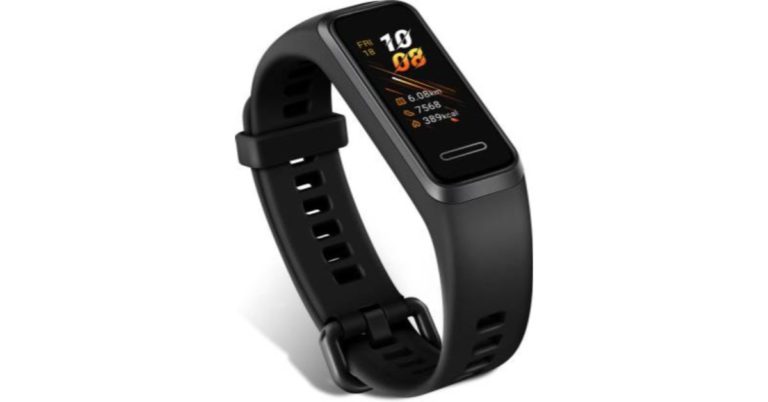
The Chinese Electronics brand Huawei recently launched Huawei Band 4 in India. Today the smartphone is going on sale for the first time in the country. At the time of launch, the company did not confirm the exact date of its first sale but now it has confirmed that the smartband is going to be up for sale on Saturday via Flipkart. The device will be available in a single Graphite Black option. To recall the smart band was first introduced last year in China.

Huawei Band 4 pricing and availability

The Chinese company launched Huawei Band 4 in India at Rs 1,999. The device will gon on its first sale in the country from February 1st that is today via e-commerce platform Flipkart. The company has launched the fitness band in the country in a single Graphite Black colour option. Until now the company has not disclosed any launch offers, but the website will be offering bank offers as well as EMI options. As per the website, there will be a 10 per cent instant discount to HSBC Credit Cards with EMI Transactions and Federal Bank Debit Cards. There will be 10 percent off to Axis Bank Buzz Credit Card users also 5 per cent unlimited cashback on Flipkart Axis Bank Credit Card

Huawei Band 4 specifications and features

Now coming to the key highlights of the newly launched Huawei Band 4 comes equipped with a 91mAh battery that delivers up to 9 hours of battery life when fully charged. The device features lots of fitness tracking and heart rate monitoring established on the company’s own TrueSenn 3.5. The smart band comes with a 0.96-inch TFT colour touch display with 80×160 pixels of resolution, round edges with an oleophobic coating and Apollo 3 microprocessor. It offers  8 colourful watch faces in different styles of sports, cartoons, intelligence and more.

The fitness app works with devices that run on Android 4.4 or higher version and iOS 9.0 or later. Other features such as scientific heart rate, oxygen saturation and sleep monitoring benefit users to keep up with their everyday physical fitness. It can monitor users heart rate 24×7 and is supported by Huawei TruSleep 2.0 technology that can pick out 6 types of sleep disorders while suggesting more than 200 potential solutions for better sleep. The device is also capable of determining blood oxygen.

The fitness band offers 9 types of sports modes such as outdoor run, indoor run, outdoor walk, outdoor cycle, indoor cycle, free training, elliptical machine, rowing machine and more. 

For the latest gadget and tech news, and gadget reviews, follow us on TwitterFacebook and Instagram. For newest tech & gadget videos subscribe to our YouTube Channel. You can also stay up to date using the Gadget Bridge Android App.

Snapchat launched Bitmoji TV that will be starring snap chatters and their friend in an animated avatar

Social media app Snapchat has launched its personalised Bitmoji TV.  According to the company, it will be premiering a fully animated show starring Snapchatters and their friends on Snapchat. 

Snap Inc. will be launching Bitmoji show this Saturday that is February 1st and will be having 10 episode season. The Bitmoji TV will be casting the friend that was snapped most recently as a Snapchatter’s co-star in each episode. In order to make it more fun and interesting Snapchat Users will have to snap different friends to see episodes of Bitmoji TV with different co-stars. 

The Bitmoji show will air new episodes on Saturday morning on the Discover feed globally. Each episode will be featuring 10 episodes of three minutes in length. We can be heard  Bitmoji Tv comedy stars such as Andy Richter, Jon Lovitz and Riki Landhome from the beginning to the end of the first season. 

Bitmoji TV

Bitstrips is the maker of Bitmoji which was acquired by Snap Inc. in the year 2016 for $100 million. It offers people to create their own version of the avatar that also includes customized outfits that the users can send it to their friends. 

To recall Bitmoji Stories made its debut in 2018 in the month of November. In total, more than 100 million Snapchatters have already watched and loved Bitmoji stories. Since then people have been making use of Bitmojis in order to represent and express themselves with other people. As per the company user’s love for Snapchat to a broader range of digital experiences like playing Snap Games, 3D Bitmoji AR Lens as well as Bitmoji TV. 

According to an online publisher, Bitmoji TV will not be carrying any advertising. According to the company’s head Sean Mills, “I would imagine we’ll find plenty of business opportunities down the line. So much of what we’re trying to do is use new technology and features to change the way we tell stories. Bitmoji TV’ takes that to a new level… I think it starts a new chapter for us.” 

Last year the company introduced  Cameos. This feature allows the user to insert a selfie of themselves into a scene and then they can send the processed videos to their friends.

 For the latest gadget and tech news, and gadget reviews, follow us on TwitterFacebook and Instagram. For newest tech & gadget videos subscribe to our YouTube Channel. You can also stay up to date using the Gadget Bridge Android App.

Oppo F15 review: Almost as good as it looks on paper

Chinese smartphone maker Oppo recently launched its F15 handset in the Indian market at a price of Rs 19,990. The device comes with a quad-rear camera setup, a beautiful-looking gradient back panel, an in-display fingerprint scanner and a big 4,000mAh battery. Considering the specifications, Oppo F15 should excel well when it comes to performance. We spent a few days with the smartphone to know what it’s really like and here’s our review of Oppo F15:

Oppo F15 design and display

The Oppo F15 is very appealing to look at. The smartphone is available in Lightning Black and Unicorn White colour options and we got the latter one for review. The back panel of the smartphone has a gradient finish. At the top, it is White coloured, it turns Blue and Lilac towards the bottom. In our opinion, this made the Oppo F15 look beautiful. We have to say that the back panel of Oppo F15 did somehow remind us of the rear panel of the Huawei P30 Pro, but it only resembles it, and is not an outright copy. The back panel of the smartphone also has the camera module, the LED flash and Oppo branding on it. One thing that we really like about the built of the handset is that it’s very light in weight at 172 grams, unlike most other smartphones that we have reviewed recently. This made it very easy for us to carry the device with us.

Oppo F15 2

Flip over the device and you will see the 6.4-inch AMOLED display of Oppo F15. The screen of the handset has full-HD+ resolution and it is protected by Corning’s Gorilla Glass 5. The display of the device is also among its positive aspects. It is bright and it showcases accurate colours that remain consistent at different viewing angles. Whether you use the screen to watch videos, or just look at some images, you will see that they are sharp and have clarity. Even the sunlight readability of the handset is good, which we think is a very big plus point. The bezels of the smartphone outline its display and it is worth pointing out that the chin is thicker than the other three. The top bezel also has a notch to house the selfie camera.

The right edge of the smartphone has the power button while the left one has the volume rocker keys and the SIM tray. The bottom has the charging port, the 3.5mm headphone jack, the speaker grille and the microphone, while the top has the secondary microphone.

Oppo F15 3

To sum up, the look and feel of the device, we would again say that Oppo F15 is very pleasant to look at. We really liked the design of the smartphone and although gradient back panels are nothing new, Oppo F15’s is particularly beautiful. The light weight and the strong built also add some extra points to design of the device. However, we should mention that it can be a little tough to fit the smartphone in a pocket. The display, as we said earlier, is another positive and we were quite happy with it.

Oppo F15 performance and cameras

Let’s talk about the specifications of the Oppo F15 smartphone. The device runs Android 9 Pie skinned with ColorOS 6.1.2 and it is powered by an octa-core MediaTek Helio P70 processor clubbed with 8GB RAM and 128GB of onboard storage. For more storage, the smartphone can hold a microSD card of up to 256GB. For imaging duties, there is a quad camera setup on the back panel of the smartphone with a 48MP primary sensor, an 8MP ultra-wide angle sensor, a 2MP macro sensor and a 2MP depth sensor. For selfies and video calls, there is a 16MP front-facing snapper. The camera of the smartphone also has support for EIS and AI video beautification. The handset houses a 4,000mAh battery and comes accompanies with a 20W VOOC 3.0 flash charger.

Oppo F15 4

As far as the software of the device goes, it is customised and has some additional features like shortcut on the home screen for recently used apps, Google’s Digital Wellbeing and more. There are a number of pre-installed apps on the handset, but then, the good thing is that you can uninstall them if you find them unnecessary. Although we liked the additional features, we personally prefer phones that have stock Android.

Moving on, let’s talk about the performance of the device. Oppo F15 can handle most of the day-to-day tasks with perfect ease. We even used the smartphone to perform a number of functions at once like navigation and gaming. However, it handled that well and did not heat up. We also did not face any lag while using the smartphone.

Oppo F15 5

Speaking of gaming, we played a number of games on the device including Alto’s Odyssey, Temple Run 2 and Asphalt 9. Most of these games, although they differ from each other in terms of graphics, played well on the handset. It was only while playing the graphic-hungry Asphalt 9 that we faced a certain lag. A feature named ‘Game Assistant’ on the smartphone actually enhanced the gaming experience as it will give you options like blocking notifications and more.

Coming to the biometrics, Oppo F15 has a fingerprint sensor as well as facial unlock. During our time with the smartphone, both of them performed well. The fingerprint scanner worked even when our fingers were moist with water and the facial unlock worked even in dimly lit conditions.

The call quality of the device was good too. We faced no problem while making or receiving calls ever, even when we were in areas like basements and elevators.

The battery of Oppo F15 lasts an entire day with usage that involves long phone calls, listening to music, gaming and using the camera. A great aspect of the device is that it charges very quickly. It went from 0 to 90% in an hour and we think that this is very good.

Now, let’s talk about the cameras of the handset. The 48MP primary camera of the device clicks images that are 12MP in resolution by default. While this can be changed in the setting of the phone, users still don’t have the option of recording videos at 48MP resolution.

Oppo F15 image

During the day, the camera does a very good job of clicking images that have vibrant colours and a good amount of details. The performance of the primary lens remains more of less the same in dimly lit areas too. The ultra-wide angle camera also offers a good amount of details, however, it wouldn’t be fair to compare it to the primary camera of the device. That is far better than the ultra-wide sensor. Another thing that we should mention is that the ultra-wide camera’s performance does go down a little bit. The depth sensor of the camera worked well too, and the app offers the option of adjusting the level of blur. However, it is only available before taking the shot and not later.

Oppo F15 image 2

Coming to the selfie camera of the device, we managed to click some good shots in well-lit conditions. However, there is no ‘Night Mode’ for the front-facing camera, so images taken in dimly lit areas didn’t turn out to be great.

Verdict

Oppo F15 is overall a good smartphone and there are a lot of pros that it has. It has a lasting battery and a great design and display. Its performance was also mostly good. However, the camera’s performance could be more consistent and we expected a few more features in the camera app like ‘Night Mode’ for the front facing snapper. Gaming experience was a little inconsistent too. Besides that, nothing is disappointing. It seems to be a good start to the year by Oppo.

Pros

  • Lasting battery
  • Beautiful design
  • Vibrant display

Cons

  • Gaming could be better
  • Cameras could have more features

For the latest gadget and tech news, and gadget reviews, follow us on TwitterFacebook and Instagram. For newest tech & gadget videos subscribe to our YouTube Channel. You can also stay up to date using the Gadget Bridge Android App.

Android 10 now available on Asus Zenfone Max Pro M1: Here is how to get it

Android 10 has been slowly rolling out on a lot of smartphones and like the rest the Taiwanese company Asus had also promised its roll out on its devices like the Asus Zenfone Max Pro M1. They have already rolled out the Android 10 Beta 6 update on Asus ROG Phone 2 and now is the turn of Max Pro M1. Remember this is the new Beta version of Android 10 for the smartphone and some bugs will be there.

The Android 10 Beta update is first being given to users in India and France. Then it will be rolled out to the rest of the world. The new software will come with the latest OS by Google and will also fetch security updates up till November 2019. That is still a bit behind, however it will get you the latest UI aesthetics and enhancements. The software version WW-17.2017.1911.407 is a 1.6GB update that will have all the essential files of the firmware.

Asus said on Twitter (on its official handle), ”This current Android 10 update for Zenfone Max Pro M1 is based on the beta version build. Users can expect the stable version update to arrive soon. Stay Tuned.” With the new update, a lot of patches are expected. Also, a system-wide dark mode is going to come with the new Android 10 OS on Asus Zenfone Max Pro M1. This is a feature many were looking forward to, as it saves battery life.

Over that Asus Zenfone Max Pro M1 with the new Android 10 beta update is expected to get smart replies, drop-down quick section upgrade, stronger privacy and also robust location controls, amongst others. The update will soon be out officially by Asus, however, there are links on the web that have already started pointing to the Asus official website for the download.

Asus Zenfone Max Pro M1 Tech specs and price

The Asus Zenfone Max Pro M1 comes with a 5.99-inch IPS LCD screen that supports FHD+ graphics. Inside the smartphone has 3GB RAM and 32GB storage, 4GB RAM and 64GB storage that is expandable using a microSD card. All this built on Qualcomm Snapdragon 636 chipset. A 5,000 mAh battery can be found inside this mobile, too.

On the camera front, the Asus Zenfone Max Pro M1 has 13MP + 5MP rear camera setup, while the front camera comes with an 8MP sensor. Connectivity features of the smartphone include Wi-Fi 802.11b/g/n, Bluetooth 5.0, GPS, 4G LTE and a micro USB port for data transfer as well as charging. Graphics are powered by the Adreno 509 GPU unit integrated on the chipset. The smartphone is available at Rs 7,499 on Flipkart for 3GB variant.

For the latest gadget and tech news, and gadget reviews, follow us on TwitterFacebook and Instagram. For newest tech & gadget videos subscribe to our YouTube Channel. You can also stay up to date using the Gadget Bridge Android App.